-
-
Connecting the invisible to the visible
As modern scientists, we frequently deal in abstraction. We are separated from the species and ecosystems we study often by hundreds of miles, bureaucratic bubbles, cloistered campuses, and the machinations of innumerable statistical analyses whirring silently away in the electric flatness…
-
Tracking Raincoast, past, present, and future
As this decade closes, it’s timely to celebrate what we have collectively achieved for BC’s coast. Raincoast’s past in the Kitlope takes us back three decades to 1990, when Brian Falconer first visited at the invitation of the Haisla and Xenaksiala. The Nations were working to save the Kitlope from clearcut logging, which they ultimately…
-
Where bears, fish, and humans roam
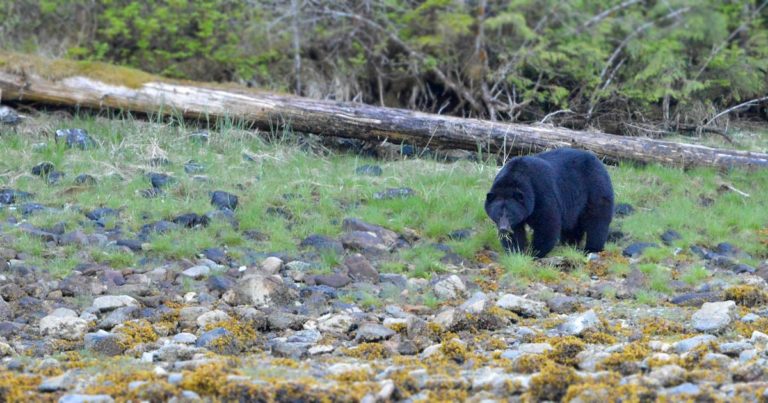
Transitioning between seasons can often push your senses to work overtime. This is especially true in summer and autumn in the Atnarko River corridor, where the river comes alive with Chinook, chum, pink, sockeye, and coho salmon runs. The smell of a river containing spawned-out fish is unforgettable, and one I have grown fond of….
-
Join us at the Salish Sea Ecosystem Conference in Vancouver
Along with the Lower Fraser Fisheries Alliance, Raincoast is chairing a traditional session at the upcoming Salish Sea Ecosystem Conference April 19-22, 2020 Vancouver Convention Centre Vancouver BC. The session, Toward a vision for Ecological Resilience in the Lower Fraser River, session ID1438, is accepting abstracts until November 1st. Our goal is to bring together…
-
Backgrounder on Canada’s Pacific salmon fishery losing its Marine Stewardship Council certification
What is the Marine Stewardship Council? The Marine Stewardship Council, or “MSC”, is an international, independent non-profit organization which sets a standard for sustainable fishing. Fisheries that wish to demonstrate they are well-managed and sustainable compared to the science-based MSC standards are assessed by a team of experts who are independent of both the fishery…
-
Finding communities in salmon conservation
As I crouch on the riverbank taking measurements of the salmon carcass, the ever-telling sensation of being watched creeps up my neck. I look up to see a mother black bear and her two cubs across the river, staring right at me. Our eyes meet, and time slows. In this moment of connected eyes and…
-
Habitat use by juvenile salmon, other migratory fish, and resident fish species underscores the importance of estuarine habitat mosaics
Pacific salmon, especially Chinook and Chum, reside and feed in estuaries during downstream migrations. But the extent to which they rely on estuaries, and which habitats within estuaries, is not well understood. We need to understand this complexity if we are going to enact effective conservation policies. This is especially important in urban systems where habitat loss is ongoing, and at different rates across the estuarine mosaic. The Fraser River estuary, for example, supports a multitude of fish species…
-
Salmon, bears and people
Grizzly and black bears do a lot of the heavy lifting when it comes to connecting marine and terrestrial ecosystems along the coast. As fish return each fall to spawn, bears catch salmon and eat them along the river banks or adjacent forests, leaving food and nutrient sources for hundreds of species of scavengers on…
-
One night only – Patagonia’s Artifishal screening at the University of Victoria
Join us on Tuesday, August 27, at 7:00 pm for a film screening of Patagonia’s documentary, Artifishal, at the University of Victoria’s Cinecenta theatre located in the Student Union Building. Artifishal examines the harmful effects hatcheries…
-
In search of the Lower Fraser’s lost streams
There is currently renewed interest in locating historical streams that have long been paved over and lost in Vancouver and the Lower Mainland. Mapping these historical landscape features offers a connection to the land that has been lost through urbanization and highlights opportunities for restoration…
-
Saving endangered whales: Strategies from above and below the 49th parallel
On May 10, the Canadian federal government announced its first wide-ranging measures to reduce the primary threats compromising survival of the salmon-eating Southern Resident killer whales reliant on the transboundary waters of the Pacific Northwest and British Columbia. Although federally listed as endangered in 2003 in Canada and 2005 in the US, little has happened…