Oil and chemical spill tracking

Spills of oil and chemicals into freshwater and ocean environments have killed fish, degraded habitat, and led to closures of commercial, recreational, and Indigenous fisheries. Raincoast’s Healthy Waters Program is positioned to collect data at the scene of a spill and collaborate with various organizations and First Nations to understand the impact of a spill. 

Tracker will host a number of rugged analytical instruments, and enable the measurement of several contaminants in the field, including coliform bacteria, nutrients, metals, pesticides, and tracers of wastewater effluent.
Photo by Peter Ross.
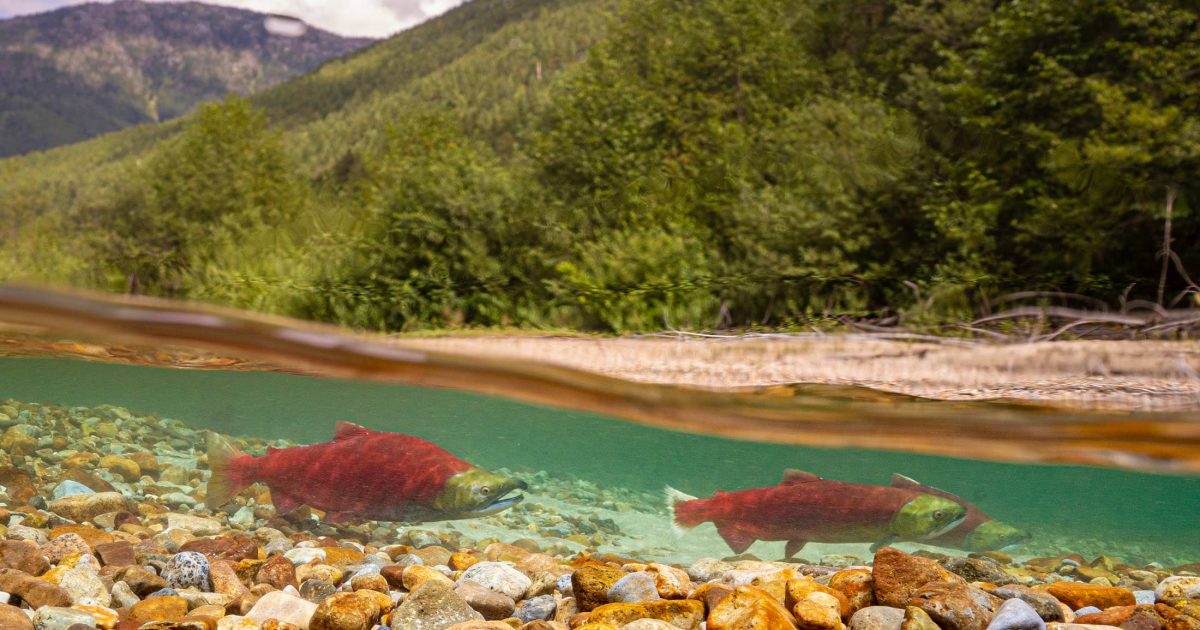
Two sockeye salmon swimming in a river.
Photo by Fernando Lessa.

Spills happen

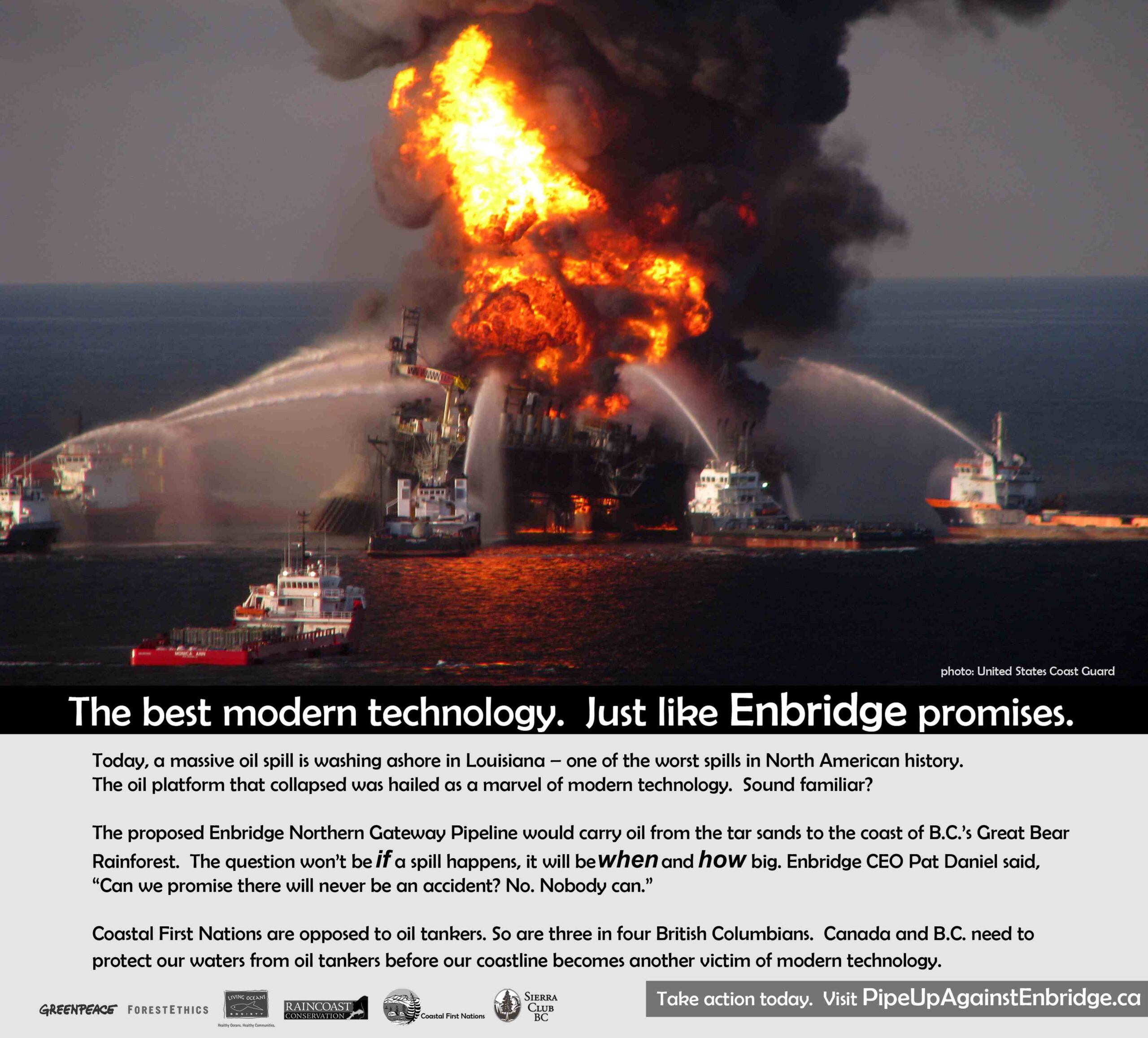
Spills originate from all manner of accidents. The 2005 train derailment that spilled caustic soda into the Cheakamus River that killed 500,000 fish, The 2015 spill of 3,000 L of Bunker C oil from the MV Marathassa into English Bay. The 2020 fire aboard the MV ZIM Kingston in Juan de Fuca Strait that resulted in the loss of 104 mixed cargo shipping containers into the ocean. Each and every accident is bad news, and threatens the health of fish and whales, and contributes to the degradation of their habitats.

Being prepared is key

Given the sudden and unpredictable nature of oil and chemical spills, our oil and chemical spill response work entails being agile and available for support to First Nations, government agencies, and industry during a major spill. We are developing science protocols, and acquiring sampling kits, field equipment, and safety gear, and are poised to deploy our team to the scene of a spill. 

Being prepared on all fronts is key to limiting the damage from a spill. We recognize that with spills, it’s not a matter of if, but when. Research and monitoring to confirm the origin of the spill, track the fate of the spilled product, and monitor the recovery of ecosystem components routinely fails to be a priority. We will deploy expert capacity where and when needed, and work to prevent harm to valued ecosystem components.
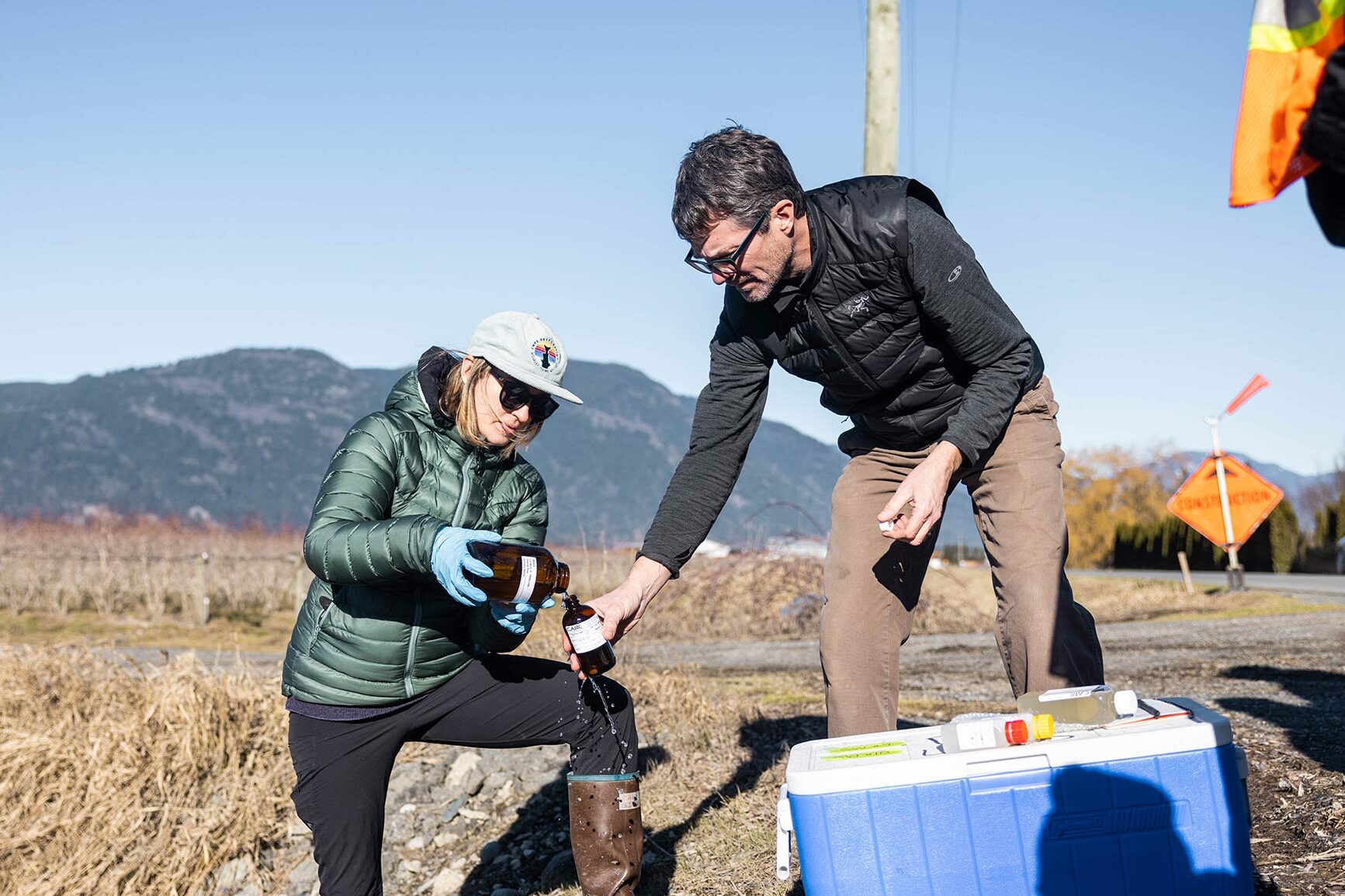
Two people working together to collect water samples in a farm field with the mountains in the background.
Photo by Alex Harris.
https://www.raincoast.org/reports/flood

Semá:th X̱ó:tsa (Sumas Lake) Floods of 2021

The catastrophic floods of late 2021 in southern British Columbia (Canada) and neighbouring Washington State (USA) destroyed homes, farms and businesses, with excess water spilling debris, animal carcasses and diesel fuel into historically productive fish habitat. 

We assembled a team to assess water quality in the former Semá:th X̱ó:tsa (Sumas Lake) area of the Fraser Valley over a seven-week period after the floods. We collected water samples from 11 surface water sites and four groundwater sites for comprehensive contaminant analysis and a subsequent risk-based evaluation. We measured 379 analytes (chemical components and bacteria), including 262 anthropogenic contaminants. We examined excess nutrients, metals, fecal coliform, hydrocarbons, pesticides, pharmaceuticals, and personal care products, perfluorinated compounds, sucralose, and tire-related chemicals.

Recent articles

Extent of gulf oil spill as of May 3 2010

Gulf oil spill spurs Canadian concerns

In the wake of the Gulf of Mexico oil spill disaster, federal opposition parties are calling for emergency hearings before the Commons Natural Resources Committee to discuss the need for more stringent safeguards against oil spills in Canada’s Arctic. But the public needs be properly and clearly informed as to the risks and tradeoffs with…
underwater photo of sockeye salmon in BC river

The Get Out Migration – Salmon are Sacred

Sidney Presentation by Alexandra Morton – Salmon are Sacred Alexandra Morton will be giving an evening presentation about her reasons for rallying the public around wild salmon. She’ll share her experiences about her journey on the Migration and her hopes for the next day’s rally in Victoria at the Parliament buildings. A table will be…
Oil tanker in BC waters

Coastal waters are no place for oil tankers

Special to the Vancouver Sun, Earth day April 22 2010 By Josh Paterson, Jen Lash, Nikki Skuce, Gerald Amos, Pat Moss, Eric Swanson, Jennifer Rice, Julia Hill and Chris Genovali. Federal studies have repeatedly concluded that oil tankers must be prohibited in some sensitive marine areas because of the severe risks. The Campbell government was…
A close up of a deer with horns.

Would you like worms with that?

Raincoast researchers publish paper on unexpected discovery. Conservation research can lead to unexpected findings. Sometimes these surprises relate to our core questions while other times they belong in a science fiction film.  One of these findings occurred while we were studying diseases that might harm wildlife in coastal BC. Though not what we set out…
dummy-img

Identification of nematodes in feces of gray wolves

Heather M. Bryan, Kathrin A. Sim, Chris T. Darimont, Paul C. Paquet, Brent Wagner, Violeta Munoz- Fuentes,  Judit E. Smits, and Neil B. Chilton. 2o1o. Identification of Parelaphostrongylus odocoilei (Nematoda: Protostrongylidae) First-Stage Larvae in the Feces of Gray Wolves (Canis lupus) by Molecular Methods. Journal of Wildlife Diseases, 46(1) 297–302
A man in a helmet sitting in a helicopter.

Why I support Raincoast

Supporter and volunteer Don Arney gives time to Raincoast “I donate my flying time to take Raincoast’s Salmon Carnivore team to places where grizzlies roam but where the team’s boats and gum boots cannot take them. I make this contribution because I see in them a passionate group of scientists and conservationists who work hard…
A brown bear with a fish in its mouth.

Field Notes: Saving our bears

Outpost Magazine,  April 2010, by Chris Darimont In one of Nature’s most elegant pas de daux, salmon and bear engage in a delicate dance for survival.  The bear is losing… We’re searching for solutions to one of the most critical questions facing coastal B.C. today: how to guarantee grizzlies enough salmon to ensure their survival….
An albino grizzly bear climbs rocks at the shore in the Great Bear Rainforest

Not your average bear

As Raincoast’s research vessel Achiever pulled into the inlet on British Columbia’s north coast I glassed the port side shoreline with my binoculars, checking for wildlife.  It was that magical time right before dusk when unexpected and unusual things often manifest in the coastal fall alpenglow.