

Ripple Effect
A series of animated videos aimed at conserving salmon.
Art by Michael Mann.
A killer future
Southern Resident killer whales are at a critical crossroads. Their future depends on the choices we make today. These choices will either push them closer to extinction or put them on a path to recovery. These whales rely almost entirely on Chinook salmon, yet they often struggle to find enough food, especially in the spring after a lean winter. Rising ship traffic has made the Salish Sea so noisy that whales struggle to use echolocation to hunt and communicate. At the same time, toxic contaminants in their environment threaten the growth and survival of calves. By restoring Chinook salmon, reducing underwater noise, and stopping pollution there is still time to protect these iconic animals for generations to come.

Is there something wrong with the way we fish?
Along with habitat loss and climate change, overfishing is widely considered a key driver of the decline in wild salmon. To fix this problem, we can look to fishing methods that have been practiced for generations, and still are used successfully to this day: terminal fisheries. With terminal fisheries, often placed at the mouth or within a river, fishers can control which species of salmon they are catching, and be able to only catch salmon from populations that are thriving.
Animation direction by Michael Mann. Narrated by Tariq Leslie. Sound mixing by Daryl Chonka.
Recent articles

British Columbia wolves have taste for salmon, new study finds
Financial Post Canwest News Service Published: Tuesday, September 02, 2008…
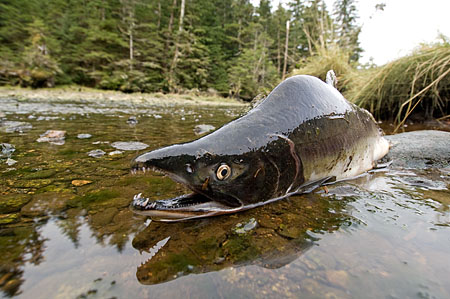
Venison’s fine, but wolves prefer salmon
Wolves are not quite the red-blooded hunters we thought they…
Oil Futures: We’re in for a whale of a time, one way or another
BY: CHRIS GENOVALI MONDAY MAGAZINE August 27, 2008 The International…
