

Shifting salmon policy
Photo by Alex Harris.
Ecosystems are complex. They are communities of living organisms connected through interacting processes and features on the land, in water, and between the two. Yet BC’s antiquated environmental policy doesn’t reflect this. Colonial society governs ecosystems by siloing them into distinct ministries and resources instead of reflecting the interconnected nature of habitats that make them function in the living world. This “siloed decision making”is the root cause of many of the ecological challenges we face today.


Our policy goals
1. Manage fisheries for ecosystems
- Set salmon harvest at levels that optimize the benefits of spawning salmon to watersheds and wildlife.
- Shift away from historic management paradigms that minimize the number of spawning salmon reaching rivers and maximize harvest (called Maximum Sustainable Yield). Move towards fisheries management that meets salmon spawning targets that are ecologically based, not harvest-based.
- Shift harvest toward selective terminal fisheries (conducted in or near the rivers of origin) that respect the ‘place-based’ nature of salmon, and optimize the benefits to ecosystems, Indigenous cultures, and local communities.
2. Implement ecological-based governance
- Conservation planning and a commitment to sustainability that looks 7 generations ahead.
- A “whole-of-government” approach that implements shared solutions by Indigenous, federal, provincial, and municipal governments to achieve salmon recovery from inland watersheds and rivers, to the open ocean.
- Governance that honours Aboriginal rights and title, inherent Indigenous jurisdiction and law, and the United Nations Declaration on the Rights of Indigenous Peoples (UNDRIP) and the Declaration on the Rights of Indigenous Peoples Act (DRIPA).
- Sustainable funding strategies for watershed-scale restoration and planning.


3. Advance land-use policies that prioritize the health of wild salmon and biodiversity
- Zoning that bolsters functioning watersheds and riparian habitat (i.e.protect natural features, limit impervious surfaces, reduce urban sprawl, adopt nature-based solutions).
- Forestry policy that prioritizes salmon health by restricting clear-cutting in salmon watersheds, and incentivizes a sustainable, second or third-growth forest economy.
- Climate adaptation policy that incentivizes nature-based solutions including natural shorelines, intact riparian areas, unrestricted floodplains, managed retreat, and use of rain-gardens in urban areas.
Our recent reports
Recent articles

Five years following a wild wolf pack
The Kootenay Wolves – Five years Following a Wild Wolf Pack is a spectacularly illustrated photography book by John E. Marriott, full of behavioural observations and wolf tales that will engage those interested in the state of wild wolves in North America.

The story of Coastal Douglas-fir forests: Living within rather than apart from the places that sustain us
This installment is the first of several articles seeking to explore the ways ecosystems differ between the islands within the Coastal Douglas-fir (CDF) biogeoclimatic zone. Adam Huggins, Restoration Coordinator with the Galiano Conservancy Association (GCA), explains the ways topography, historic land use, and shifting economies have influenced and continue to shape the ways CDF forests…
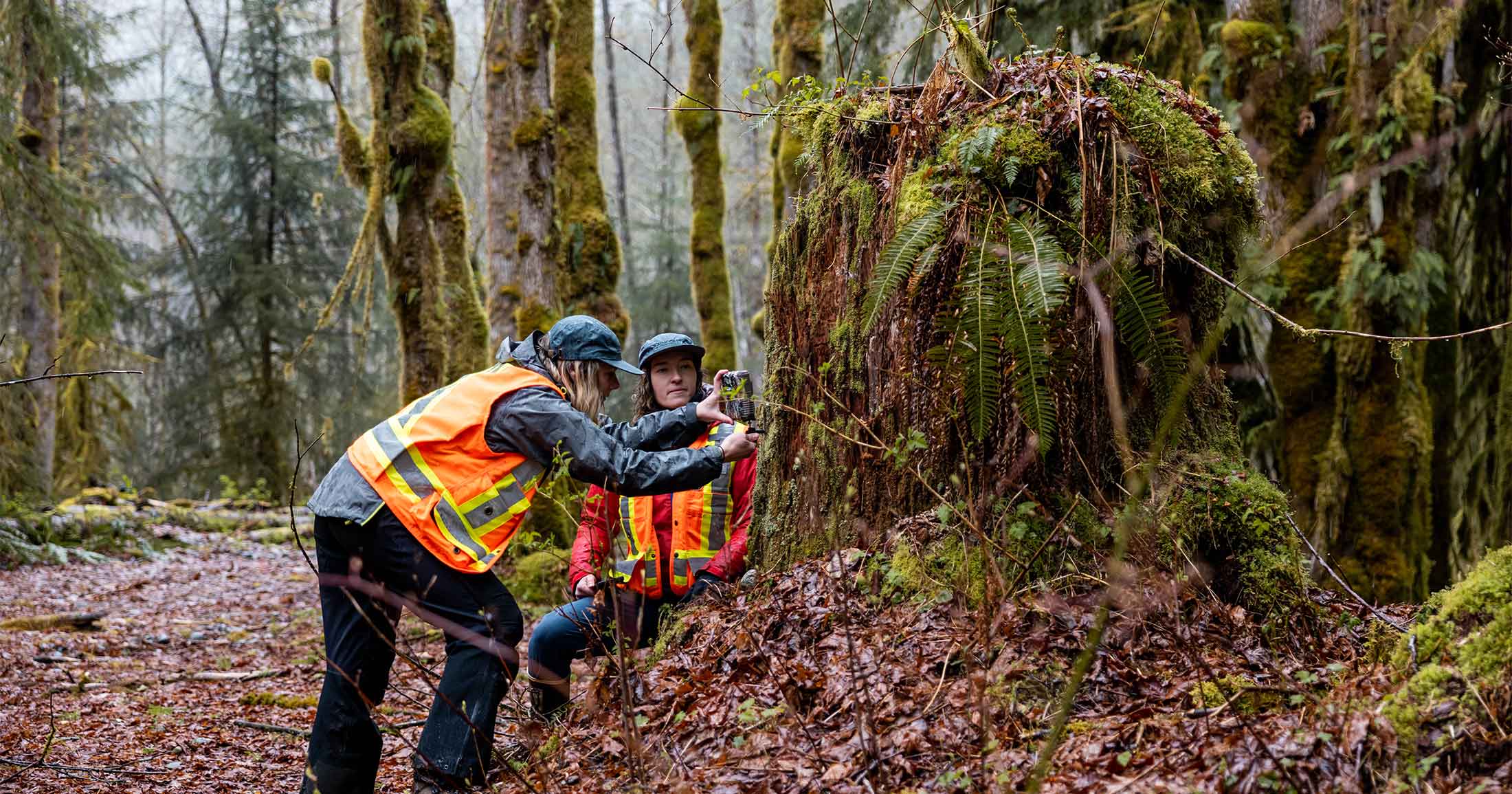
Landslides, clearcuts, and camera traps: surveilling wolves on an industrial landscape
In two field days, we deployed nine remote cameras throughout the valley.
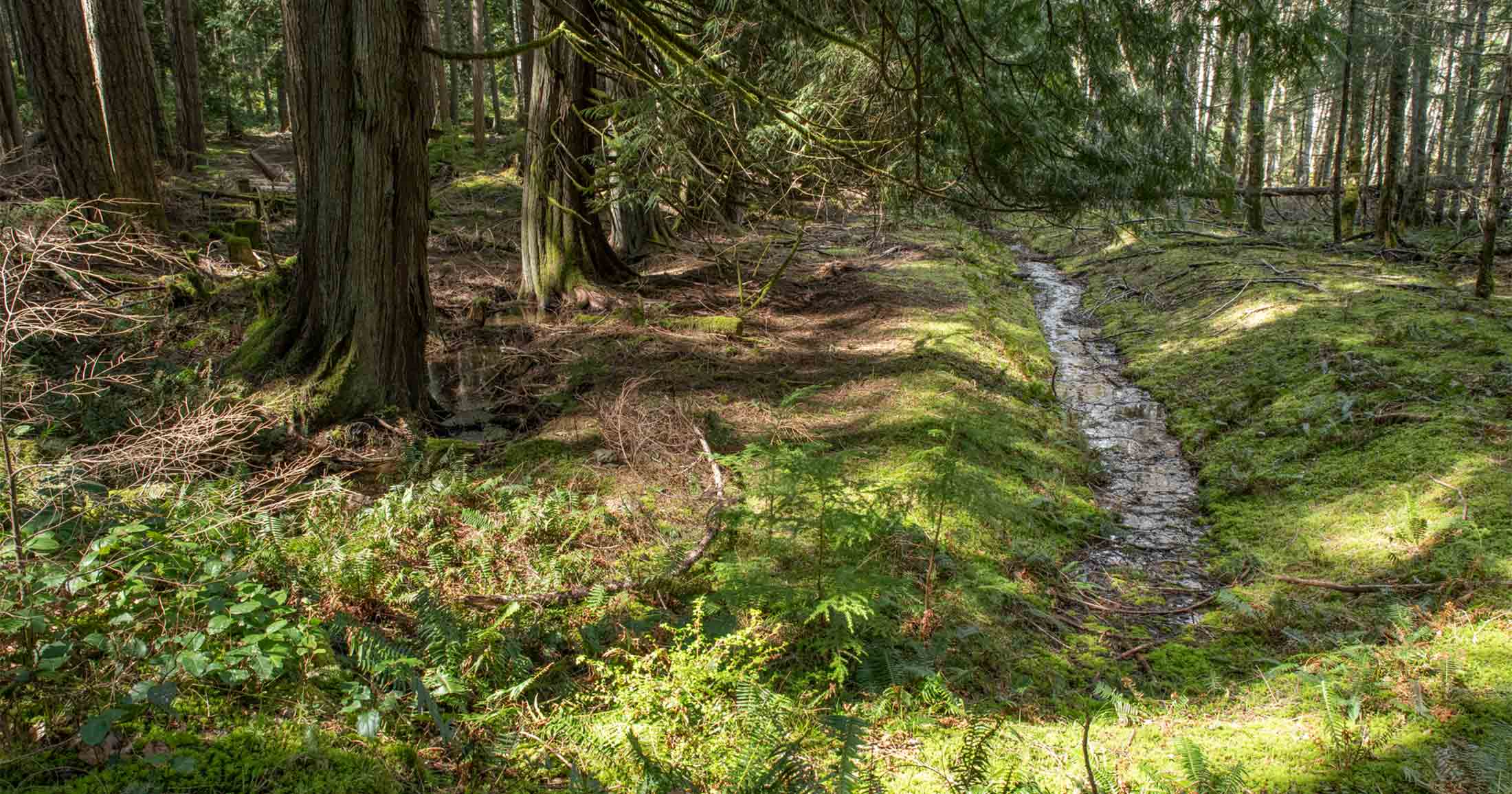
Maxwell Creek Watershed Project Field Files Part 1: Project Impetus
Registered environmental charity, Transition Salt Spring has partnered with experts and organizations from across the Coastal Douglas-fir biogeoclimatic zone, including Raincoast Conservation Foundation, to provide a model for on-the-ground, multidisciplinary, multisectoral, and collaborative climate action. We interviewed Ruth Waldick from Transition Salt Spring to learn more about Maxwell Creek Watershed project. What is the Maxwell…

KELÁ_EKE Kingfisher Forest matching campaign update
Altogether, we have raised a total of $571,222.69 since we announced our intention to purchase and protect KELÁ_EKE Kingfisher Forest.
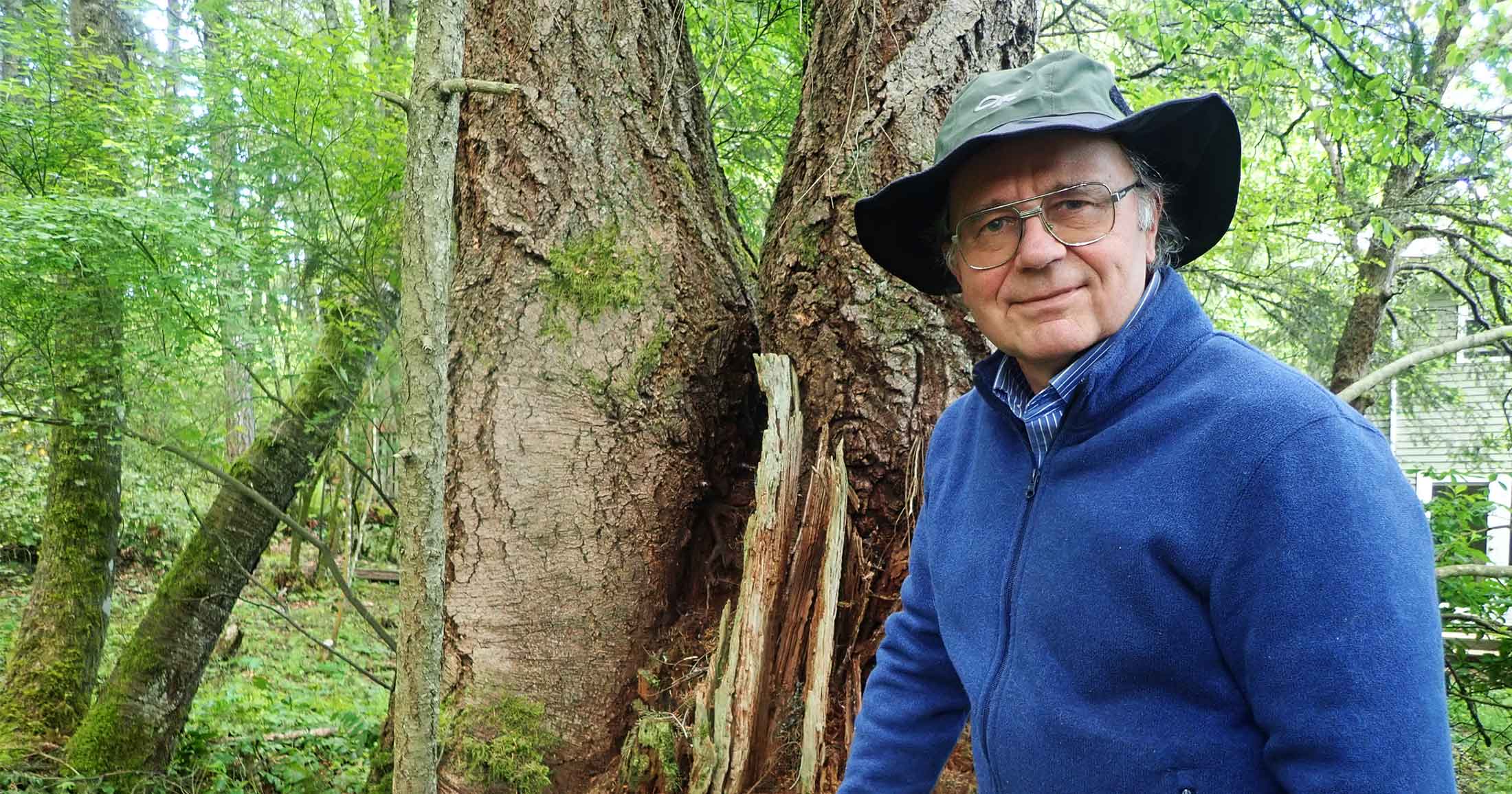
The story of Coastal Douglas-fir forests: An ancient legacy, a critical future
Eleven and half thousand years ago is a mighty long time for a major forest ecosystem. Yet, that is how long Coastal Douglas-fir forests have existed on Canada’s west coast, longer than most other forested biogeoclimatic zones in British Columbia!