

Shifting salmon policy
Photo by Alex Harris.
Ecosystems are complex. They are communities of living organisms connected through interacting processes and features on the land, in water, and between the two. Yet BC’s antiquated environmental policy doesn’t reflect this. Colonial society governs ecosystems by siloing them into distinct ministries and resources instead of reflecting the interconnected nature of habitats that make them function in the living world. This “siloed decision making”is the root cause of many of the ecological challenges we face today.
Our policy goals
1. Manage fisheries for ecosystems
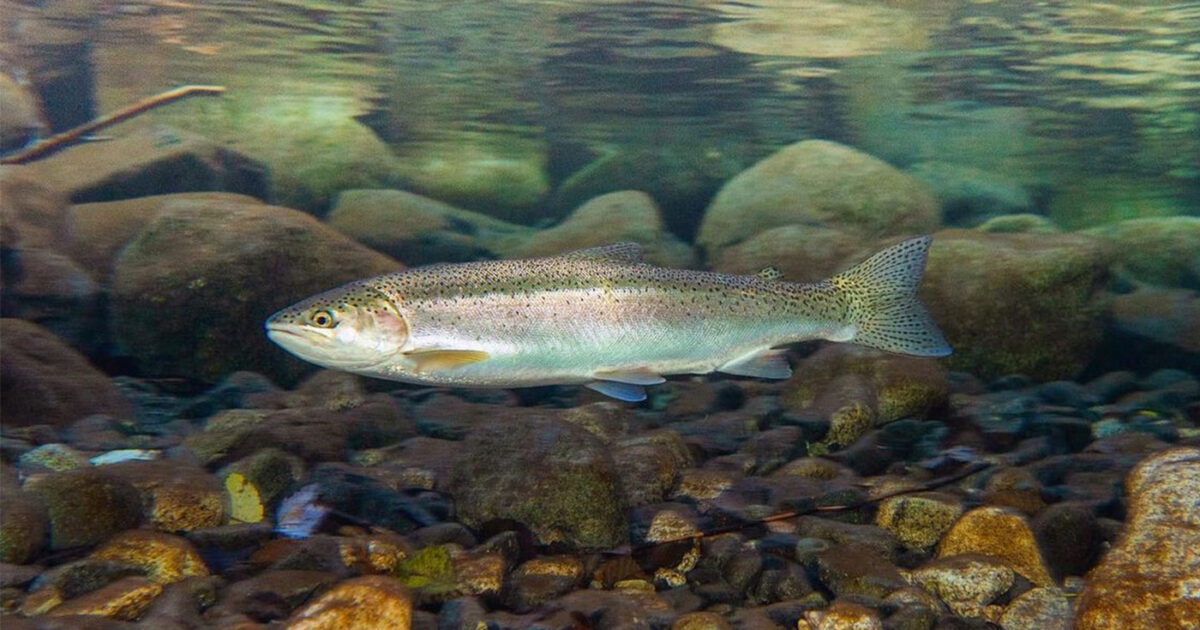
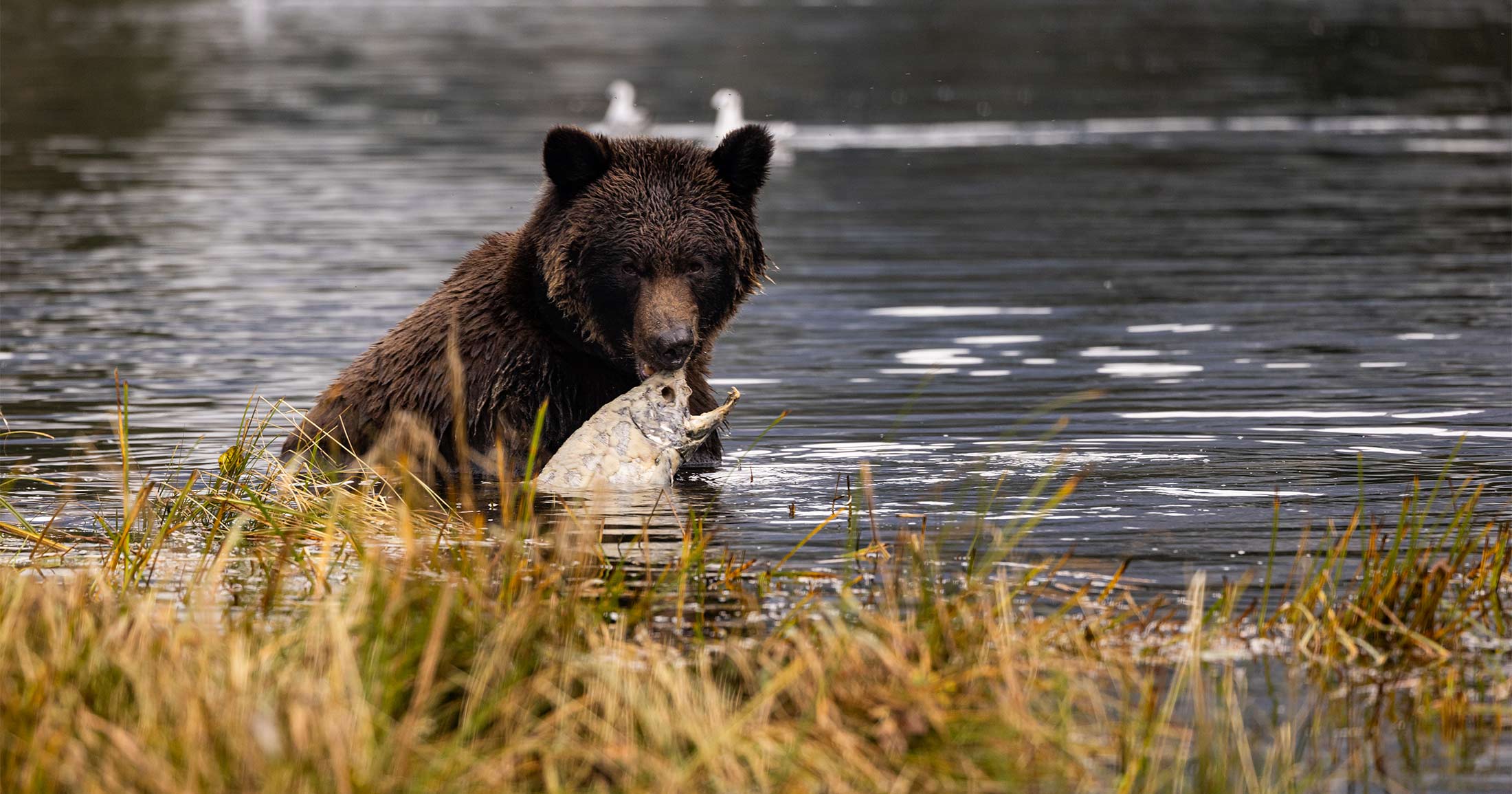
- Set salmon harvest at levels that optimize the benefits of spawning salmon to watersheds and wildlife.
- Shift away from historic management paradigms that minimize the number of spawning salmon reaching rivers and maximize harvest (called Maximum Sustainable Yield). Move towards fisheries management that meets salmon spawning targets that are ecologically based, not harvest-based.
- Shift harvest toward selective terminal fisheries (conducted in or near the rivers of origin) that respect the ‘place-based’ nature of salmon, and optimize the benefits to ecosystems, Indigenous cultures, and local communities.
2. Implement ecological-based governance
- Conservation planning and a commitment to sustainability that looks 7 generations ahead.
- A “whole-of-government” approach that implements shared solutions by Indigenous, federal, provincial, and municipal governments to achieve salmon recovery from inland watersheds and rivers, to the open ocean.
- Governance that honours Aboriginal rights and title, inherent Indigenous jurisdiction and law, and the United Nations Declaration on the Rights of Indigenous Peoples (UNDRIP) and the Declaration on the Rights of Indigenous Peoples Act (DRIPA).
- Sustainable funding strategies for watershed-scale restoration and planning.
3. Advance land-use policies that prioritize the health of wild salmon and biodiversity
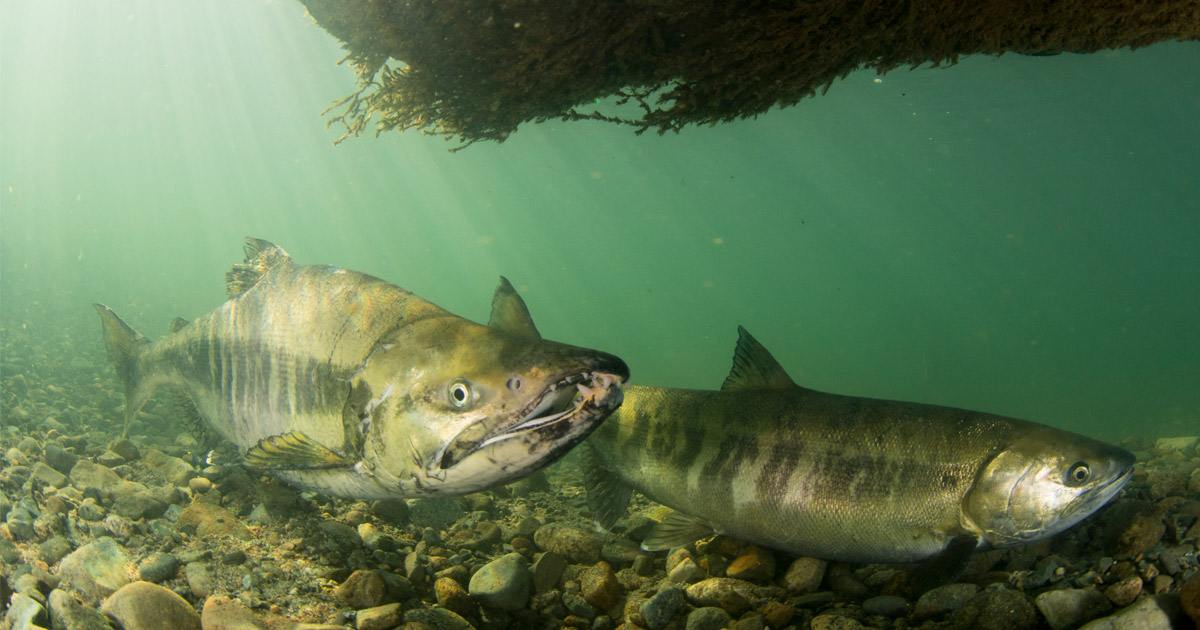
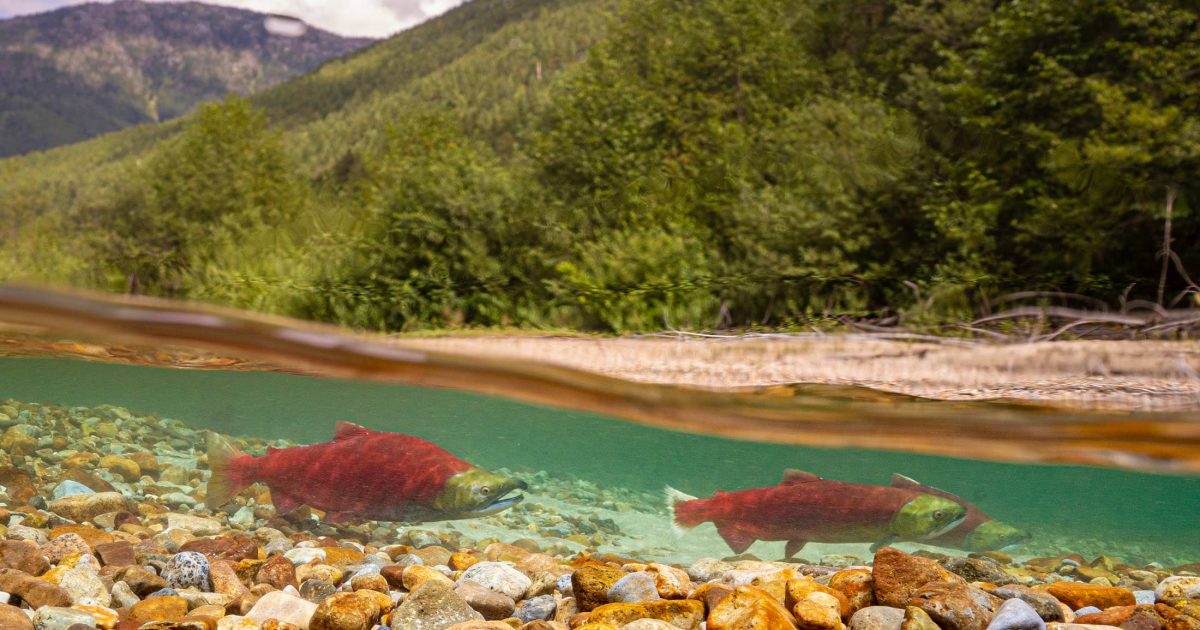
- Zoning that bolsters functioning watersheds and riparian habitat (i.e.protect natural features, limit impervious surfaces, reduce urban sprawl, adopt nature-based solutions).
- Forestry policy that prioritizes salmon health by restricting clear-cutting in salmon watersheds, and incentivizes a sustainable, second or third-growth forest economy.
- Climate adaptation policy that incentivizes nature-based solutions including natural shorelines, intact riparian areas, unrestricted floodplains, managed retreat, and use of rain-gardens in urban areas.
Our recent reports
Recent articles

Bute Inlet Hydroelectric Project Open House
A massive hydroelectric development is proposed for Bute Inlet involving 17 river diversions and a peak generating capacity of 1,027 MW – more than the proposed Site C project. The public has not been properly consulted. Come to the Open House to find out more. Victoria Wednesday February 11, University of Victoria Elliott Building Room…
Raincoast scientists contribute to paper on impacts of commercial harvesting
Raincoast scientists Dr. Chris Darimont and Dr. Paul Paquet are authors on an important paper published this week in the Proceedings of the National Academy of Sciences.’a0 The paper examines the impacts of commercial harvesting on plants and animals.
Old growth clearcuts are pushing out deer
Victoria News January 14, 2009 by Chris Genovail Re: “Petition Calls For End To Old Growth Logging On Vancouver Island” The Ministry of Environment has acknowledged that the Island’s cougar and wolf populations have been in decline as a result of a drop in the deer population, which is linked to the clearcut logging of…
Campbell’s contradictions on fossil fuel development
FOCUS Magazine January 2009 by Chris Genovali In Katherine Gordon’s “The Inconvenient Truth About Her Axe and His Tax,” Premier Gordon Campbell’s facile explanation regarding the stark disconnect between his implementation of the carbon tax and his continued support for intensive fossil fuel development escapes indepth scrutiny.
Pipeline Peril
Calgary Herald January 4, 2009 by Chris Genovali Re: “Syncrude duck deaths cap oilpatch’s ‘dirty’ year,” Dec. 29. The oilsands could impact avian life beyond the waterfowl migrating through and nesting in Alberta’s boreal forest.
Maple Leaf Adventures
Maple Leaf Adventures has supported Raincoast from the beginning, for its important research, education and advocacy on the Great Bear Rainforest. To learn about touring the Great Bear Rainforest – including Raincoast’s field station – you can read about Maple Leaf’s Great Bear Rainforest adventure cruises.