

Shifting salmon policy
Photo by Alex Harris.
Ecosystems are complex. They are communities of living organisms connected through interacting processes and features on the land, in water, and between the two. Yet BC’s antiquated environmental policy doesn’t reflect this. Colonial society governs ecosystems by siloing them into distinct ministries and resources instead of reflecting the interconnected nature of habitats that make them function in the living world. This “siloed decision making”is the root cause of many of the ecological challenges we face today.
Our policy goals
1. Manage fisheries for ecosystems
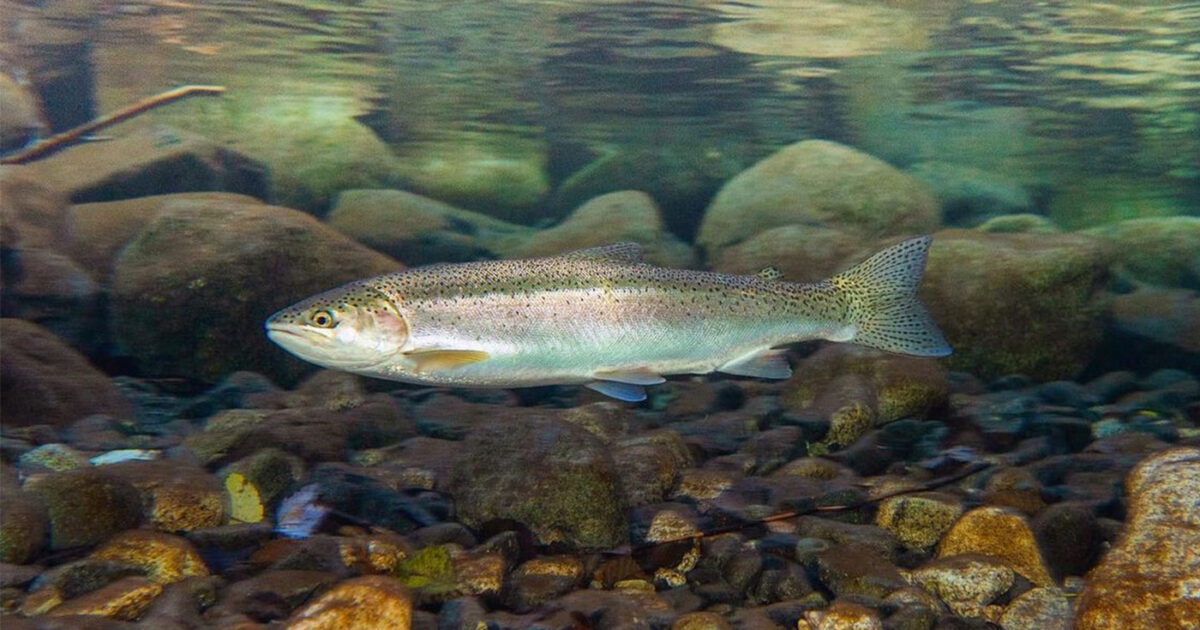
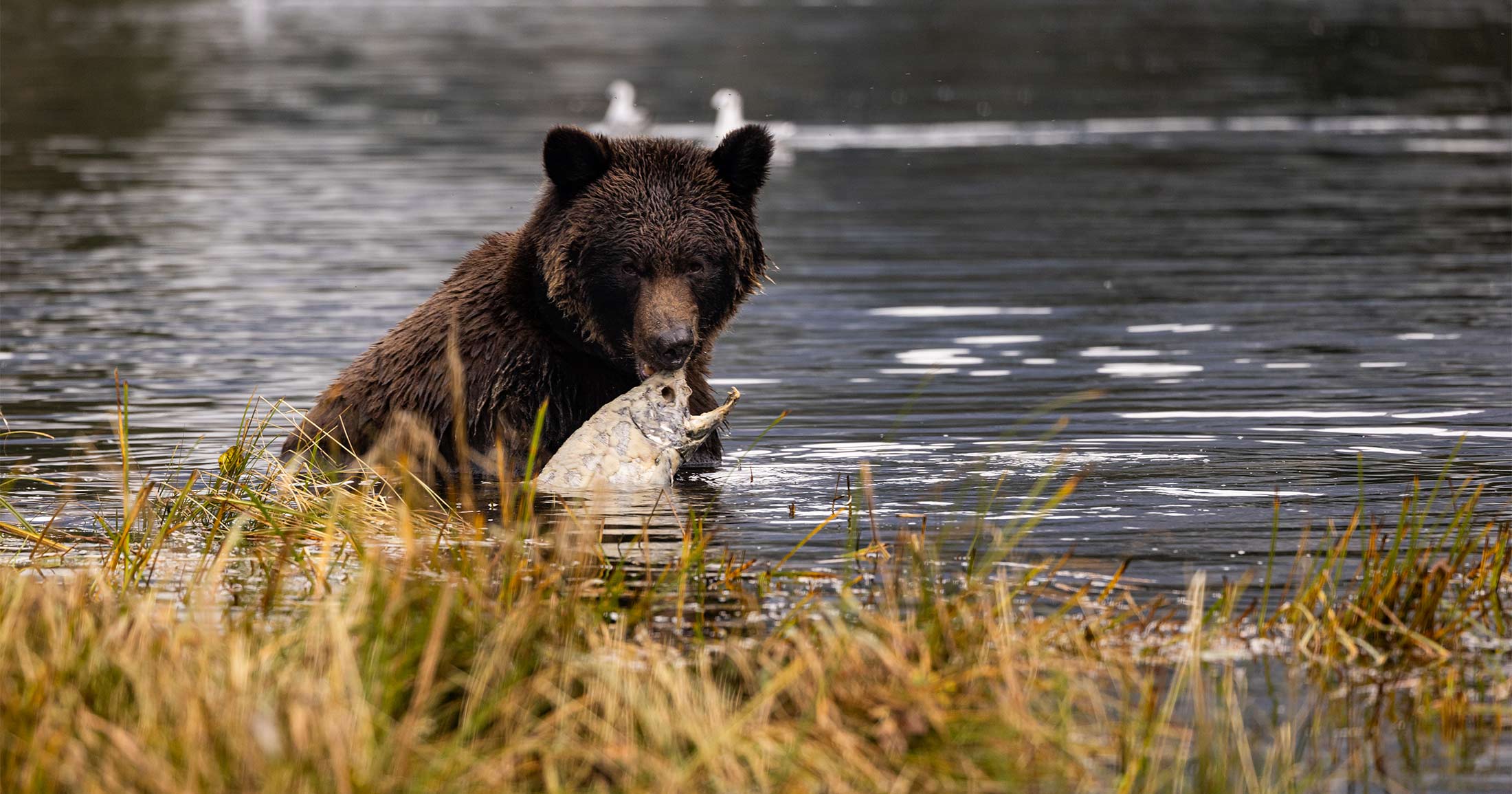
- Set salmon harvest at levels that optimize the benefits of spawning salmon to watersheds and wildlife.
- Shift away from historic management paradigms that minimize the number of spawning salmon reaching rivers and maximize harvest (called Maximum Sustainable Yield). Move towards fisheries management that meets salmon spawning targets that are ecologically based, not harvest-based.
- Shift harvest toward selective terminal fisheries (conducted in or near the rivers of origin) that respect the ‘place-based’ nature of salmon, and optimize the benefits to ecosystems, Indigenous cultures, and local communities.
2. Implement ecological-based governance
- Conservation planning and a commitment to sustainability that looks 7 generations ahead.
- A “whole-of-government” approach that implements shared solutions by Indigenous, federal, provincial, and municipal governments to achieve salmon recovery from inland watersheds and rivers, to the open ocean.
- Governance that honours Aboriginal rights and title, inherent Indigenous jurisdiction and law, and the United Nations Declaration on the Rights of Indigenous Peoples (UNDRIP) and the Declaration on the Rights of Indigenous Peoples Act (DRIPA).
- Sustainable funding strategies for watershed-scale restoration and planning.
3. Advance land-use policies that prioritize the health of wild salmon and biodiversity
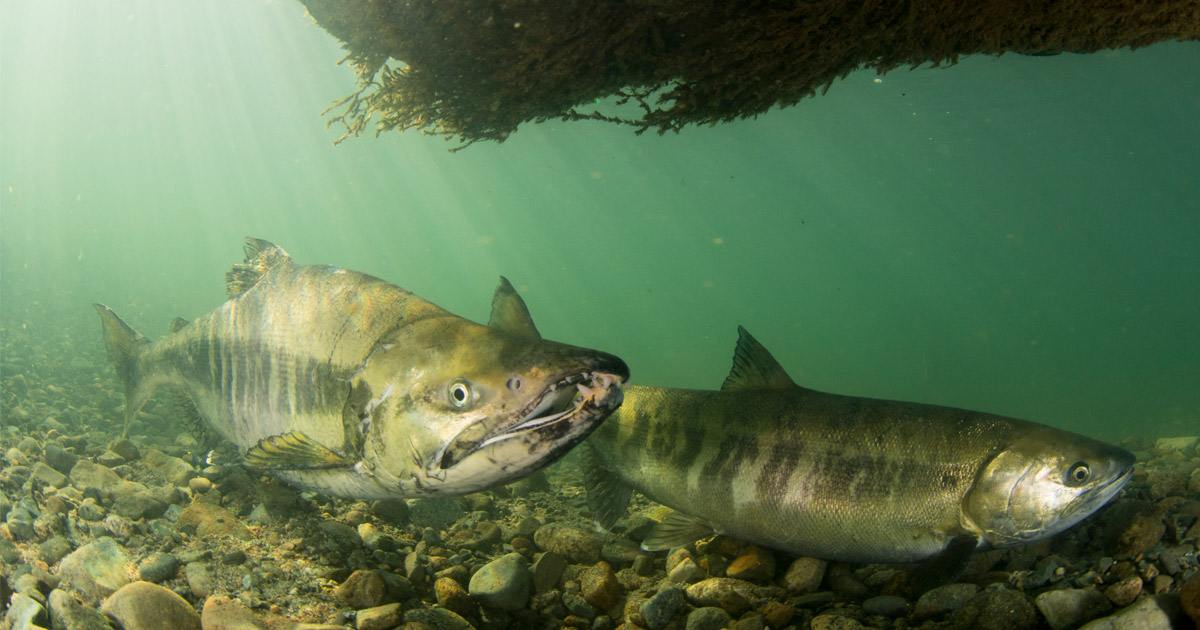
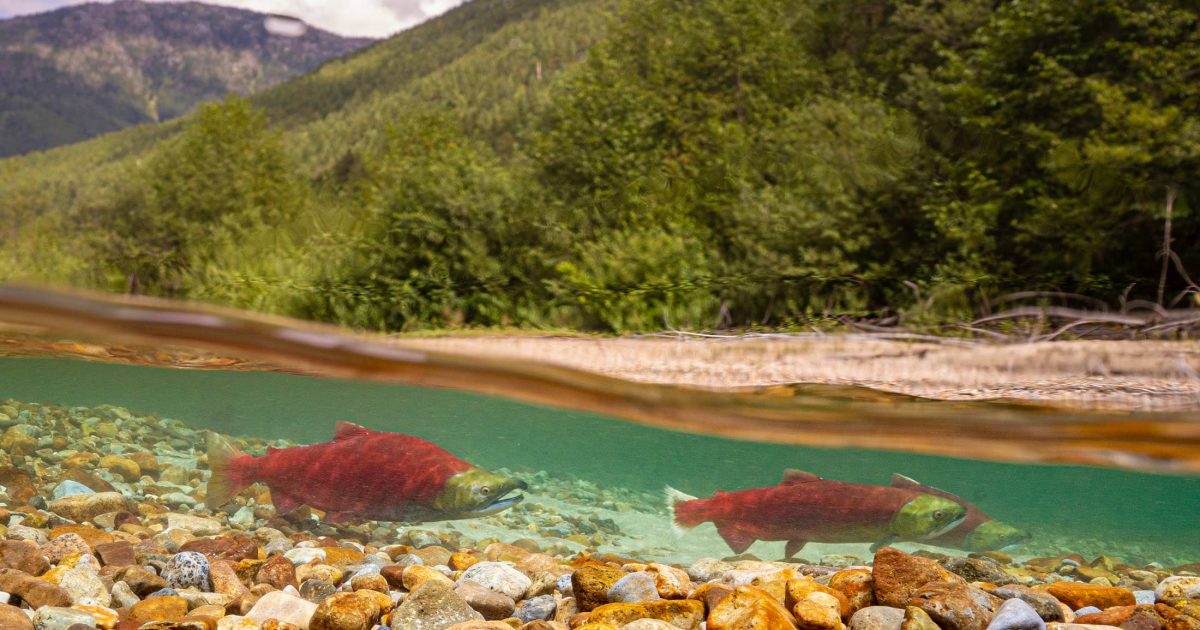
- Zoning that bolsters functioning watersheds and riparian habitat (i.e.protect natural features, limit impervious surfaces, reduce urban sprawl, adopt nature-based solutions).
- Forestry policy that prioritizes salmon health by restricting clear-cutting in salmon watersheds, and incentivizes a sustainable, second or third-growth forest economy.
- Climate adaptation policy that incentivizes nature-based solutions including natural shorelines, intact riparian areas, unrestricted floodplains, managed retreat, and use of rain-gardens in urban areas.
Our recent reports
Recent articles

Unique coastal wolves merit protection, study concludes
Species has evolved to take advantage of marine environment March 11, 2009 Judith Lavoie, Canwest News Service Vancouver Sun, Vancouver Province, Edmonton Journal, Times Colonist They have red-tinted hair instead of grey, eat fish along with meat and love to island-hop.
Order protects habitat of West Coast whales
Globe and Mail February 26, 2009 Mark Hume VANCOUVER — Nine environmental groups that were taking the federal government to court for allegedly failing to protect endangered killer whale populations off the West Coast
Grizzlies’ fate decided by anecdotes?
The Edmonton Journal February 26, 2009 by Chris Genovali Re: “Anecdotes about grizzlies not on par with science, groups say; Minister Ted Morton to weigh both sides in decision on hunt,” The Journal, Feb. 22.
Inaccuracies used to criticize editorial
February 20, 2009 Courier Islander Mike Price and Craig Orr In response to Kelly Osborn’s recent critique of Neil Cameron’s original editorial (Courier- Islander, Feb. 6, Revealing Report), several selectively reported and simply inaccurate statements deserve comment.
Catch them if you can
Salmon runs on Canada’s west coast are declining year by year, putting other wildlife such as grizzly bears at risk James Fair BBC Wildlife February 2009 It may have been voted one of the world’s top 10 wildlife spectacles by BBC Wildlife experts (January), but the sight of the grizzly bears gathering to feed on…
Quirks and Quarks: Unnatural Selection
CBC’s Bob McDonald speaks with Chris Darimont about natural selection: It’s perhaps not surprising that humans are having an impact on the evolution of other animals on the planet. What is surprising, according to Dr. Chris Darimont, an NSERC postdoctoral fellow in the Department of Environmental Studies at the University of California, Santa Cruz, is the…