
Shifting salmon policy
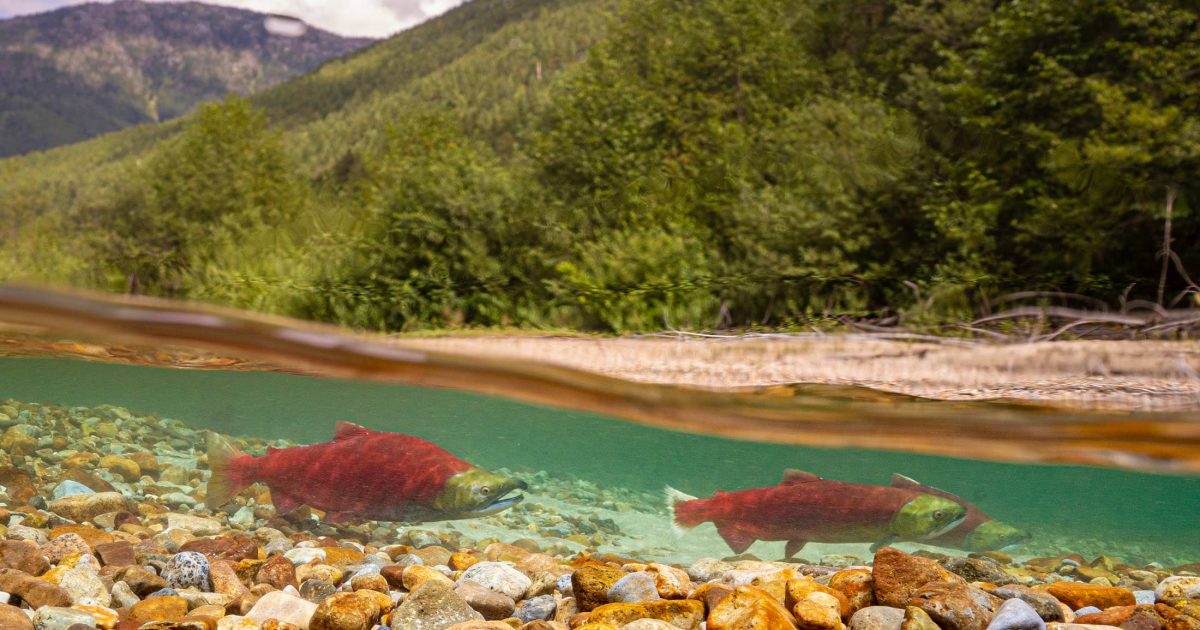
Photo by Alex Harris.
Ecosystems are complex. They are communities of living organisms connected through interacting processes and features on the land, in water, and between the two. Yet BC’s antiquated environmental policy doesn’t reflect this. Colonial society governs ecosystems by siloing them into distinct ministries and resources instead of reflecting the interconnected nature of habitats that make them function in the living world. This “siloed decision making”is the root cause of many of the ecological challenges we face today.
Our policy goals
1. Manage fisheries for ecosystems
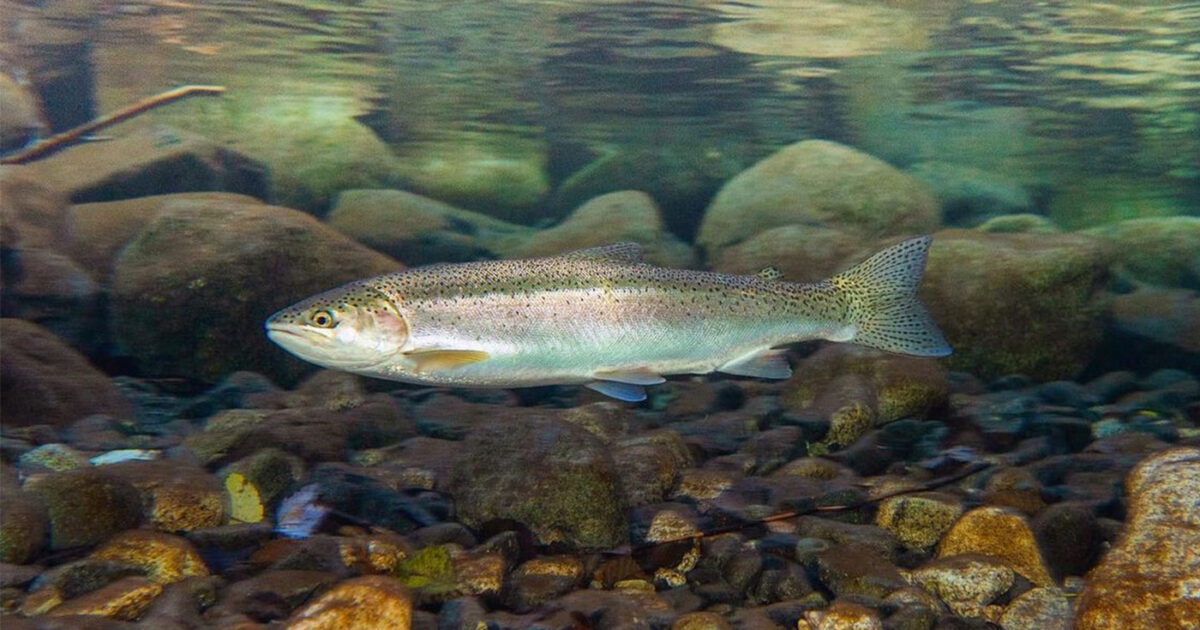
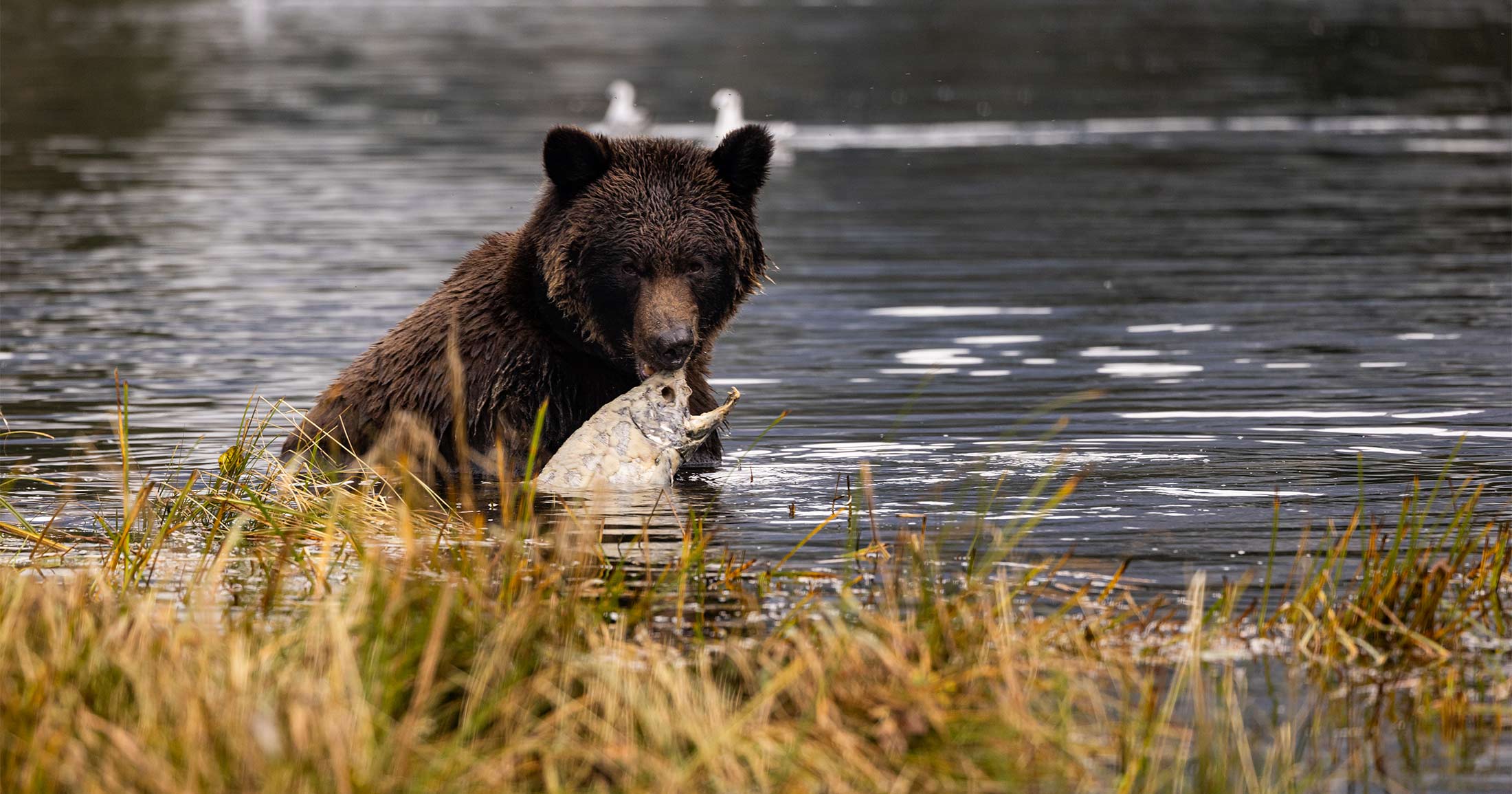
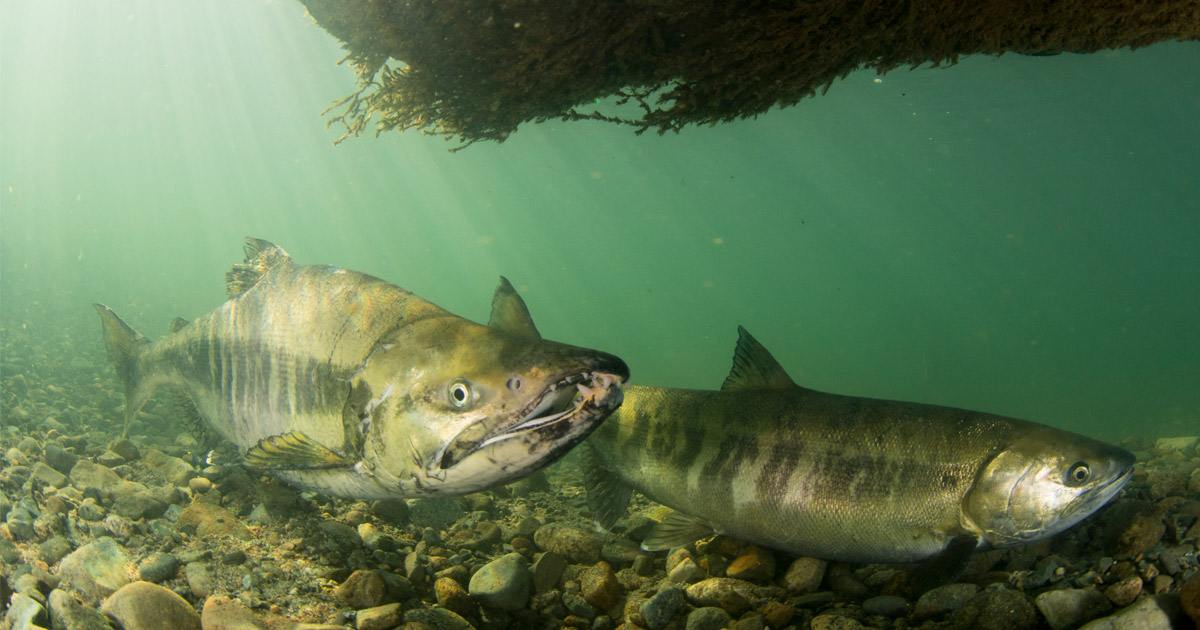
- Set salmon harvest at levels that optimize the benefits of spawning salmon to watersheds and wildlife.
- Shift away from historic management paradigms that minimize the number of spawning salmon reaching rivers and maximize harvest (called Maximum Sustainable Yield). Move towards fisheries management that meets salmon spawning targets that are ecologically based, not harvest-based.
- Shift harvest toward selective terminal fisheries (conducted in or near the rivers of origin) that respect the ‘place-based’ nature of salmon, and optimize the benefits to ecosystems, Indigenous cultures, and local communities.
2. Implement ecological-based governance
- Conservation planning and a commitment to sustainability that looks 7 generations ahead.
- A “whole-of-government” approach that implements shared solutions by Indigenous, federal, provincial, and municipal governments to achieve salmon recovery from inland watersheds and rivers, to the open ocean.
- Governance that honours Aboriginal rights and title, inherent Indigenous jurisdiction and law, and the United Nations Declaration on the Rights of Indigenous Peoples (UNDRIP) and the Declaration on the Rights of Indigenous Peoples Act (DRIPA).
- Sustainable funding strategies for watershed-scale restoration and planning.
3. Advance land-use policies that prioritize the health of wild salmon and biodiversity
- Zoning that bolsters functioning watersheds and riparian habitat (i.e.protect natural features, limit impervious surfaces, reduce urban sprawl, adopt nature-based solutions).
- Forestry policy that prioritizes salmon health by restricting clear-cutting in salmon watersheds, and incentivizes a sustainable, second or third-growth forest economy.
- Climate adaptation policy that incentivizes nature-based solutions including natural shorelines, intact riparian areas, unrestricted floodplains, managed retreat, and use of rain-gardens in urban areas.
Our recent reports
Recent articles

Is push to export oil to China worth risk of catastrophic spill?
Edmonton Journal, August 10, 2009 By Chris Genovali, A recent Canwest News report described how “China’s energy buying spree is bypassing Canada’s oilpatch.” Depending on one’s viewpoint, this could besomething to lament or something to be relieved about.

Of whales and plastic
I had spent the entire day hiking solo around Trutch Island on B.C.’s central coast looking for the feces of canis lupus for Raincoast Conservation Foundation’s wolf research project. Trutch doesn’t have a lot of distinguishing features and the landscape became somewhat uniform in the stupefaction caused by 10 hours of bush whacking.
Way to go Thrifty Foods
Plastics impact the health of our oceans and wildlife. Plastic bag litter has a lethal effect on countless numbers of seabirds, turtles, whales and seals annually. Read our article, “Of Whales and Plastic.” On behalf of our marine ecosystems and future generations, we commend Thrifty Foods for their leadership in eliminating plastic bags from distribution.
Climate skeptics fiddle with truth while planet burns
Vancouver Sun BY CHRIS GENOVALI AND PAUL PAQUET, SPECIAL TO THE SUN, AUGUST 5, 2009 We’re all entitled to our own opinions, but not our own set of facts.
Howling and yowling
MONDAY MAGAZINE -letters July 29, 2009 Howling and yowling Re: “Big Cats on the Prowl,” July 2-8 I am compelled to respond to some of the myriad inaccuracies in Willi Boepple’s letter about cougars, Sitka black-tailed deer and my article on both species which recently appeared in Monday.
Legal Protection needed for Killer whales
CFAX Radio’s Murray Langdon speaks with Raincoast’s marine mammal scientist, Kathy Heise about the lawsuit …