

Shifting salmon policy
Photo by Alex Harris.
Ecosystems are complex. They are communities of living organisms connected through interacting processes and features on the land, in water, and between the two. Yet BC’s antiquated environmental policy doesn’t reflect this. Colonial society governs ecosystems by siloing them into distinct ministries and resources instead of reflecting the interconnected nature of habitats that make them function in the living world. This “siloed decision making”is the root cause of many of the ecological challenges we face today.
Our policy goals
1. Manage fisheries for ecosystems
- Set salmon harvest at levels that optimize the benefits of spawning salmon to watersheds and wildlife.
- Shift away from historic management paradigms that minimize the number of spawning salmon reaching rivers and maximize harvest (called Maximum Sustainable Yield). Move towards fisheries management that meets salmon spawning targets that are ecologically based, not harvest-based.
- Shift harvest toward selective terminal fisheries (conducted in or near the rivers of origin) that respect the ‘place-based’ nature of salmon, and optimize the benefits to ecosystems, Indigenous cultures, and local communities.
2. Implement ecological-based governance
- Conservation planning and a commitment to sustainability that looks 7 generations ahead.
- A “whole-of-government” approach that implements shared solutions by Indigenous, federal, provincial, and municipal governments to achieve salmon recovery from inland watersheds and rivers, to the open ocean.
- Governance that honours Aboriginal rights and title, inherent Indigenous jurisdiction and law, and the United Nations Declaration on the Rights of Indigenous Peoples (UNDRIP) and the Declaration on the Rights of Indigenous Peoples Act (DRIPA).
- Sustainable funding strategies for watershed-scale restoration and planning.
3. Advance land-use policies that prioritize the health of wild salmon and biodiversity
- Zoning that bolsters functioning watersheds and riparian habitat (i.e.protect natural features, limit impervious surfaces, reduce urban sprawl, adopt nature-based solutions).
- Forestry policy that prioritizes salmon health by restricting clear-cutting in salmon watersheds, and incentivizes a sustainable, second or third-growth forest economy.
- Climate adaptation policy that incentivizes nature-based solutions including natural shorelines, intact riparian areas, unrestricted floodplains, managed retreat, and use of rain-gardens in urban areas.
Our recent reports
Recent articles

Take Action!! ‘Control kills’ of grizzlies out of control.
Bella Coola grizzly bears need your voice. Send a letter to Environment Minister Barry Penner. A disturbing number of grizzly bears are being shot as ‘control kills’ in BC’s Bella Coola valley. Most of these kills are as a result of humans who don’t secure bear attractants. Despite this, virtually no enforcement action is being…
The Gift of Conservation
Three pillars form the underpinnings of Raincoast Conservation Foundation’s mission: informed advocacy, scientific research, and environmental ethics. Informed advocacy drives all Raincoast’s conservation efforts; it’s a distinctive approach that has earned us a unique niche in the environmental movement. Our advocacy is informed by rigorous scientific research and guided by environmental ethics. This allows us…
Oil sands, tankers and climate. Raincoast speaks out
Climate change is real and demands a concerted effort Vancouver Sun Climategate’s a convenient sideshow to the real issue Victoria News Climategate a convenient sideshow Ottawa Citizen Climategate is first in a new wave of attacks The Ecologist Hopenhagen or Dopenhagen? Common Dreams, Georgia Strait, Climate change policy in the dark Toronto Star Now the…

The black and white world of spirit bears
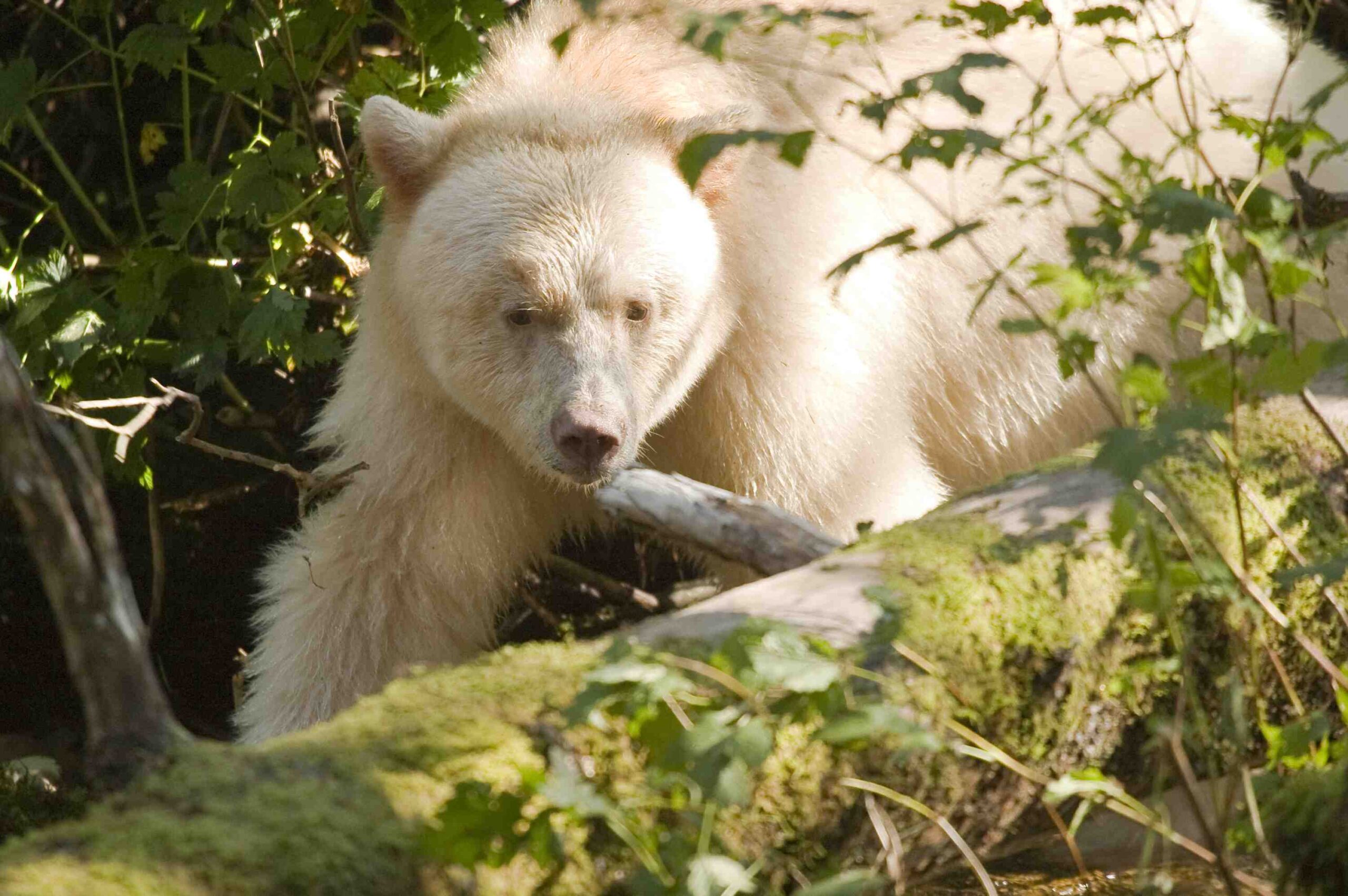
The spirit bear’s white fur chest was covered in bright red blood, as if he’d been spattered with paint. The blood red dye job was from the all the salmon he had been eating.With rapt attention, we had been watching him catch fish at river’s edge and then bring them back into the forest to…
Take the lead: On climate action
By Chris Genovali Calgary Herald, Nov 30, 2009 Re: “Climate plan will take 40 years: Prentice,” Nov. 21. Climate scientist James Hansen of NASA states we have already passed the threshold for “maximum permissible concentration of carbon dioxide in the atmosphere.”
Grizzly Details: Salmon Collapse Could Be Bad News for Bears
Scientific AmericanBy Anne Casselman Scientists are collecting hairs from live bears to prevent population declines as a result of declines in a principal food source: salmon. For most of May, Chris Darimont, an environmental scientist at the University of California, Santa Cruz, poured liters of fermented cattle blood mixed with pureed rotten fish guts on…