

Shifting salmon policy
Photo by Alex Harris.
Ecosystems are complex. They are communities of living organisms connected through interacting processes and features on the land, in water, and between the two. Yet BC’s antiquated environmental policy doesn’t reflect this. Colonial society governs ecosystems by siloing them into distinct ministries and resources instead of reflecting the interconnected nature of habitats that make them function in the living world. This “siloed decision making”is the root cause of many of the ecological challenges we face today.
Our policy goals
1. Manage fisheries for ecosystems
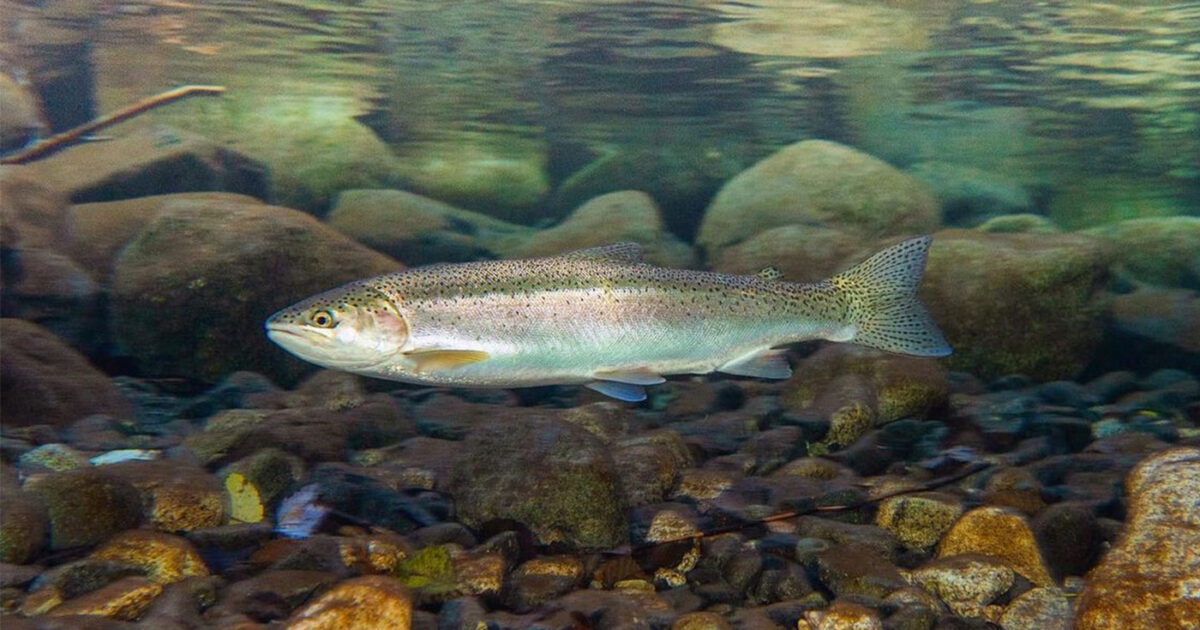
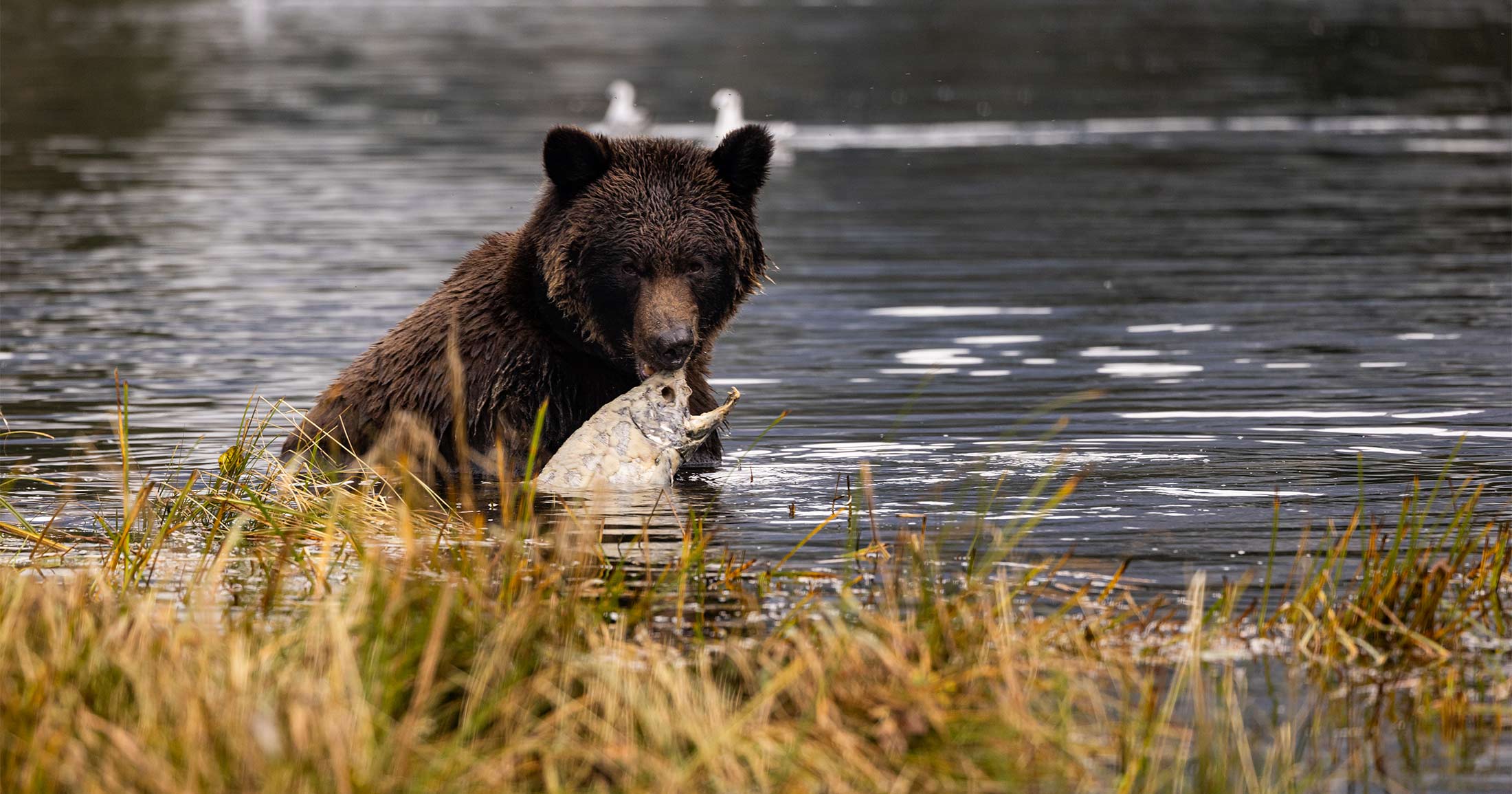
- Set salmon harvest at levels that optimize the benefits of spawning salmon to watersheds and wildlife.
- Shift away from historic management paradigms that minimize the number of spawning salmon reaching rivers and maximize harvest (called Maximum Sustainable Yield). Move towards fisheries management that meets salmon spawning targets that are ecologically based, not harvest-based.
- Shift harvest toward selective terminal fisheries (conducted in or near the rivers of origin) that respect the ‘place-based’ nature of salmon, and optimize the benefits to ecosystems, Indigenous cultures, and local communities.
2. Implement ecological-based governance
- Conservation planning and a commitment to sustainability that looks 7 generations ahead.
- A “whole-of-government” approach that implements shared solutions by Indigenous, federal, provincial, and municipal governments to achieve salmon recovery from inland watersheds and rivers, to the open ocean.
- Governance that honours Aboriginal rights and title, inherent Indigenous jurisdiction and law, and the United Nations Declaration on the Rights of Indigenous Peoples (UNDRIP) and the Declaration on the Rights of Indigenous Peoples Act (DRIPA).
- Sustainable funding strategies for watershed-scale restoration and planning.
3. Advance land-use policies that prioritize the health of wild salmon and biodiversity
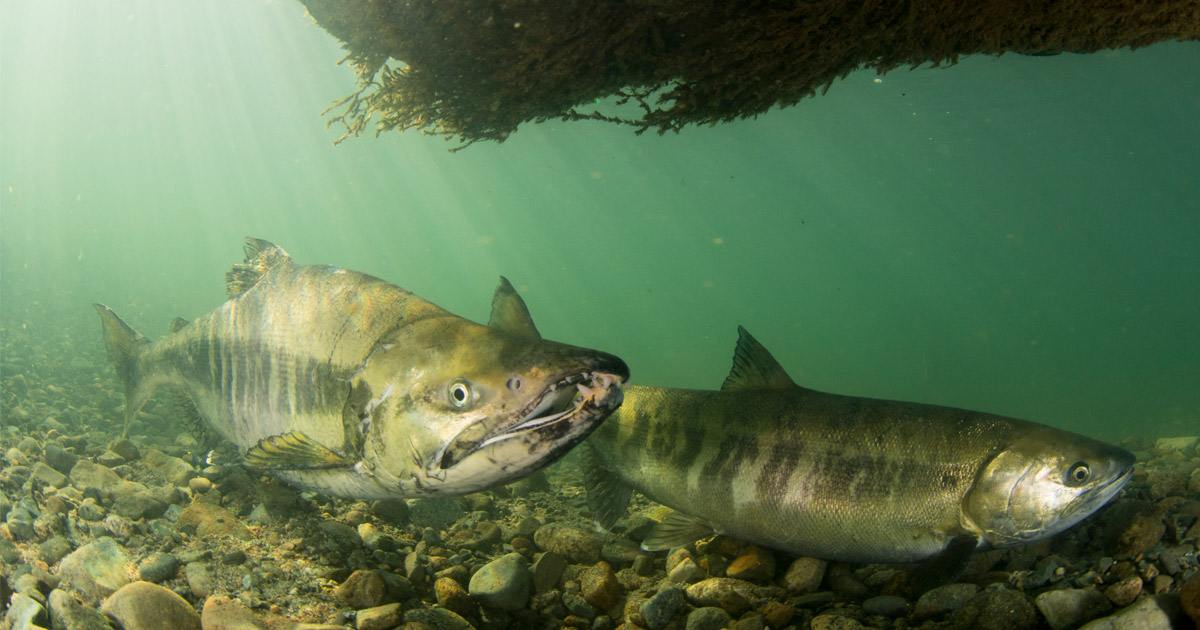
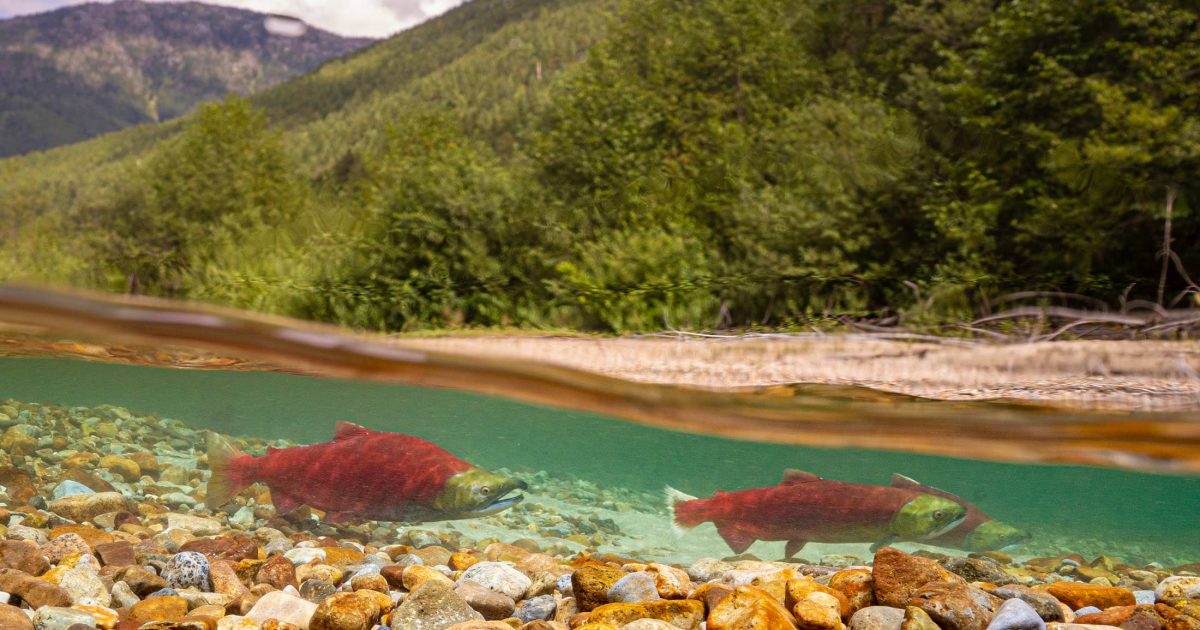
- Zoning that bolsters functioning watersheds and riparian habitat (i.e.protect natural features, limit impervious surfaces, reduce urban sprawl, adopt nature-based solutions).
- Forestry policy that prioritizes salmon health by restricting clear-cutting in salmon watersheds, and incentivizes a sustainable, second or third-growth forest economy.
- Climate adaptation policy that incentivizes nature-based solutions including natural shorelines, intact riparian areas, unrestricted floodplains, managed retreat, and use of rain-gardens in urban areas.
Our recent reports
Recent articles

Notes from the Blood Shed
By Ian Jansma, Research Assistant Denny Island Field Station When I signed up as a volunteer on Raincoast’s salmon-carnivore study, I didn’t realize I’d be spending my days up to my armpits in blood. In the moist, pungent darkness of the ‘Blood Shed’, I mix fish oil and cow’s blood into a frothy cocktail with…
Survival of the smallest
Humans have evolutionary impact on animals; our prey is getting smaller, breeding earlier MacLeans Magazine, February, 2010 by Rachel Mendleson As a general rule, it’s tough to get the public engaged in science. Which is why Victoria-based environmental researcher Chris Darimont says he’s “thrilled” about the attention his findings on the evolutionary impacts of hunting…
Royal Victoria Marathon 2010
Join ‘the Salmon Run’ this fall. From near and far Raincoast needs runners for the 2010 Royal Victoria Marathon. October is a beautiful time of year to run the waterfront streets of Victoria in this qualifier for the Boston marathon. And… what a great reason to run! Raincoast is an official charity of RVM’s charity…
Let’s examine the morality of the trophy hunt
A version of this article first ran in the Vancouver Province, January 22, 2010. The B.C. grizzly bear hunt has been a source of unrelenting controversy. Both sides are stuck in an expert-driven argument in which both camps claim science supports their positions. It is time that the debate was conducted within the context of…
Bella Coola grizzly bears need your voice.
Send a letter to environment Minister Barry Penner. A disturbing number of grizzly bears are being shot as ‘control kills’ in BC’s Bella Coola valley. Most of these kills are as a result of humans who don’t secure bear attractants. Despite this, virtually no enforcement action is being taken against individuals responsible for the needless…
