

Shifting salmon policy
Photo by Alex Harris.
Ecosystems are complex. They are communities of living organisms connected through interacting processes and features on the land, in water, and between the two. Yet BC’s antiquated environmental policy doesn’t reflect this. Colonial society governs ecosystems by siloing them into distinct ministries and resources instead of reflecting the interconnected nature of habitats that make them function in the living world. This “siloed decision making”is the root cause of many of the ecological challenges we face today.


Our policy goals
1. Manage fisheries for ecosystems
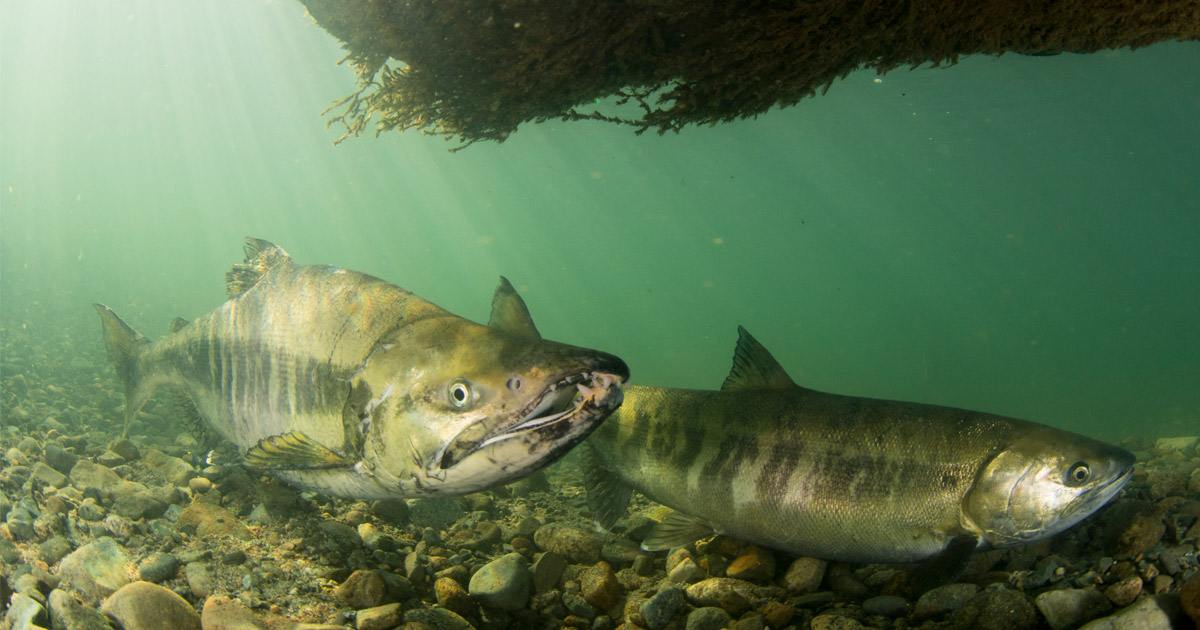
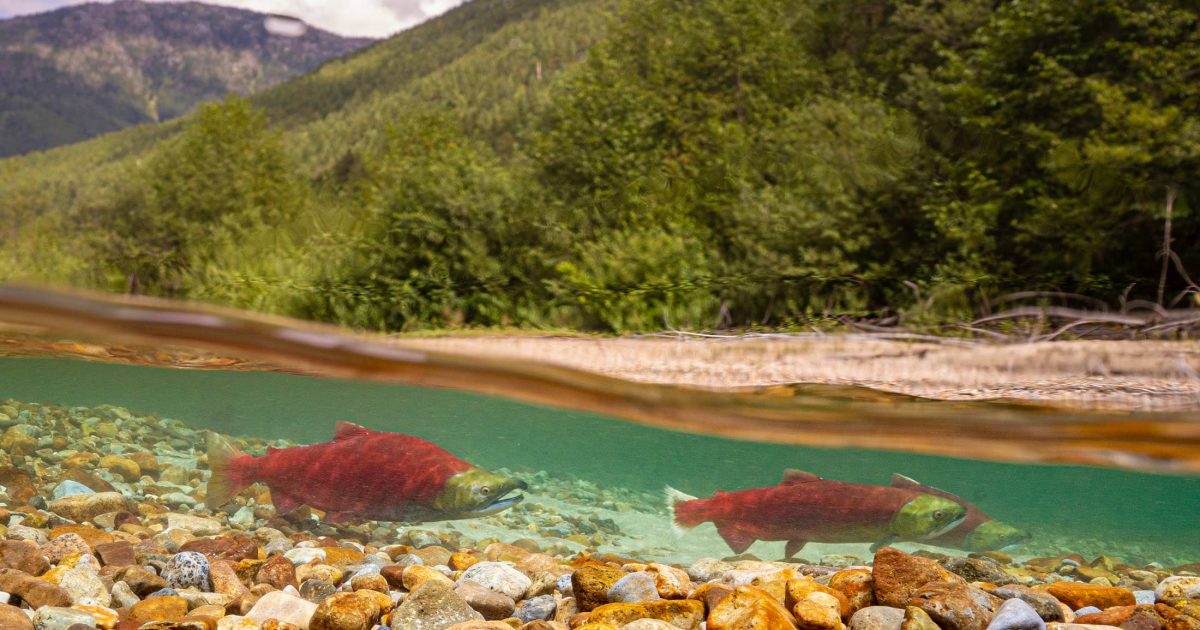
- Set salmon harvest at levels that optimize the benefits of spawning salmon to watersheds and wildlife.
- Shift away from historic management paradigms that minimize the number of spawning salmon reaching rivers and maximize harvest (called Maximum Sustainable Yield). Move towards fisheries management that meets salmon spawning targets that are ecologically based, not harvest-based.
- Shift harvest toward selective terminal fisheries (conducted in or near the rivers of origin) that respect the ‘place-based’ nature of salmon, and optimize the benefits to ecosystems, Indigenous cultures, and local communities.
2. Implement ecological-based governance
- Conservation planning and a commitment to sustainability that looks 7 generations ahead.
- A “whole-of-government” approach that implements shared solutions by Indigenous, federal, provincial, and municipal governments to achieve salmon recovery from inland watersheds and rivers, to the open ocean.
- Governance that honours Aboriginal rights and title, inherent Indigenous jurisdiction and law, and the United Nations Declaration on the Rights of Indigenous Peoples (UNDRIP) and the Declaration on the Rights of Indigenous Peoples Act (DRIPA).
- Sustainable funding strategies for watershed-scale restoration and planning.
3. Advance land-use policies that prioritize the health of wild salmon and biodiversity
- Zoning that bolsters functioning watersheds and riparian habitat (i.e.protect natural features, limit impervious surfaces, reduce urban sprawl, adopt nature-based solutions).
- Forestry policy that prioritizes salmon health by restricting clear-cutting in salmon watersheds, and incentivizes a sustainable, second or third-growth forest economy.
- Climate adaptation policy that incentivizes nature-based solutions including natural shorelines, intact riparian areas, unrestricted floodplains, managed retreat, and use of rain-gardens in urban areas.
Our recent reports
Recent articles

Our first blog entry!
More notes, more ideas, more reflections. More action. The Raincoast Conservation Foundation has been at the fore front of science and research on the coast of British Columbia for a number of years. We publish peer reviewed papers, we develop reports, we host conferences. We also have a talent for getting press, we produce a…

Groups decry province’s proposed aerial wolf kill
By Andrea Woo, Vancouver Sun A collective of Canadian environmental groups has written an open letter to Premier Gordon Campbell decrying the provincial government’s proposal for an aerial wolf kill in efforts to protect the dwindling mountain caribou population.
Emerging from the den
Our spring field season has arrived and is led by Dr. Chris Darimont, Raincoast Director of Science by Chris Darimont Possessing only a rudimentary knowledge of gravity, delicate little claws for braking, and pure trust in their momma, brand new grizzly cubs are slip-sliding their way down snowfields this month as they emerge from their…
Wolf kill to save caribou strongly opposed
The following open letter has been sent to BC Premier Gordon Campbell opposing the killing of wolves and cougars to save mountain caribou May 3, 2010BY FAX AND E-MAIL Premier Gordon CampbellPO Box 9041 STN PROV GOVTVictoria, BC V8W 9E1Fax: (250) 387-0087 Dear Premier Campbell: The undersigned organizations are strongly opposed to the killing of…

Oil sands revenue and education
Letter to the Editor, Financial Post Re: Enbridge Chief Defends Gateway Pipline. April 30 It was fascinating to read how Enbridge CEO Patrick Daniel is advocating for corporate socialism as he flogs his company’s Northern Gateway Pipeline project. Mr. Daniel’s suggestion that Canadians will need to massively subsidize the transport of tar sands crude through…

Gulf oil spill spurs Canadian concerns
In the wake of the Gulf of Mexico oil spill disaster, federal opposition parties are calling for emergency hearings before the Commons Natural Resources Committee to discuss the need for more stringent safeguards against oil spills in Canada’s Arctic. But the public needs be properly and clearly informed as to the risks and tradeoffs with…