

Shifting salmon policy
Photo by Alex Harris.
Ecosystems are complex. They are communities of living organisms connected through interacting processes and features on the land, in water, and between the two. Yet BC’s antiquated environmental policy doesn’t reflect this. Colonial society governs ecosystems by siloing them into distinct ministries and resources instead of reflecting the interconnected nature of habitats that make them function in the living world. This “siloed decision making”is the root cause of many of the ecological challenges we face today.
Our policy goals
1. Manage fisheries for ecosystems
- Set salmon harvest at levels that optimize the benefits of spawning salmon to watersheds and wildlife.
- Shift away from historic management paradigms that minimize the number of spawning salmon reaching rivers and maximize harvest (called Maximum Sustainable Yield). Move towards fisheries management that meets salmon spawning targets that are ecologically based, not harvest-based.
- Shift harvest toward selective terminal fisheries (conducted in or near the rivers of origin) that respect the ‘place-based’ nature of salmon, and optimize the benefits to ecosystems, Indigenous cultures, and local communities.
2. Implement ecological-based governance
- Conservation planning and a commitment to sustainability that looks 7 generations ahead.
- A “whole-of-government” approach that implements shared solutions by Indigenous, federal, provincial, and municipal governments to achieve salmon recovery from inland watersheds and rivers, to the open ocean.
- Governance that honours Aboriginal rights and title, inherent Indigenous jurisdiction and law, and the United Nations Declaration on the Rights of Indigenous Peoples (UNDRIP) and the Declaration on the Rights of Indigenous Peoples Act (DRIPA).
- Sustainable funding strategies for watershed-scale restoration and planning.
3. Advance land-use policies that prioritize the health of wild salmon and biodiversity
- Zoning that bolsters functioning watersheds and riparian habitat (i.e.protect natural features, limit impervious surfaces, reduce urban sprawl, adopt nature-based solutions).
- Forestry policy that prioritizes salmon health by restricting clear-cutting in salmon watersheds, and incentivizes a sustainable, second or third-growth forest economy.
- Climate adaptation policy that incentivizes nature-based solutions including natural shorelines, intact riparian areas, unrestricted floodplains, managed retreat, and use of rain-gardens in urban areas.
Our recent reports
Recent articles

Koeye Camp – 20 years of engaging youth in science and culture
Every summer, Raincoast joins and supports the Qqs Project Society with Koeye camp, an innovative camp program that takes place in the Koeye River valley. This year was a particularly special year as it marked the 20-year anniversary of the camp…

Interview: Southern Resident killer whales, fisheries, whale watching and the need for enforcement
Last week, Raincoast Conservation Foundation and the David Suzuki Foundation made a joint call for action to save the Southern Resident killer whales. This call for action was made to the new Minister of Fisheries and Oceans Jonathan Wilkinson to immediately close recreational and commercial marine Chinook fisheries, to suspend all commercial and recreational whale…

Emergency order for Southern Residents under the Species at Risk Act
Research by an international team of scientists, including Raincoast staff, showed that a modelled 30 per cent increase in the coast-wide Chinook abundance above the 1979-2008 average could increase southern resident growth rate by as much as 1.9 per cent…

Fisheries closures needed for killer whales
The Southern Resident killer whale population needs your voice to demand that the new federal Fisheries Minister, Jonathan Wilkinson, issue an emergency order that also includes the following actions…
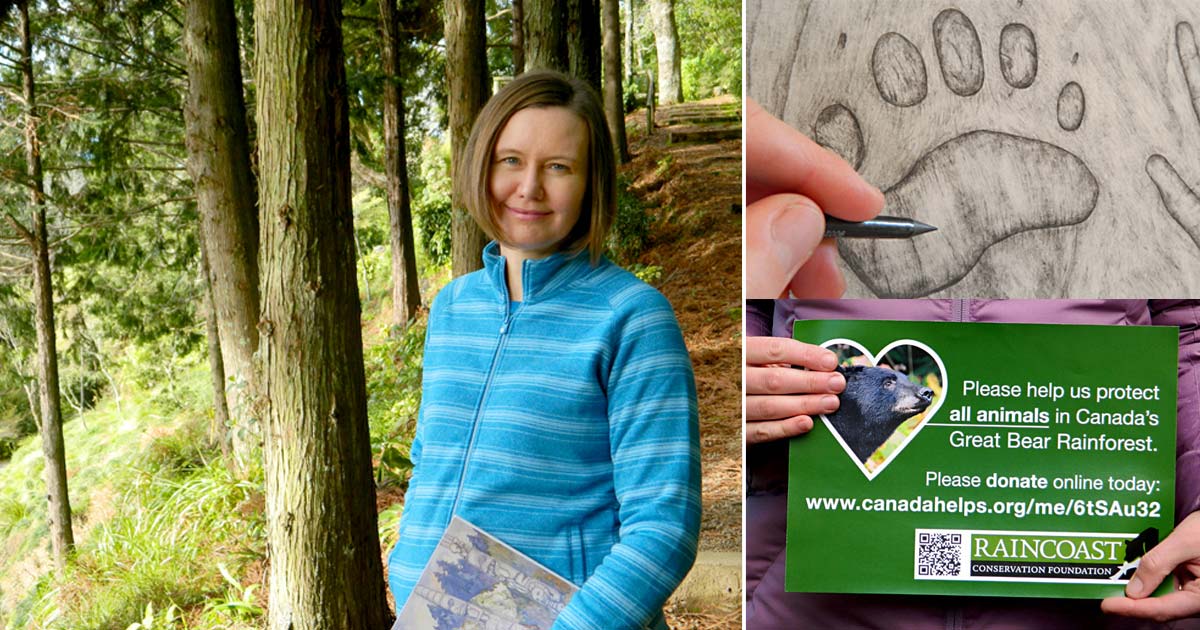
Angela Gnyp: A wilderness artist down under
When I first found out about Raincoast’s goal to buy up the commercial hunting territories in 2013, it was something I couldn’t ignore. So, on discovering the opportunity to fundraise for the Safeguarding Coastal Carnivores campaign earlier this year, I knew I had to sign up…

Creating a living atlas for salmon and salmon habitat in the Lower Fraser
Much of this data currently contained within the atlas comes from provincially available data online, as well as the Department of Fisheries and Oceans (DFO) and the local stewardship organizations that we have met with. We hope that the map can be used to support decision making, management and…