

Shifting salmon policy
Photo by Alex Harris.
Ecosystems are complex. They are communities of living organisms connected through interacting processes and features on the land, in water, and between the two. Yet BC’s antiquated environmental policy doesn’t reflect this. Colonial society governs ecosystems by siloing them into distinct ministries and resources instead of reflecting the interconnected nature of habitats that make them function in the living world. This “siloed decision making”is the root cause of many of the ecological challenges we face today.


Our policy goals
1. Manage fisheries for ecosystems
- Set salmon harvest at levels that optimize the benefits of spawning salmon to watersheds and wildlife.
- Shift away from historic management paradigms that minimize the number of spawning salmon reaching rivers and maximize harvest (called Maximum Sustainable Yield). Move towards fisheries management that meets salmon spawning targets that are ecologically based, not harvest-based.
- Shift harvest toward selective terminal fisheries (conducted in or near the rivers of origin) that respect the ‘place-based’ nature of salmon, and optimize the benefits to ecosystems, Indigenous cultures, and local communities.
2. Implement ecological-based governance
- Conservation planning and a commitment to sustainability that looks 7 generations ahead.
- A “whole-of-government” approach that implements shared solutions by Indigenous, federal, provincial, and municipal governments to achieve salmon recovery from inland watersheds and rivers, to the open ocean.
- Governance that honours Aboriginal rights and title, inherent Indigenous jurisdiction and law, and the United Nations Declaration on the Rights of Indigenous Peoples (UNDRIP) and the Declaration on the Rights of Indigenous Peoples Act (DRIPA).
- Sustainable funding strategies for watershed-scale restoration and planning.


3. Advance land-use policies that prioritize the health of wild salmon and biodiversity
- Zoning that bolsters functioning watersheds and riparian habitat (i.e.protect natural features, limit impervious surfaces, reduce urban sprawl, adopt nature-based solutions).
- Forestry policy that prioritizes salmon health by restricting clear-cutting in salmon watersheds, and incentivizes a sustainable, second or third-growth forest economy.
- Climate adaptation policy that incentivizes nature-based solutions including natural shorelines, intact riparian areas, unrestricted floodplains, managed retreat, and use of rain-gardens in urban areas.
Our recent reports
Recent articles
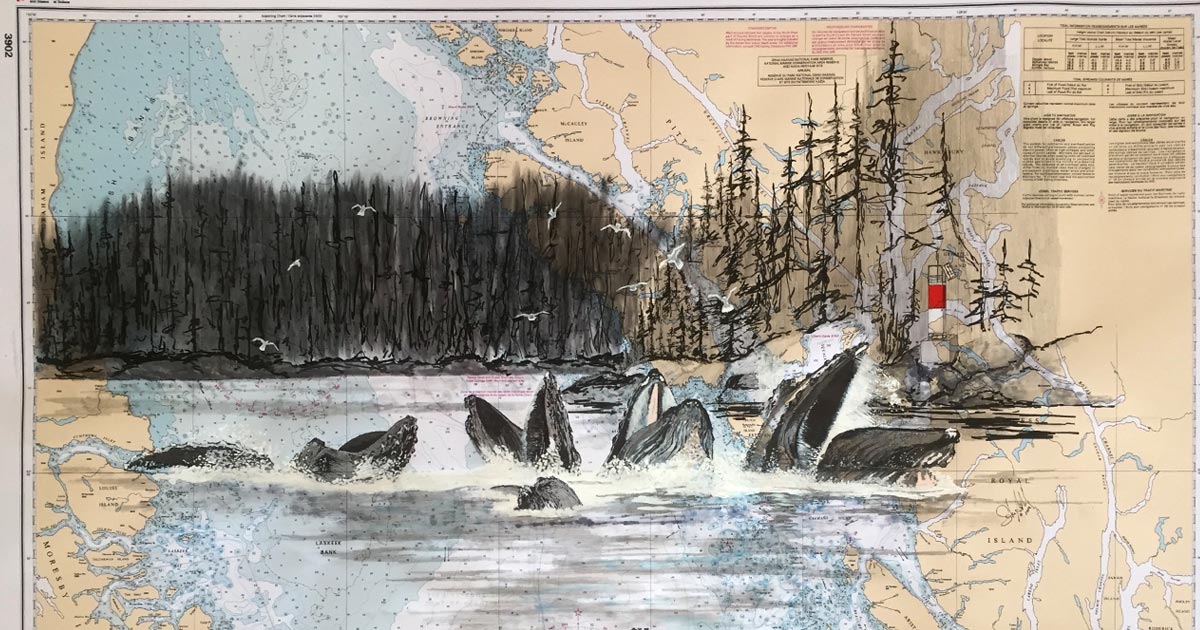
Humpback whales, artistic cartography, for the coast
Watching these magnificent creatures work in unison to catch their meal was truly inspirational and became the idea behind my first Artistic Cartography piece for Raincoast. Listening to them, via the hydrophone that Captain Nick dropped over the side, still makes the hair on the back of neck stand on end and solidified the artistic idea that this hunting method had to be painted…

No half measures for Southern Resident killer whales
Right now, as we anticipate the return of these endangered whales to the Salish Sea, the federal government is considering exactly what measures they will take to aid recovery in 2019. They are asking you for your input, and it is critical that you encourage them to make the right choice. Many voices are advocating for less ambitious recovery actions…
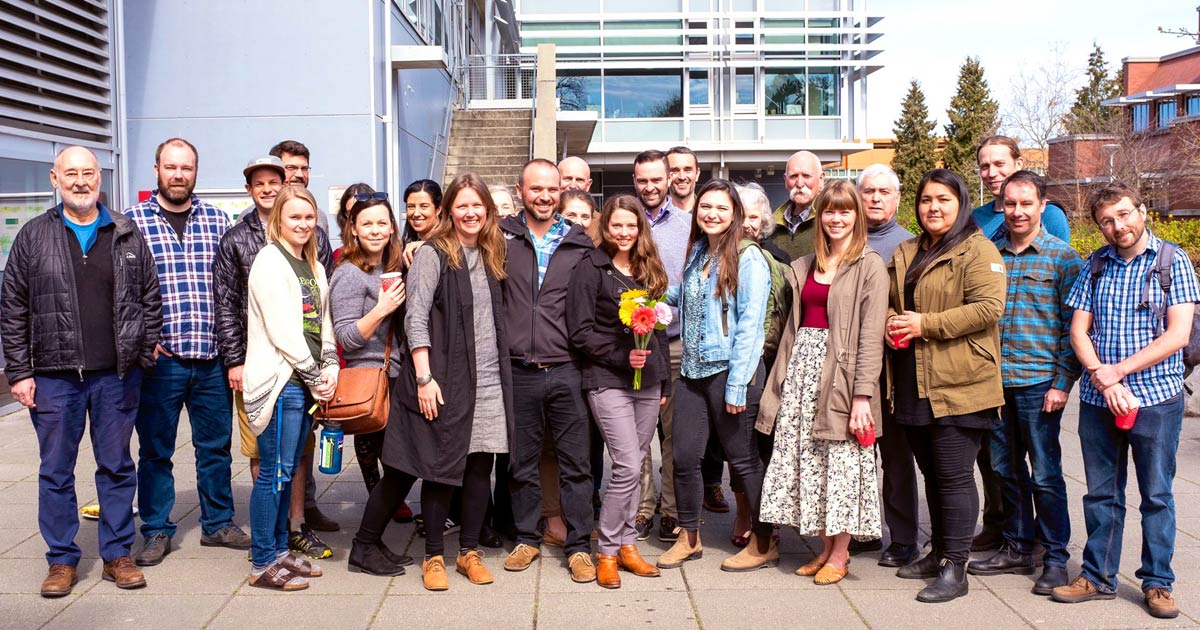
The future of applied conservation science is bright
This has been a time of remarkable accomplishment for the Raincoast Applied Conservation Science Lab at the University of Victoria. The research that the lab produces is a dynamic mix of population analyses, biogeography, marine-terrestrial interactions and much more, all rooted in a ‘wildlife welfare’ ethic. Collaboration with Indigenous communities forms the hallmark of much of this work, which is being directly applied…

Research: Publication reform to safeguard wildlife from researcher harm
Scientists from Raincoast Conservation Foundation, University of Victoria, Alpha Wildlife Research & Management, and University of Saskatchewan reviewed more than 200 peer-reviewed academic journals that commonly publish wildlife research, evaluating the presence and comprehensiveness of ‘Animal Care’ requirements of authors. The study, “Publication reform to safeguard wildlife from researcher harm,” published as an open access article…

Oceans Awards win – Raincoast’s Dr. Chris Darimont honoured with Murray A. Newman Conservation Award
Darimont was recognized for the significance of his work as well as a career that already includes important and leading contributions, in coastal science and conservation…

Creating transformative experiences for students on the Salish Sea
These experiences are transformative and what we strive to create for young people with the Salish Sea Emerging Stewards program. The program brings students on multi-day journeys aboard Achiever to learn about coastal environments and conservation challenges…