

Shifting salmon policy
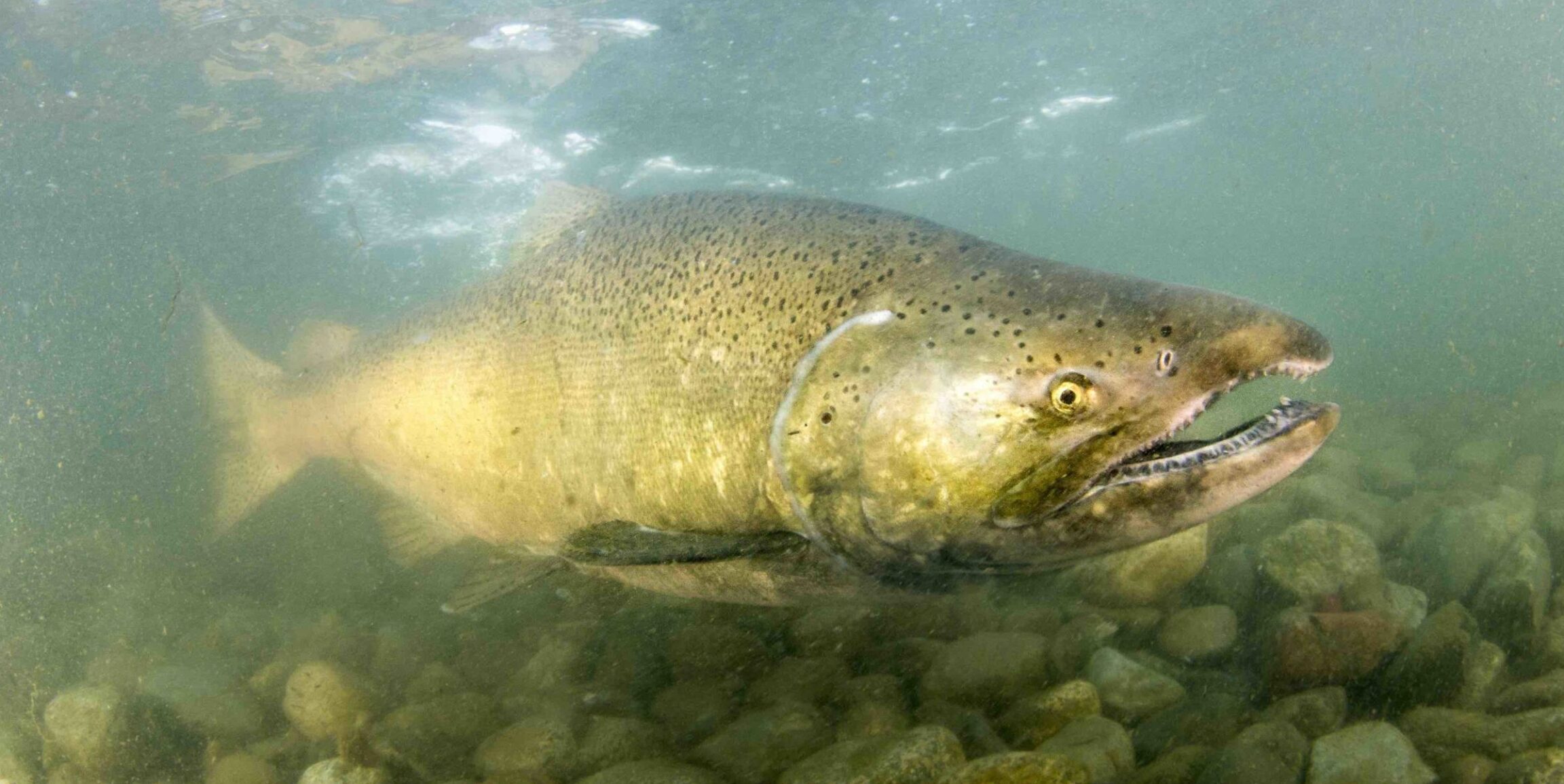
Photo by Alex Harris.
Ecosystems are complex. They are communities of living organisms connected through interacting processes and features on the land, in water, and between the two. Yet BC’s antiquated environmental policy doesn’t reflect this. Colonial society governs ecosystems by siloing them into distinct ministries and resources instead of reflecting the interconnected nature of habitats that make them function in the living world. This “siloed decision making”is the root cause of many of the ecological challenges we face today.


Our policy goals
1. Manage fisheries for ecosystems
- Set salmon harvest at levels that optimize the benefits of spawning salmon to watersheds and wildlife.
- Shift away from historic management paradigms that minimize the number of spawning salmon reaching rivers and maximize harvest (called Maximum Sustainable Yield). Move towards fisheries management that meets salmon spawning targets that are ecologically based, not harvest-based.
- Shift harvest toward selective terminal fisheries (conducted in or near the rivers of origin) that respect the ‘place-based’ nature of salmon, and optimize the benefits to ecosystems, Indigenous cultures, and local communities.
2. Implement ecological-based governance
- Conservation planning and a commitment to sustainability that looks 7 generations ahead.
- A “whole-of-government” approach that implements shared solutions by Indigenous, federal, provincial, and municipal governments to achieve salmon recovery from inland watersheds and rivers, to the open ocean.
- Governance that honours Aboriginal rights and title, inherent Indigenous jurisdiction and law, and the United Nations Declaration on the Rights of Indigenous Peoples (UNDRIP) and the Declaration on the Rights of Indigenous Peoples Act (DRIPA).
- Sustainable funding strategies for watershed-scale restoration and planning.


3. Advance land-use policies that prioritize the health of wild salmon and biodiversity
- Zoning that bolsters functioning watersheds and riparian habitat (i.e.protect natural features, limit impervious surfaces, reduce urban sprawl, adopt nature-based solutions).
- Forestry policy that prioritizes salmon health by restricting clear-cutting in salmon watersheds, and incentivizes a sustainable, second or third-growth forest economy.
- Climate adaptation policy that incentivizes nature-based solutions including natural shorelines, intact riparian areas, unrestricted floodplains, managed retreat, and use of rain-gardens in urban areas.
Our recent reports
Recent articles
Terminal 2 Backgrounder: Impacts to Fraser Chinook salmon
The Port of Vancouver is proposing to double the size of its shipping terminal at Roberts Bank beside the Tsawwassen Ferry Terminal. The existing terminal is already a significant presence in the Fraser estuary. Its 210-acre container terminal connects to the largest coal terminal in North America. A four-kilometre long causeway across the Fraser estuary facilitates truck and rail transit between the terminal and the shore…

Research: Addressing poor statistical support for wolf control and maternal penning as conservation measures for endangered mountain caribou
A new study shows that while addressing potential threats from wolves does not seem to be effective, an important new signal has emerged from the data: ecotype.

Current situational analysis of BC wolves
In British Columbia, Canada, wolves continue to be killed through a variety of means. These include legal recreational hunting and trapping. Our goal is to stop the hunting and trapping of BC’s wolves. Our initial initiative includes educating the public about the biology, behavior and ecology of wolves and their current situation in British Columbia…

Study: Spatial patterns and rarity of the white‐phased ‘Spirit bear’ allele reveal gaps in habitat protection
New research has identified that the small genetic change responsible for Spirit bears – a rare, white-coated form of black bears – is up to 50% rarer in the Great Bear Rainforest than previously estimated. The study also indicates that geographic hotspots, where the Spirit bear version of the gene was especially prominent lack adequate protection from resource extraction…

Spirits of the Coast – live event
Join us on July 22 for an unique evening bringing together contributors from the book, Spirits of the Coast. Hear from Jess Housty, Nikki Iyolo Sanchez, Misty MacDuffee and Eric Mazimpaka, as they discuss their own connection to killer whales…

In memory of Dr. Michael Soulé
Michael Soulé’s work has been central to the growth of conservation science. He has been called the grandfather of conservation biology. Soulé has been an important source of knowledge, counsel, and insight to many of the scientists at Raincoast Conservation Foundation. May 28, 1936 – June 17, 2020 Thoughtful counsel and generosity My last conversations…