
Plastic pollution

Photo by April Benze.

Plastic pollution is choking our waterways and threatening the health of fish and wildlife. We are collecting plastic and microplastic data as part of our community-oriented water pollution monitoring program. We are collaborating on research projects with universities, governments and experts in the field. We are providing advice to local, regional and federal governments on plastic science, policies, and regulations. We are working with Ocean Diagnostics to support a strong science-based foundation for solutions.


Lots of garbage on a beach.
Photo by Simon Ager.
People working together to take samples of water in jars.
Photo by Alex Harris / Raincoast Conservation Foundation.

Our approach

  • Design a source identification toolbox for plastic pollution; 
  • Working with Indigenous and coastal communities to document plastic pollution and track this back to its source;
  • Conduct research on the source, transport and fate of micro and macroplastics in the environment;
  • Engage in outside-the-box dialogue with industry and governments to support more sustainable design, manufacturing and processes that stem the release of plastics during the life cycle of a product;
  • Support community-oriented outreach and training to support solution-oriented actions and capacity building.

Plastics are everywhere

Plastics from just about every sector can now be found all over the world – from mountain tops to the seafloor, from the Arctic to the Antarctic, and from our homes to the ocean. A modern-day scourge that is blighting remote beaches and shorelines, getting mistaken for food by wildlife, and getting into the foods that nourish us. Whether it’s the structural features of plastic products that suffocate, entangle, or create intestinal blockages – or the endocrine disrupting-contaminants that serve as ingredients of the product (e.g. Bisphenol A or phthalate esters) or as hitchhikers soaked up by plastics in the environment (e.g. PCBs or metals) – plastics are harmful.

Underwater photo of plastic floating near the top of the water.
Chinook salmon swim in a river as seen from head on; epic.
Photo by Fernando Lessa.

The impact on the environment

Without a dramatic re-think, the plastic crisis is here to stay. Despite the best intentions of governments, industry, and consumers to reduce, recycle or re-use, global plastic production continues to enjoy exponential growth. And the unintentional loss to the environment of plastic products and byproducts will continue – plastic bags, bottles, and fishing gear, as well as the discharge of microplastics through domestic and industrial waste. With that will come a constant stream of items that will be mistaken for food but offer zero nutrition, that will entangle wildlife, and will deliver endocrine disruptors to our aquatic food webs. We will document impacts, share findings, and work for change through science, community engagement, and expert advice.

Recent articles

A man smiling on the deck of a boat.

Oil sands revenue and education

Letter to the Editor, Financial Post Re: Enbridge Chief Defends Gateway Pipline. April 30 It was fascinating to read how Enbridge CEO Patrick Daniel is advocating for corporate socialism as he flogs his company’s Northern Gateway Pipeline project. Mr. Daniel’s suggestion that Canadians will need to massively subsidize the transport of tar sands crude through…
Extent of gulf oil spill as of May 3 2010

Gulf oil spill spurs Canadian concerns

In the wake of the Gulf of Mexico oil spill disaster, federal opposition parties are calling for emergency hearings before the Commons Natural Resources Committee to discuss the need for more stringent safeguards against oil spills in Canada’s Arctic. But the public needs be properly and clearly informed as to the risks and tradeoffs with…
underwater photo of sockeye salmon in BC river

The Get Out Migration – Salmon are Sacred

Sidney Presentation by Alexandra Morton – Salmon are Sacred Alexandra Morton will be giving an evening presentation about her reasons for rallying the public around wild salmon. She’ll share her experiences about her journey on the Migration and her hopes for the next day’s rally in Victoria at the Parliament buildings. A table will be…
Oil tanker in BC waters

Coastal waters are no place for oil tankers
Special to the Vancouver Sun, Earth day April 22 2010 By Josh Paterson, Jen Lash, Nikki Skuce, Gerald Amos, Pat Moss, Eric Swanson, Jennifer Rice, Julia Hill and Chris Genovali. Federal studies have repeatedly concluded that oil tankers must be prohibited in some sensitive marine areas because of the severe risks. The Campbell government was…
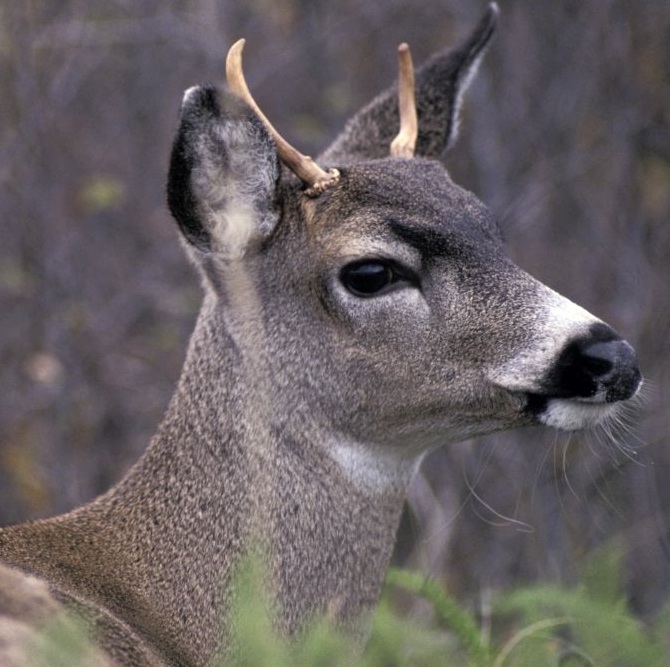
A close up of a deer with horns.

Would you like worms with that?

Raincoast researchers publish paper on unexpected discovery. Conservation research can lead to unexpected findings. Sometimes these surprises relate to our core questions while other times they belong in a science fiction film.  One of these findings occurred while we were studying diseases that might harm wildlife in coastal BC. Though not what we set out…
dummy-img

Identification of nematodes in feces of gray wolves

Heather M. Bryan, Kathrin A. Sim, Chris T. Darimont, Paul C. Paquet, Brent Wagner, Violeta Munoz- Fuentes,  Judit E. Smits, and Neil B. Chilton. 2o1o. Identification of Parelaphostrongylus odocoilei (Nematoda: Protostrongylidae) First-Stage Larvae in the Feces of Gray Wolves (Canis lupus) by Molecular Methods. Journal of Wildlife Diseases, 46(1) 297–302
A man in a helmet sitting in a helicopter.

Why I support Raincoast

Supporter and volunteer Don Arney gives time to Raincoast “I donate my flying time to take Raincoast’s Salmon Carnivore team to places where grizzlies roam but where the team’s boats and gum boots cannot take them. I make this contribution because I see in them a passionate group of scientists and conservationists who work hard…
A brown bear with a fish in its mouth.

Field Notes: Saving our bears

Outpost Magazine,  April 2010, by Chris Darimont In one of Nature’s most elegant pas de daux, salmon and bear engage in a delicate dance for survival.  The bear is losing… We’re searching for solutions to one of the most critical questions facing coastal B.C. today: how to guarantee grizzlies enough salmon to ensure their survival….