Plastic pollution

Photo by April Benze.

Plastic pollution is choking our waterways and threatening the health of fish and wildlife. We are collecting plastic and microplastic data as part of our community-oriented water pollution monitoring program. We are collaborating on research projects with universities, governments and experts in the field. We are providing advice to local, regional and federal governments on plastic science, policies, and regulations. We are working with Ocean Diagnostics to support a strong science-based foundation for solutions.


Lots of garbage on a beach.
Photo by Simon Ager.
People working together to take samples of water in jars.
Photo by Alex Harris / Raincoast Conservation Foundation.

Our approach

  • Design a source identification toolbox for plastic pollution; 
  • Working with Indigenous and coastal communities to document plastic pollution and track this back to its source;
  • Conduct research on the source, transport and fate of micro and macroplastics in the environment;
  • Engage in outside-the-box dialogue with industry and governments to support more sustainable design, manufacturing and processes that stem the release of plastics during the life cycle of a product;
  • Support community-oriented outreach and training to support solution-oriented actions and capacity building.

Plastics are everywhere

Plastics from just about every sector can now be found all over the world – from mountain tops to the seafloor, from the Arctic to the Antarctic, and from our homes to the ocean. A modern-day scourge that is blighting remote beaches and shorelines, getting mistaken for food by wildlife, and getting into the foods that nourish us. Whether it’s the structural features of plastic products that suffocate, entangle, or create intestinal blockages – or the endocrine disrupting-contaminants that serve as ingredients of the product (e.g. Bisphenol A or phthalate esters) or as hitchhikers soaked up by plastics in the environment (e.g. PCBs or metals) – plastics are harmful.

Underwater photo of plastic floating near the top of the water.
Chinook salmon swim in a river as seen from head on; epic.
Photo by Fernando Lessa.

The impact on the environment

Without a dramatic re-think, the plastic crisis is here to stay. Despite the best intentions of governments, industry, and consumers to reduce, recycle or re-use, global plastic production continues to enjoy exponential growth. And the unintentional loss to the environment of plastic products and byproducts will continue – plastic bags, bottles, and fishing gear, as well as the discharge of microplastics through domestic and industrial waste. With that will come a constant stream of items that will be mistaken for food but offer zero nutrition, that will entangle wildlife, and will deliver endocrine disruptors to our aquatic food webs. We will document impacts, share findings, and work for change through science, community engagement, and expert advice.

Recent articles
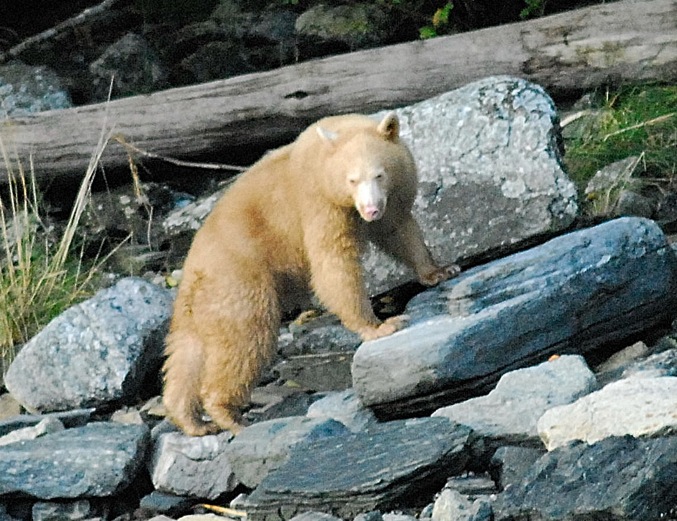
An albino grizzly bear climbs rocks at the shore in the Great Bear Rainforest

Not your average bear

As Raincoast’s research vessel Achiever pulled into the inlet on British Columbia’s north coast I glassed the port side shoreline with my binoculars, checking for wildlife.  It was that magical time right before dusk when unexpected and unusual things often manifest in the coastal fall alpenglow.
Brian Falconer at the helm.

Isn’t there a better way to manage bears?

SPRING HUNT 2010 By Chris Genovali A new decade has dawned, but this month yet another year of grizzly bear hunting will commence in British Columbia. The B.C. grizzly bear hunt has been a source of unrelenting controversy. Both sides are stuck in a continual expert-driven argument in which each camp claims science supports their…
dummy-img

Royal Victoria Marathon 2010

Raincoast is an official charity of the charity pledge program of the Royal Victoria Marathon. We are looking for runners for the October 2010 race.    Its a beautiful time of year to run the waterfront streets of Victoria and this a qualifier for the Boston Marathon.  The salmon and bears need you! Sign up…
What's at Stake Report Cover

What’s at stake? Canada’s west coast

[youtube =http://www.youtube.com/watch?v=rU3emD_0HLk] The Canadian Federal government is pushing a proposal to ship tar sands oil by tanker through Canada’s Inside Passage . These tankers must navigate dog leg channels, rocky courses, unpredictable and sometimes violent weather after leaving the proposed terminal in Kitimat, BC. These routes would bring tankers into BC’s productive, diverse and fragile…
dummy-img

Last Stand of the Great Bear

Done in production with National Geographic, this trailer highlights the full length feature on large carnivores and Raincoast’s work to protect them in the Great Bear Rainforest.  
A group of orca whales swimming in the water.

Courting the Next Exxon Valdez

Counterpunch, By Chris Genovali, Paul Paquet and Misty MacDuffee The BC coast is a fragile archipelago with a boundary between land and ocean that changes by the hour, by the season and over millennia.
A group of orca whales swimming in the ocean.

British Columbia’s coast in the balance

Island Tides, Apr 1, 2010 Chris Genovali, Paul Paquet and Misty MacDuffee In this part of the world March 24 will, to borrow a phrase from Franklin Delano Roosevelt, live in infamy; it’s the anniversary of the Exxon Valdez oil spill disaster that took place in Alaska’s Prince William Sound in 1989.
A woman wearing a black jacket.

Tankers and oil spills could reverse years of recovery efforts

By Chris Genovali Lessons from the Exxon Valdez oil spill in Alaska have shown that even after two decades, some species and fisheries still have not recovered. This includes killer whale populations, some seabird populations, shellfish harvesting and the commercial herring fishery. If the proposed Enbridge Northern Gateway pipeline is constructed from Alberta’s tar sands…