
Plastic pollution

Photo by April Benze.

Plastic pollution is choking our waterways and threatening the health of fish and wildlife. We are collecting plastic and microplastic data as part of our community-oriented water pollution monitoring program. We are collaborating on research projects with universities, governments and experts in the field. We are providing advice to local, regional and federal governments on plastic science, policies, and regulations. We are working with Ocean Diagnostics to support a strong science-based foundation for solutions.


Lots of garbage on a beach.
Photo by Simon Ager.
People working together to take samples of water in jars.
Photo by Alex Harris / Raincoast Conservation Foundation.

Our approach

  • Design a source identification toolbox for plastic pollution; 
  • Working with Indigenous and coastal communities to document plastic pollution and track this back to its source;
  • Conduct research on the source, transport and fate of micro and macroplastics in the environment;
  • Engage in outside-the-box dialogue with industry and governments to support more sustainable design, manufacturing and processes that stem the release of plastics during the life cycle of a product;
  • Support community-oriented outreach and training to support solution-oriented actions and capacity building.

Plastics are everywhere

Plastics from just about every sector can now be found all over the world – from mountain tops to the seafloor, from the Arctic to the Antarctic, and from our homes to the ocean. A modern-day scourge that is blighting remote beaches and shorelines, getting mistaken for food by wildlife, and getting into the foods that nourish us. Whether it’s the structural features of plastic products that suffocate, entangle, or create intestinal blockages – or the endocrine disrupting-contaminants that serve as ingredients of the product (e.g. Bisphenol A or phthalate esters) or as hitchhikers soaked up by plastics in the environment (e.g. PCBs or metals) – plastics are harmful.

Underwater photo of plastic floating near the top of the water.
Chinook salmon swim in a river as seen from head on; epic.
Photo by Fernando Lessa.

The impact on the environment

Without a dramatic re-think, the plastic crisis is here to stay. Despite the best intentions of governments, industry, and consumers to reduce, recycle or re-use, global plastic production continues to enjoy exponential growth. And the unintentional loss to the environment of plastic products and byproducts will continue – plastic bags, bottles, and fishing gear, as well as the discharge of microplastics through domestic and industrial waste. With that will come a constant stream of items that will be mistaken for food but offer zero nutrition, that will entangle wildlife, and will deliver endocrine disruptors to our aquatic food webs. We will document impacts, share findings, and work for change through science, community engagement, and expert advice.

Recent articles
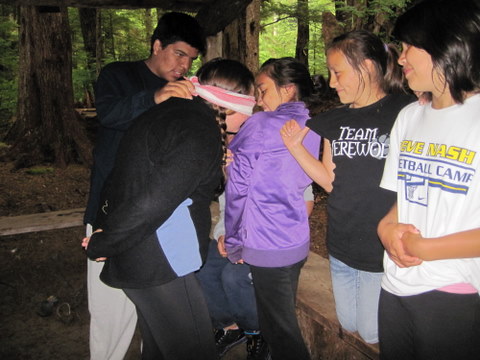
A group of people standing around in a wooded area.

Kids of Kvai

Our time at Kvai (Koeye) is coming to an end far too quickly. This morning we had another fun day of learning and games. First, we learned about provisioning theory: some of the kids (including me) pretended to be chicks in nests of different sizes, begging their parents (other kids) for food (goldfish crackers). Nests…
A group of people standing on a beach near a river.

Magic of Koeye

I feel lucky to be at the Koeye River again where Heiltsuk youth come every year to take part in culture/science camps. Representing Raincoast, Doug, Kyle, Bryce, and I have come for a week as science resource people and also to learn from the campers and camp staff.
Grizzly wades through water with salmon in its mouth

Would a Grizzly Bear Certify this Fishery?

Island Tides July 8, 2010 By Misty MacDuffee, Corey Peet and Chris Genovali As the Canadian federal inquiry examining the 2009 Fraser River sockeye salmon collapse in British Columbia kicks into full gear, one might be surprised to learn that at the same time, the Marine Stewardship Council wants to designate this fishery as “eco-certified.”
A grizzly bear looks into the camera

Stop the needless killing of British Columbia’s grizzly bears
A disturbing number of grizzlies are killed in the Bella Coola Valley on Canada’s Pacific coast because of avoidable human behaviour, but existing legislation to prevent these deaths are virtually unenforceable.
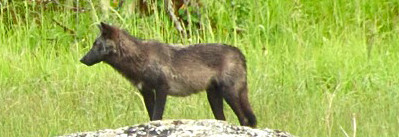
A wolf standing on a rock in the grass.

An old friend, by Doug Brown Jr.

There she is… it has been a while since I have seen her. Those long muscular legs have carried her well through the past year.  She is beautiful, in good health, poised with confidence and looking quite content. It is always comforting to see a familiar face after a long time.
A black and white photo of a grizzly bear in the woods.

Momma Bear

I’m a Papa now, and in my new role I have learned a lot about just how hard Mommas work. Gestating. Lactating. Comforting. Safeguarding. Loving. (Not) sleeping. Sacrificing. Repeat. Hour by hour. Day after day. For years. Today I want to share with you a very special mother. She is the mother-of-three grizzly we wrote…
underwater photo of sockeye salmon in BC river

Would a grizzly bear certify this fishery?

To protect BC’s wild sockeye salmon and truly drive conservation in the world’s oceans, the Marine Stewardhip Council (MSC) needs to address the structural flaws in their certification process and commit to incorporating ecosystem objectives for marine and terrestrial environments.
A black bear laying on the ground.

Capturing Curious Carnivores

Now that this year’s field crew for the salmon carnivore project has disbanded I find myself reminiscing about the experience by obsessively cycling through photos. Though a vast amount of photos were taken during the field season, wildlife images captured by our trail cameras stand out as especially extraordinary. There’s something intensely captivating about watching…