
Plastic pollution

Photo by April Benze.

Plastic pollution is choking our waterways and threatening the health of fish and wildlife. We are collecting plastic and microplastic data as part of our community-oriented water pollution monitoring program. We are collaborating on research projects with universities, governments and experts in the field. We are providing advice to local, regional and federal governments on plastic science, policies, and regulations. We are working with Ocean Diagnostics to support a strong science-based foundation for solutions.


Lots of garbage on a beach.
Photo by Simon Ager.
People working together to take samples of water in jars.
Photo by Alex Harris / Raincoast Conservation Foundation.

Our approach

  • Design a source identification toolbox for plastic pollution; 
  • Working with Indigenous and coastal communities to document plastic pollution and track this back to its source;
  • Conduct research on the source, transport and fate of micro and macroplastics in the environment;
  • Engage in outside-the-box dialogue with industry and governments to support more sustainable design, manufacturing and processes that stem the release of plastics during the life cycle of a product;
  • Support community-oriented outreach and training to support solution-oriented actions and capacity building.

Plastics are everywhere

Plastics from just about every sector can now be found all over the world – from mountain tops to the seafloor, from the Arctic to the Antarctic, and from our homes to the ocean. A modern-day scourge that is blighting remote beaches and shorelines, getting mistaken for food by wildlife, and getting into the foods that nourish us. Whether it’s the structural features of plastic products that suffocate, entangle, or create intestinal blockages – or the endocrine disrupting-contaminants that serve as ingredients of the product (e.g. Bisphenol A or phthalate esters) or as hitchhikers soaked up by plastics in the environment (e.g. PCBs or metals) – plastics are harmful.

Underwater photo of plastic floating near the top of the water.
Chinook salmon swim in a river as seen from head on; epic.
Photo by Fernando Lessa.

The impact on the environment

Without a dramatic re-think, the plastic crisis is here to stay. Despite the best intentions of governments, industry, and consumers to reduce, recycle or re-use, global plastic production continues to enjoy exponential growth. And the unintentional loss to the environment of plastic products and byproducts will continue – plastic bags, bottles, and fishing gear, as well as the discharge of microplastics through domestic and industrial waste. With that will come a constant stream of items that will be mistaken for food but offer zero nutrition, that will entangle wildlife, and will deliver endocrine disruptors to our aquatic food webs. We will document impacts, share findings, and work for change through science, community engagement, and expert advice.

Recent articles

Kloey and her mom, Vernadean, from Cowichan Secondary, SD79, in Duncan.

Salish Sea Emerging Stewards celebration

We recently closed our third season of Raincoast’s Salish Sea Emerging Stewards program with a new addition to the program – an event to connect, reflect and celebrate our precious coastline. People of all ages and backgrounds joined in the festivities as graduates of the 2018 season had the opportunity to take the stage and share their experiences and perspectives from the program…
Salmon circle on the rocky bottom of the Fraser River.

Approval of Trans Mountain expansion puts Fraser River salmon and Salish Sea estuaries at risk

The Fraser River in British Columbia remains one of the world’s most productive salmon rivers. Equally significant is the Fraser River’s estuary, which serves as vital habitat for fish, bird, and mammal species that are linked across thousands of kilometers of the Northeast Pacific Ocean. All Fraser River populations of salmon…
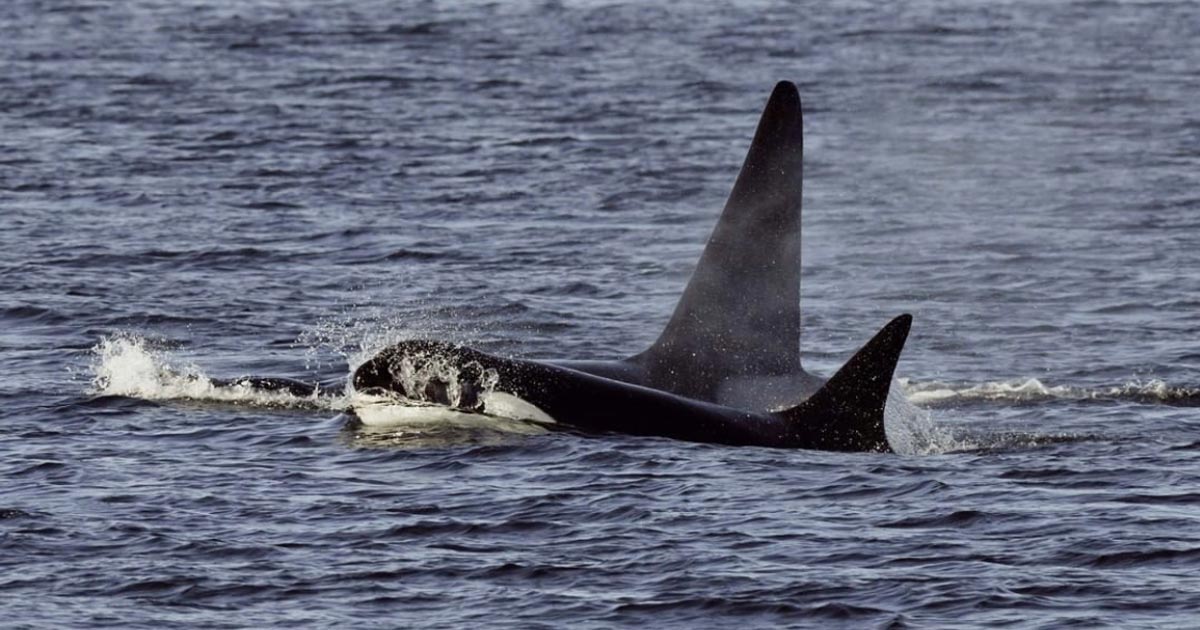
A killer whale in the foreground, with a container ship behind it in the mouth of the Fraser River.

We’re headed back to court for killer whales

Today we are returning to court with partners Ecojustice and Living Oceans Society to challenge the federal government’s re-approval of the Trans Mountain pipeline expansion. Our lawyers at Ecojustice submitted a motion to the Federal Court of Appeal this morning, asking for leave to launch a judicial review of Cabinet’s decision. We contend that Cabinet…
A stunning field of Lupin is framed by the epic mountains of the Kitlope.

A first grizzly bear in the Kitlope

Just days before being asked to go on a last-minute week-long trip to the Kitlope I had been glued to the pages of Cecil Paul and Briony Penn’s new book, Stories From the Magic Canoe. I was invited to visit as a guest aboard Maple Leaf, to capture visuals, to help with fundraising and awareness…
Aerial view of Maple Leaf in the Kitlope on emerald green water.

Maple Leaf’s commitment to coastal conservation
2019 marks the second year of a decade-long $100,000 commitment from Maple Leaf Adventures to our research and conservation efforts on the BC Coast and, in particular, the Great Bear Rainforest. As the spring field program for Raincoast’s Salmon Carnivore program comes to an end…
Two killer whales come to the surface of the Salish Sea.

Misty MacDuffee on CFAX 1070 talking about the approval of the Trans Mountain Pipeline
The day after the federal government approved the Trans Mountain Pipeline yet again, Raincoast’s Wild Salmon Program Director, Misty MacDuffee spoke with Mark Brennae on CFAX 1070 to talk pipelines, whales, and how humans are implicated in the disappearance of species. There is, of course, the risk of an oil spill or a vessel strike, but the noise and disturbance on both inbound and outbound tankers is always a certainty. And that noise can reduce the whales ability to echolocate and communicate…
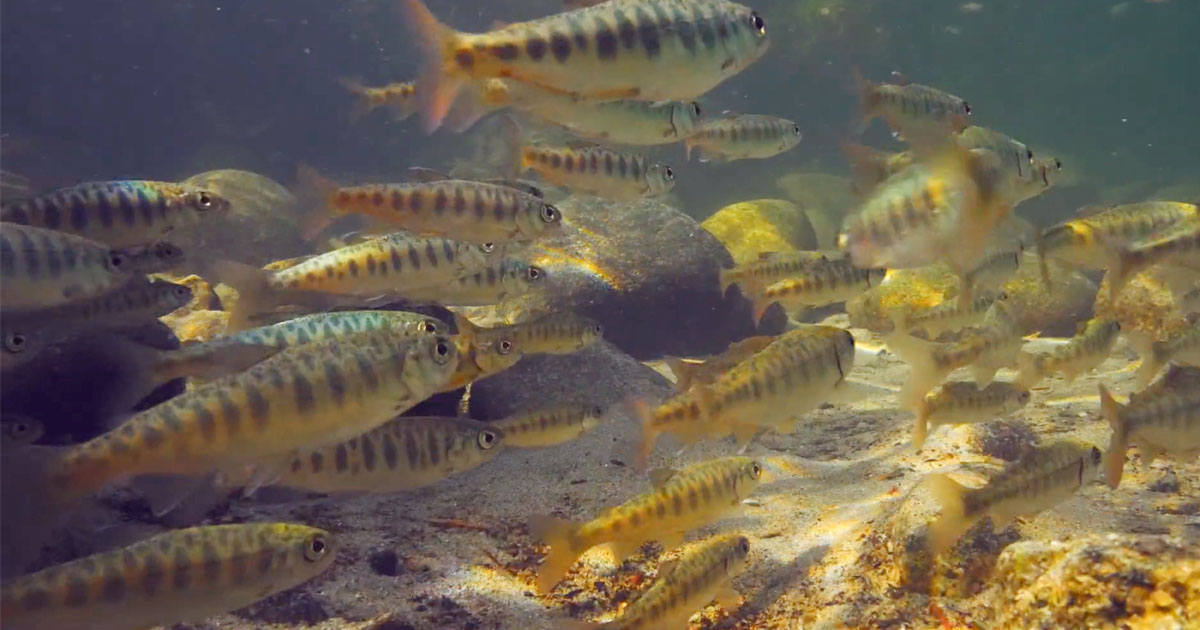
Salmon fry pool in the estuaries of the Fraser River.

The Fraser River estuary is fragmented by structures that alter the flow of water

The first phase in Raincoast’s five-year restoration project in the Fraser estuary was making breaches in the Steveston jetty to allow young salmon access to Sturgeon Bank, a safe, marshy habitat that gives them an easier transition from river to ocean…
Raincoast Fraser River crew sampling juvenile salmon in the east breach.

Great news: juvenile salmon moving through habitats reconnected after 100 years

Since the removal of sections of the Steveston jetty in February, we have been sampling our new jetty ‘breaches’ and have consistently caught juvenile salmon moving through them! This is a huge success and was realized just weeks after…