
Plastic pollution

Photo by April Benze.

Plastic pollution is choking our waterways and threatening the health of fish and wildlife. We are collecting plastic and microplastic data as part of our community-oriented water pollution monitoring program. We are collaborating on research projects with universities, governments and experts in the field. We are providing advice to local, regional and federal governments on plastic science, policies, and regulations. We are working with Ocean Diagnostics to support a strong science-based foundation for solutions.


Lots of garbage on a beach.
Photo by Simon Ager.
People working together to take samples of water in jars.
Photo by Alex Harris / Raincoast Conservation Foundation.

Our approach

  • Design a source identification toolbox for plastic pollution; 
  • Working with Indigenous and coastal communities to document plastic pollution and track this back to its source;
  • Conduct research on the source, transport and fate of micro and macroplastics in the environment;
  • Engage in outside-the-box dialogue with industry and governments to support more sustainable design, manufacturing and processes that stem the release of plastics during the life cycle of a product;
  • Support community-oriented outreach and training to support solution-oriented actions and capacity building.

Plastics are everywhere

Plastics from just about every sector can now be found all over the world – from mountain tops to the seafloor, from the Arctic to the Antarctic, and from our homes to the ocean. A modern-day scourge that is blighting remote beaches and shorelines, getting mistaken for food by wildlife, and getting into the foods that nourish us. Whether it’s the structural features of plastic products that suffocate, entangle, or create intestinal blockages – or the endocrine disrupting-contaminants that serve as ingredients of the product (e.g. Bisphenol A or phthalate esters) or as hitchhikers soaked up by plastics in the environment (e.g. PCBs or metals) – plastics are harmful.

Underwater photo of plastic floating near the top of the water.
Chinook salmon swim in a river as seen from head on; epic.
Photo by Fernando Lessa.

The impact on the environment

Without a dramatic re-think, the plastic crisis is here to stay. Despite the best intentions of governments, industry, and consumers to reduce, recycle or re-use, global plastic production continues to enjoy exponential growth. And the unintentional loss to the environment of plastic products and byproducts will continue – plastic bags, bottles, and fishing gear, as well as the discharge of microplastics through domestic and industrial waste. With that will come a constant stream of items that will be mistaken for food but offer zero nutrition, that will entangle wildlife, and will deliver endocrine disruptors to our aquatic food webs. We will document impacts, share findings, and work for change through science, community engagement, and expert advice.

Recent articles

A killer whale chases a chinook salmon in the Salish Sea.

Increasing salmon hatcheries could do more harm than good for Chinook and Southern Resident killer whales
Hatcheries have failed to protect or restore the old ages, big sizes, range of migration times and diversity of wild Chinook salmon. For Southern Residents to recover, the age structure and run timing of wild Chinook runs, along with abundance, need to be restored. This is not the objective of hatcheries…
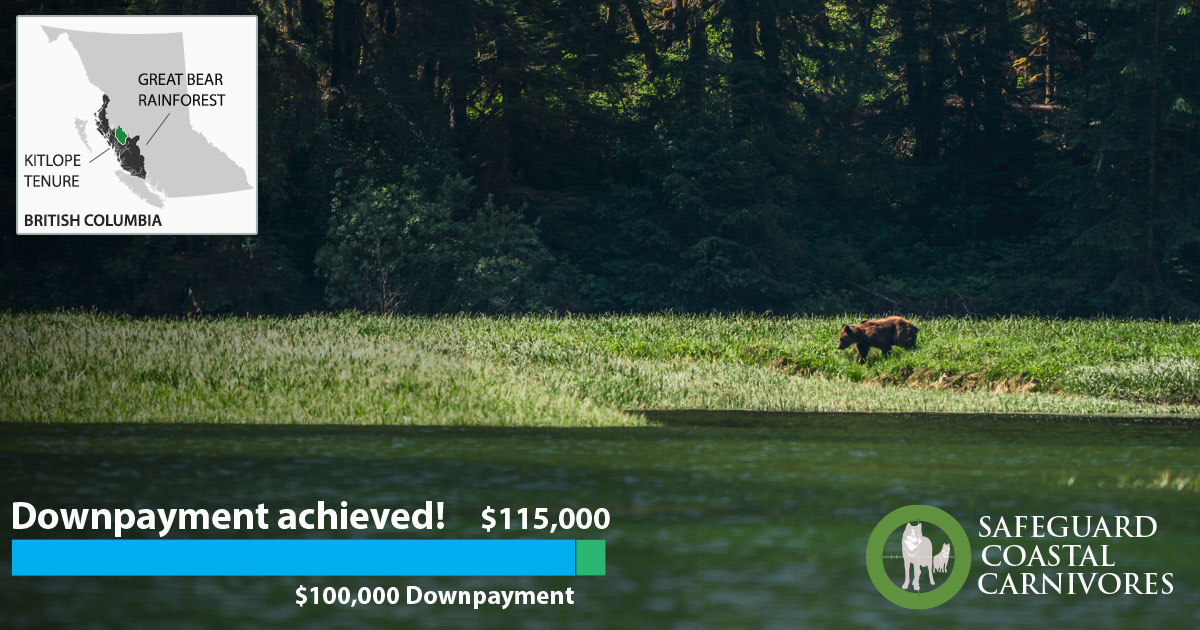
A grizzly bear wanders along a grassy bank in the Kitlope: a graphic identifying that the downpayment is achieved floats on top with a map of the coast.

Success! We now have the downpayment for the Kitlope tenure

At this point it’s worth pausing to reflect on what we’ve already accomplished. With your support, and working with Coastal First Nations, thus far we have acquired the commercial trophy hunting rights in approximately 33,500 square kilometers. For perspective, that’s an area bigger than Vancouver Island…
Close up of a map of streams and lost stream in the Fraser river watershed.

In search of the Lower Fraser’s lost streams

There is currently renewed interest in locating historical streams that have long been paved over and lost in Vancouver and the Lower Mainland. Mapping these historical landscape features offers a connection to the land that has been lost through urbanization and highlights opportunities for restoration…
Aerial view of Southern Resident killer whales in the Salish Sea, and Misty Macduffee and CFAX logo in the foreground.

Interview: Why our latest court challenge to the re-approval of the Trans Mountain pipeline is critical for the Salish Sea

The Southern Resident killer whales are a small declining population. The increase in tanker traffic associated with the Trans Mountain expansion will have a significant adverse effect on these killer whales in the Salish Sea…
The Kitlope as seen from the air.

Two weeks left for the Kitlope

We now have just two weeks to raise the remaining $15,000 of the $100,000 deposit we need to secure the purchase agreement for our 5th hunting tenure. This includes the commercial hunting rights in an area of over 5000 sq. km that encompasses the entire Kitlope…
Southern Resident killer whales in the Salish Sea.

Saving endangered whales: Strategies from above and below the 49th parallel

On May 10, the Canadian federal government announced its first wide-ranging measures to reduce the primary threats compromising survival of the salmon-eating Southern Resident killer whales reliant on the transboundary waters of the Pacific Northwest and British Columbia. Although federally listed as endangered in 2003 in Canada and 2005 in the US, little has happened…
Cecil Paul, Xenaksiala elder, at a book signing in Kitimat Valley.

Stories from the Magic Canoe of Wa’xaid

Cecil Paul has told the story of that long journey in–what his granny called–the magic canoe. “Build a canoe and it will be supernatural and no matter how many people will come aboard to help you paddle to save your place of birth, it will never be full.” Raincoast is one of the many organizations who stepped into the magic canoe to support and learn from the traditional knowledge systems of the Xenaksiala…
Grizzly bear in the water, in the Great Bear Rainforest.

A picture is worth 1000 words, but not at any price

As critical as these images are, we are committed to using only images that are ethically obtained. These considerations are informed by our own conservation ethics and what we learn along the way. The points below are those from a code of conduct, given to us by Brad Hill and available in full on Brad’s website…