Conservation Genetics Laboratory 

Our conservation genetics research addresses threats to cetaceans, fish, and coastal carnivores. 

The Conservation Genetics Lab is an integral part of Raincoast’s efforts to protect the land, waters and wildlife of coastal BC. The DNA and RNA analysis we perform provides our scientists with reliable insights into the population structure, health, diets, and resilience and genetic isolation of coastal species. The lab works closely with our Cetacean Conservation Research Program and also helps answer important questions for our other conservation initiatives. 
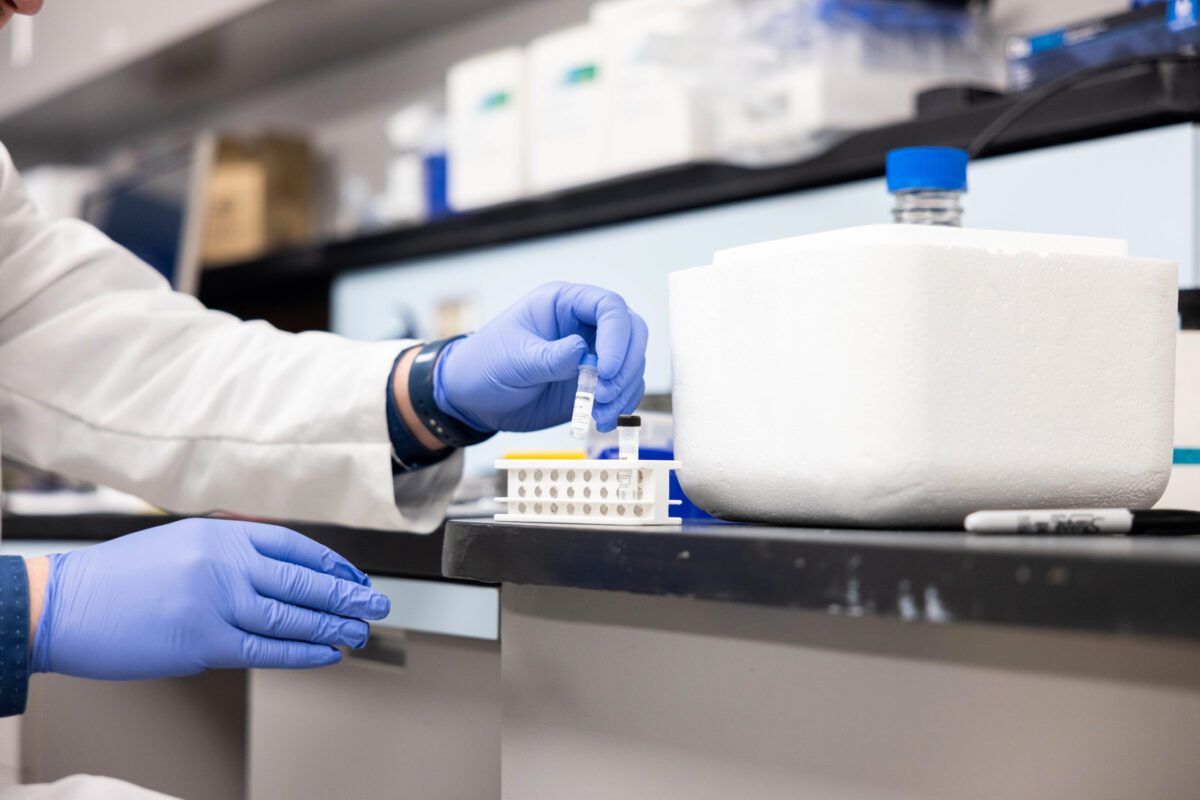
Two hands wearing blue gloves holding and organizing beakers.
Research scientist Adam Warner holding two small beakers while wearing a lab coat in a lab.

Cutting edge genetics and genomics analysis

The Raincoast Conservation Genetics Lab is equipped with a complete set of instrumentation to conduct molecular biology and genetics, including cutting-edge DNA sequencing technology. Our Research Scientist, Dr. Adam Warner, has extensive experience in genetics, genomics and DNA sequencing, has set up our lab space and has begun to carry out this research under the guidance of our Cetacean Research Program directors Dr. Lance Barrett-Lennard and Dr. Valeria Vergara. The lab works alongside Fisheries and Oceans Canada, which is hosting our lab space at the Pacific Science Enterprise Centre.

Understanding killer whale diet

A lack of sufficient Chinook salmon in the diets of Southern and Northern Resident killer whales has been linked to declines in population health. Our lab has the ability to extract and analyze salmon DNA from Resident killer whales feces, to identify the salmon stocks of most importance to the whales. Since we can identify the individual whales that produced fecal material genetically, we can link other health metrics such as stress hormone levels (also found in the fecal material) to individual killer whales. 
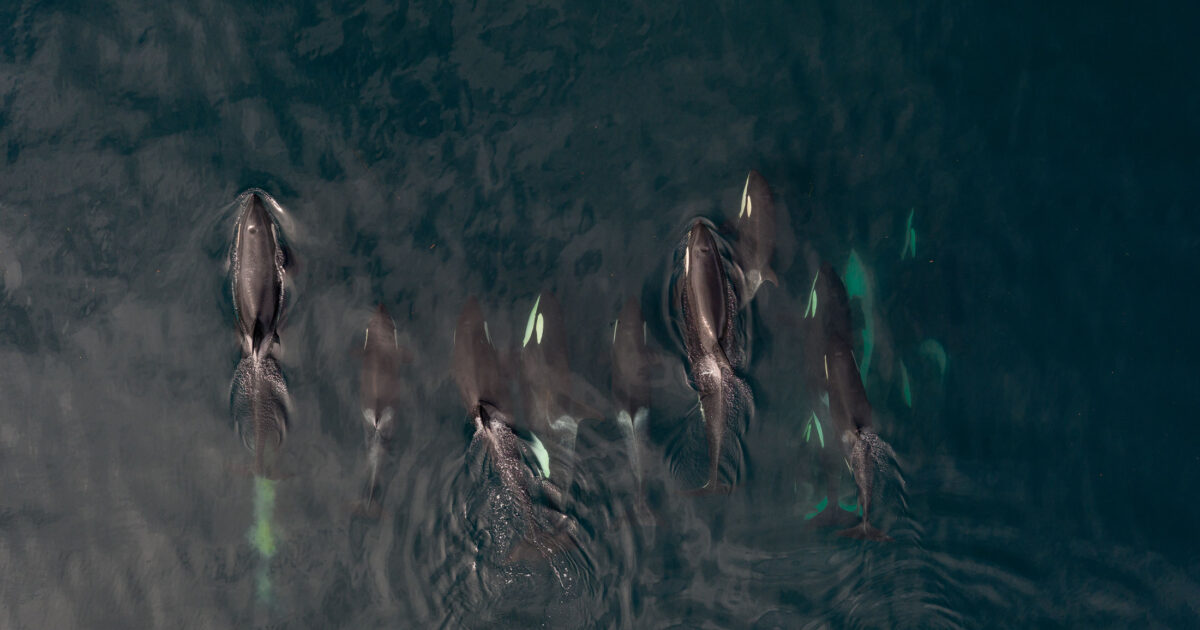
Overhead photo of a pod of killer whales swimming in the ocean.
Photo by Raincoast Conservation Foundation, taken under SARA Research License XMMS-2-2022.
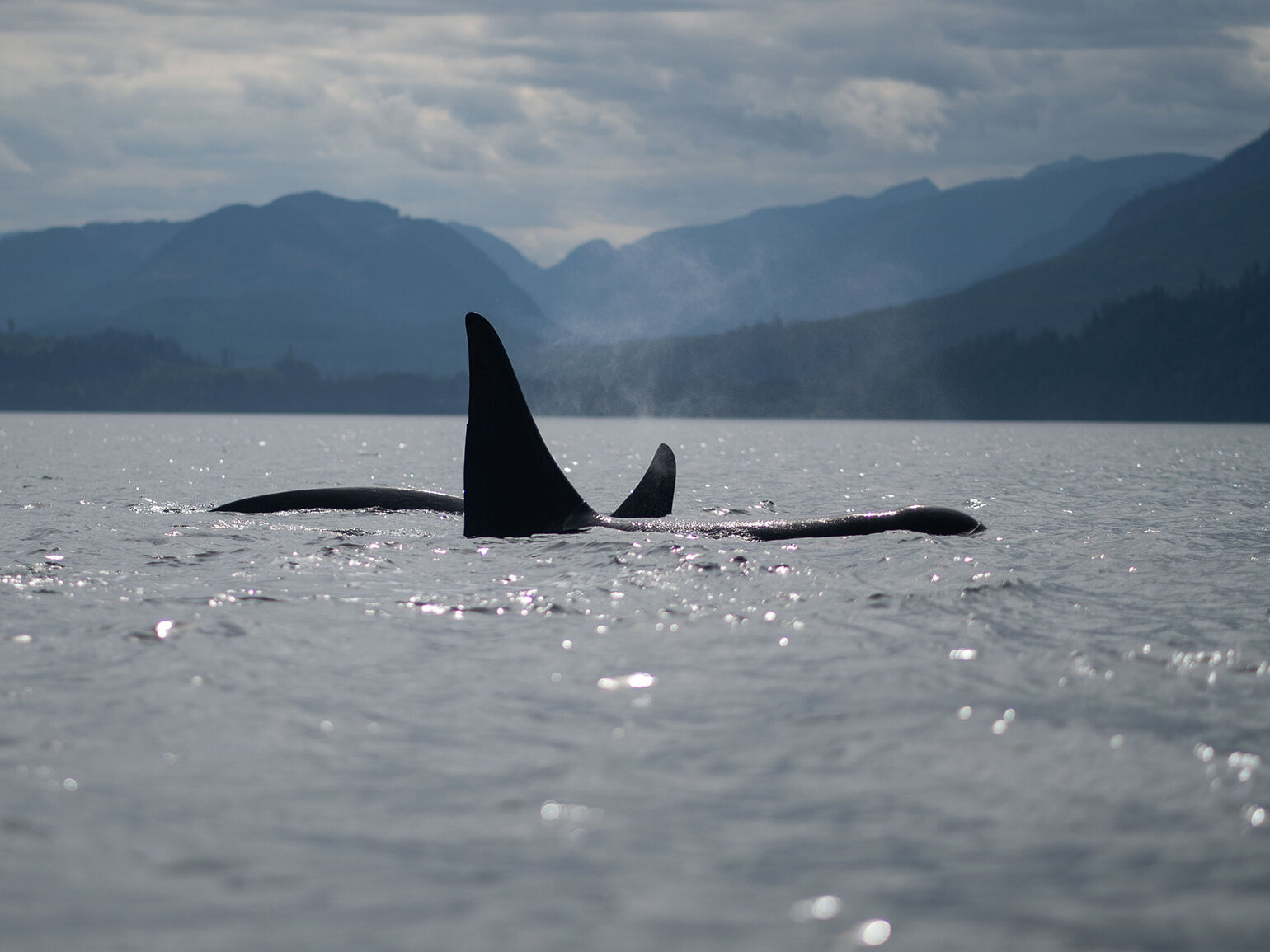
Two killer whales surfacing on the ocean.
Photo by John Kelsey.

Killer whale population health and dynamics

Killer whales live in small populations that from their size alone would appear to be vulnerable to negative effects of inbreeding.  We recently sequenced the entire genomes of 142 members of the Northern Resident population to directly  assess inbreeding, genetic diversity, and immune system strength. We are comparing this information in this dataset to one for Southern Residents compiled by NOAA in the United States. This will help us gain insight into the comparative health of these important fish-eating populations of killer whales. We are also finalizing a study of inbreeding in marine mammal-eating Bigg’s killer whales, which will inform our understanding of similarities and differences between North Pacific killer whale populations.

Environmental DNA to aid research focused on wild salmon and coastal wolves

Our research on wild salmon and coastal wolf populations has the potential to be expanded through the use of environmental DNA (eDNA) monitoring and analysis. Through eDNA, we can track and assess salmon populations and determine abundance and diversity. Using wolf scat samples we can identify specific individuals, their sex, and the prey consumed. By learning more about these important populations, we hope to drive policy change to protect biodiversity.

Research scientist Adam Warner holding two small beakers while wearing a lab coat in a lab.
Photo by Alex Harris / Raincoast Conservation Foundation.

Recent articles

Three women standing 6 feet apart talking to each other in a Coastal Douglas-fir forest

Carbon stewardship workshop focusing on Gulf Islands forests and coasts

Later this month, Raincoast, along with partners, will be hosting a workshop exploring the feasibility of implementing carbon stewardship projects on the Gulf Islands and across the Coastal Douglas-fir (CDF) zone in the Salish Sea. This workshop aims to establish a civic and Indigenous community of learners. Our goal is to collaboratively develop a nature-based climate project financed from conservation, restoration and improved ecosystem management.
The salmon song is sung by drum and on Sto:lo land.

Join us for a webinar examining the concept of Two-Eyed Seeing

In this week’s episode of Coastal Insights, join us as we visit with Albert Marshall, the creator of the two-eyed seeing concept, balancing Indigenous knowledge and contemporary science. We will also be joined by Indigenous fisheries scientist, Andrea Jane Reid, as we examine how this concept is being used today.
Two painting float in the foreground of an out of focus fern from Flycatcher Forest.

How art will help protect S,DÁYES Flycatcher Forest

We are incredibly grateful to every person who transformed this initiative from the hopes of one person into reality, and because we cannot thank each of you individually, we wanted to recognize a few of the artists who have donated their time and talent to the permanent protection of local ecosystems.
Wetland at the S,DÁYES Flycatcher Forest with the sun in the background.

You did it: 13 acres in 3 months!

We are excited to announce that together with the Pender Islands Conservancy, we have raised the funds required to purchase and permanently protect S,DÁYES Flycatcher Forest on North Pender Island…
A snapshot of the Conservation Biology research article floats in front of a giant grizzly bear in the mist.

Research: The eroding social license to hunt carnivores

A new study suggests killing predators like wolves, grizzly bears, and cougars for trophy is a potential threat not only to these sensitive animals, but also to other hunters…
Close up photo of a cedar bough.

BC’s Coastal Douglas-fir zone needs protection now
In an era where climate change is a modern reality and biodiversity is in crisis the world over, the province’s continued support of industrial logging in old growth forests is out of sync with global scientific consensus and policy objectives. This is especially true in the Coastal Douglas-fir (CDF) biogeoclimactic zone, the smallest and most endangered of 16 such zones in BC…
Shauna Doll looking up at a large Douglas-Fir tree.

Permanent protection of S,DÁYES Flycatcher Forest now within reach!

In November, when Raincoast teamed up with the Pender Islands Conservancy to purchase 13-acres of Coastal Douglas Fir forest on S,DÁYES, North Pender Island, we were given 6-months to raise the required funds. Now, less than three months later, and thanks to your overwhelming generosity, we are only $4,018 away from reaching our goal…
Coastal Insights education series – Season 2 launch

Coastal Insights education series – Season 2 launch

It is with great excitement that we launch our newest season of our Coastal Insights, aptly named ‘Eyes on the Coast’. Taking off where season 1 ended, we will be diving deeper into coastal British Columbia’s rich history, ecosystems and conservation issues using a two-eyed approach…