Conservation Genetics Laboratory 

Our conservation genetics research addresses threats to cetaceans, fish, and coastal carnivores. 

The Conservation Genetics Lab is an integral part of Raincoast’s efforts to protect the land, waters and wildlife of coastal BC. The DNA and RNA analysis we perform provides our scientists with reliable insights into the population structure, health, diets, and resilience and genetic isolation of coastal species. The lab works closely with our Cetacean Conservation Research Program and also helps answer important questions for our other conservation initiatives. 
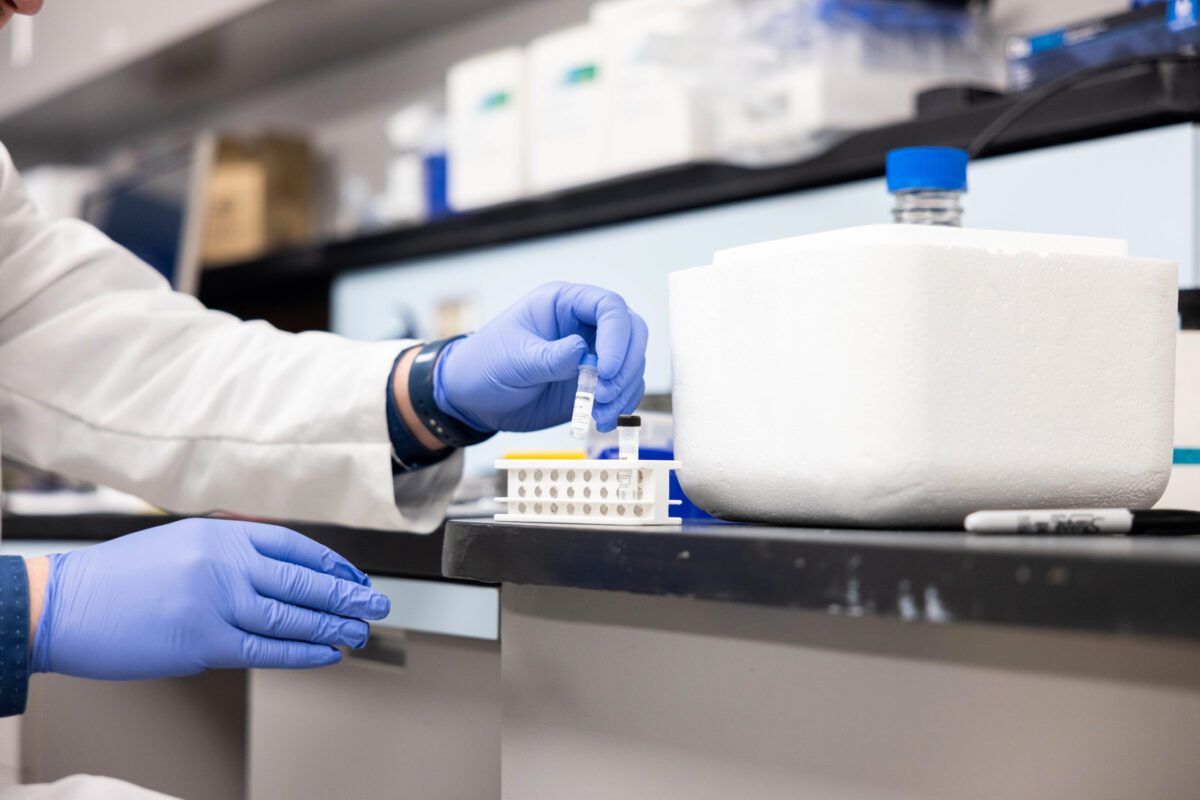
Two hands wearing blue gloves holding and organizing beakers.
Research scientist Adam Warner holding two small beakers while wearing a lab coat in a lab.

Cutting edge genetics and genomics analysis

The Raincoast Conservation Genetics Lab is equipped with a complete set of instrumentation to conduct molecular biology and genetics, including cutting-edge DNA sequencing technology. Our Research Scientist, Dr. Adam Warner, has extensive experience in genetics, genomics and DNA sequencing, has set up our lab space and has begun to carry out this research under the guidance of our Cetacean Research Program directors Dr. Lance Barrett-Lennard and Dr. Valeria Vergara. The lab works alongside Fisheries and Oceans Canada, which is hosting our lab space at the Pacific Science Enterprise Centre.

Understanding killer whale diet

A lack of sufficient Chinook salmon in the diets of Southern and Northern Resident killer whales has been linked to declines in population health. Our lab has the ability to extract and analyze salmon DNA from Resident killer whales feces, to identify the salmon stocks of most importance to the whales. Since we can identify the individual whales that produced fecal material genetically, we can link other health metrics such as stress hormone levels (also found in the fecal material) to individual killer whales. 
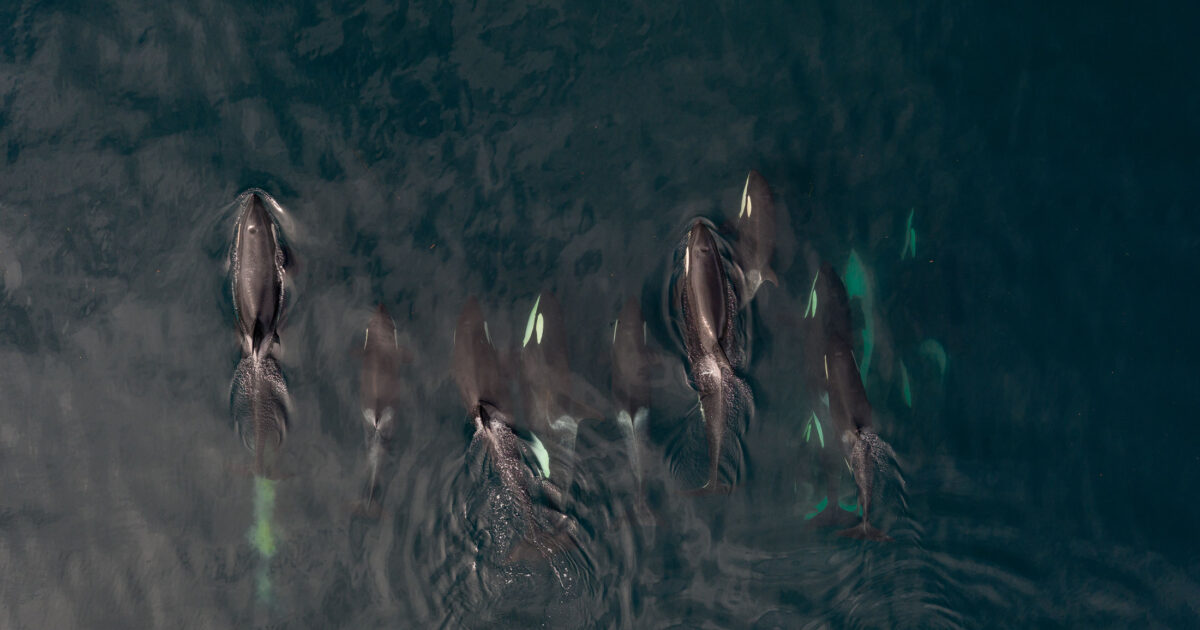
Overhead photo of a pod of killer whales swimming in the ocean.
Photo by Raincoast Conservation Foundation, taken under SARA Research License XMMS-2-2022.
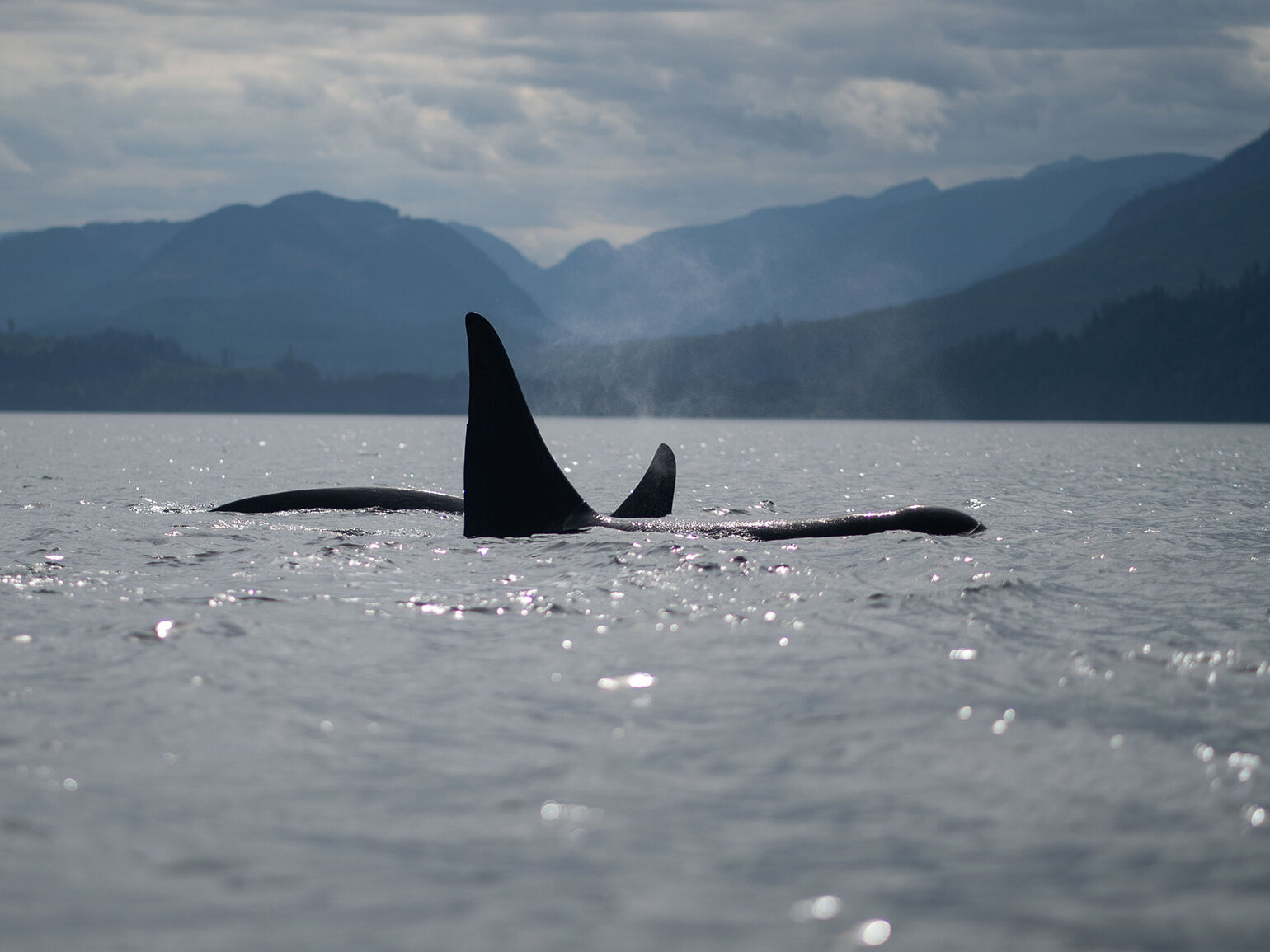
Two killer whales surfacing on the ocean.
Photo by John Kelsey.

Killer whale population health and dynamics

Killer whales live in small populations that from their size alone would appear to be vulnerable to negative effects of inbreeding.  We recently sequenced the entire genomes of 142 members of the Northern Resident population to directly  assess inbreeding, genetic diversity, and immune system strength. We are comparing this information in this dataset to one for Southern Residents compiled by NOAA in the United States. This will help us gain insight into the comparative health of these important fish-eating populations of killer whales. We are also finalizing a study of inbreeding in marine mammal-eating Bigg’s killer whales, which will inform our understanding of similarities and differences between North Pacific killer whale populations.

Environmental DNA to aid research focused on wild salmon and coastal wolves

Our research on wild salmon and coastal wolf populations has the potential to be expanded through the use of environmental DNA (eDNA) monitoring and analysis. Through eDNA, we can track and assess salmon populations and determine abundance and diversity. Using wolf scat samples we can identify specific individuals, their sex, and the prey consumed. By learning more about these important populations, we hope to drive policy change to protect biodiversity.

Research scientist Adam Warner holding two small beakers while wearing a lab coat in a lab.
Photo by Alex Harris / Raincoast Conservation Foundation.

Recent articles

A humbpack feeds

Big oil eyes B.C. coast

Marine mammals have made a remarkable recovery in this province, but that could be erased by a catastrophic oil spill. Georgia Straight By Charlie Smith Since 2004, scientists have been travelling up and down the B.C. coast on the Achiever, a steel-hulled, 22-metre sloop owned by the Raincoast Conservation Foundation. In this time, they have…
Juvenile sockeye infected with sea lice as they migrate past fish farms in the Discovery Islands

Impacts of sea lice on wild salmon

Dave Dickson at CFAX speaks with Raincoast biologist Micheal Price about his sea lice research and early findings on the presence of sea lice on juvenile Fraser River sockeye…
Doug Brown

Honouring ‘Wolfman’ Doug Brown Jr.

Our first ‘real’ blog post from the heart of the Great Bear Rainforest! Perhaps you are expecting tales of bears, wolves, or salmon.  Well, after three days of fieldwork, we have not yet seen any charismatic wildlife (except a nice spike buck in velvet). And we have heard that locals have been catching some salmon,…
Royal Victoria Marathon logo.

RVM 10-10-10 Join the salmon run

Raincoast  is an Official Pledge Charity of the 31st Annual Royal Victoria Marathon! Did you know that some Fraser River sockeye salmon swim upstream the equivalent of 12 full marathons?  Join our Raincoast Salmon Run team, and help us reach our goal of walking and running 12 full marathons and our financial goal of $30,000. Your…
A man smiling in front of a tree.

The ‘Get Out’ Migration

Reflecting on last Saturday’s finale of Alexandra Morton’s amazing Get Out Migration, the walk from Sidney (starting at the Shaw Ocean Discovery Centre) to the legislature was absolutely inspiring. The Ocean Discovery Centre had a great Get Out Migration exhibit, along with a moving montage of images from the Get Out Migration’s previous legs, accompanied…
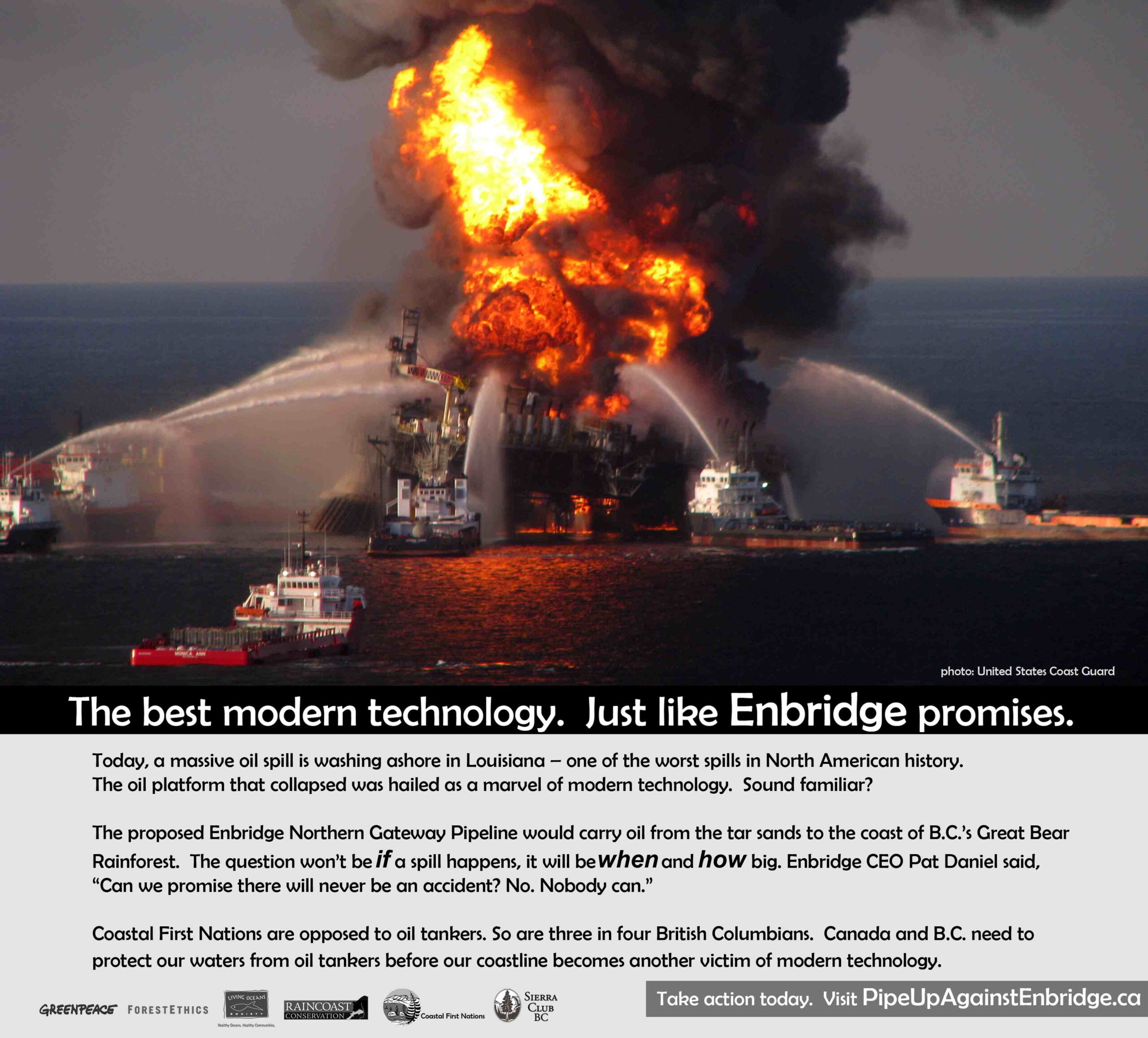
The best modern technology, just edwards.

Ad draws attention to oil spill risk

The best modern technology.  Just like Enbridge promises. Half page ad taken out by Raincoast, Greenpeace, coastal First Nations and others, points to the risks associated with oil extraction and transport. Read about one person’s perspective on BP’s safety record and the constant drive of the oil industry to reduce costs.
A man and woman holding a baby in front of a tree.

Our first blog entry!

More notes, more ideas, more reflections. More action. The Raincoast Conservation Foundation has been at the fore front of science and research on the coast of British Columbia for a number of years. We publish peer reviewed papers, we develop reports, we host conferences. We also have a talent for getting press, we produce a…
A wolf laying on a pile of wood.

Groups decry province’s proposed aerial wolf kill

By Andrea Woo, Vancouver Sun A collective of Canadian environmental groups has written an open letter to Premier Gordon Campbell decrying the provincial government’s proposal for an aerial wolf kill in efforts to protect the dwindling mountain caribou population.