Conservation Genetics Laboratory 

Our conservation genetics research addresses threats to cetaceans, fish, and coastal carnivores. 

The Conservation Genetics Lab is an integral part of Raincoast’s efforts to protect the land, waters and wildlife of coastal BC. The DNA and RNA analysis we perform provides our scientists with reliable insights into the population structure, health, diets, and resilience and genetic isolation of coastal species. The lab works closely with our Cetacean Conservation Research Program and also helps answer important questions for our other conservation initiatives. 

Two hands wearing blue gloves holding and organizing beakers.
Research scientist Adam Warner holding two small beakers while wearing a lab coat in a lab.

Cutting edge genetics and genomics analysis

The Raincoast Conservation Genetics Lab is equipped with a complete set of instrumentation to conduct molecular biology and genetics, including cutting-edge DNA sequencing technology. Our Research Scientist, Dr. Adam Warner, has extensive experience in genetics, genomics and DNA sequencing, has set up our lab space and has begun to carry out this research under the guidance of our Cetacean Research Program directors Dr. Lance Barrett-Lennard and Dr. Valeria Vergara. The lab works alongside Fisheries and Oceans Canada, which is hosting our lab space at the Pacific Science Enterprise Centre.

Understanding killer whale diet

A lack of sufficient Chinook salmon in the diets of Southern and Northern Resident killer whales has been linked to declines in population health. Our lab has the ability to extract and analyze salmon DNA from Resident killer whales feces, to identify the salmon stocks of most importance to the whales. Since we can identify the individual whales that produced fecal material genetically, we can link other health metrics such as stress hormone levels (also found in the fecal material) to individual killer whales. 
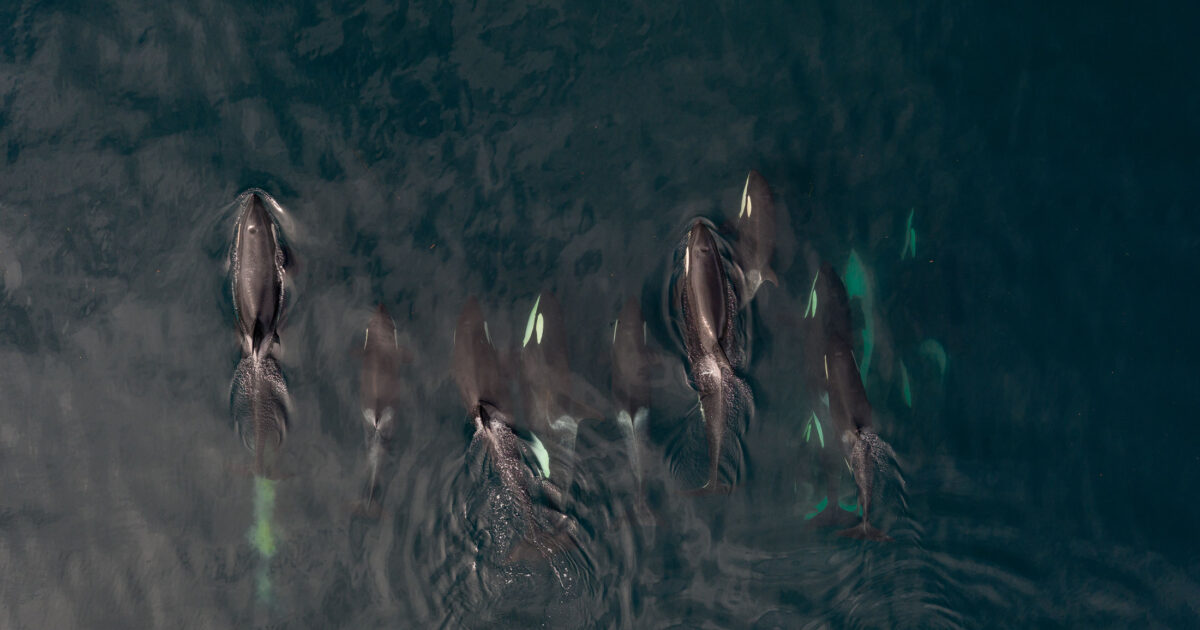
Overhead photo of a pod of killer whales swimming in the ocean.
Photo by Raincoast Conservation Foundation, taken under SARA Research License XMMS-2-2022.
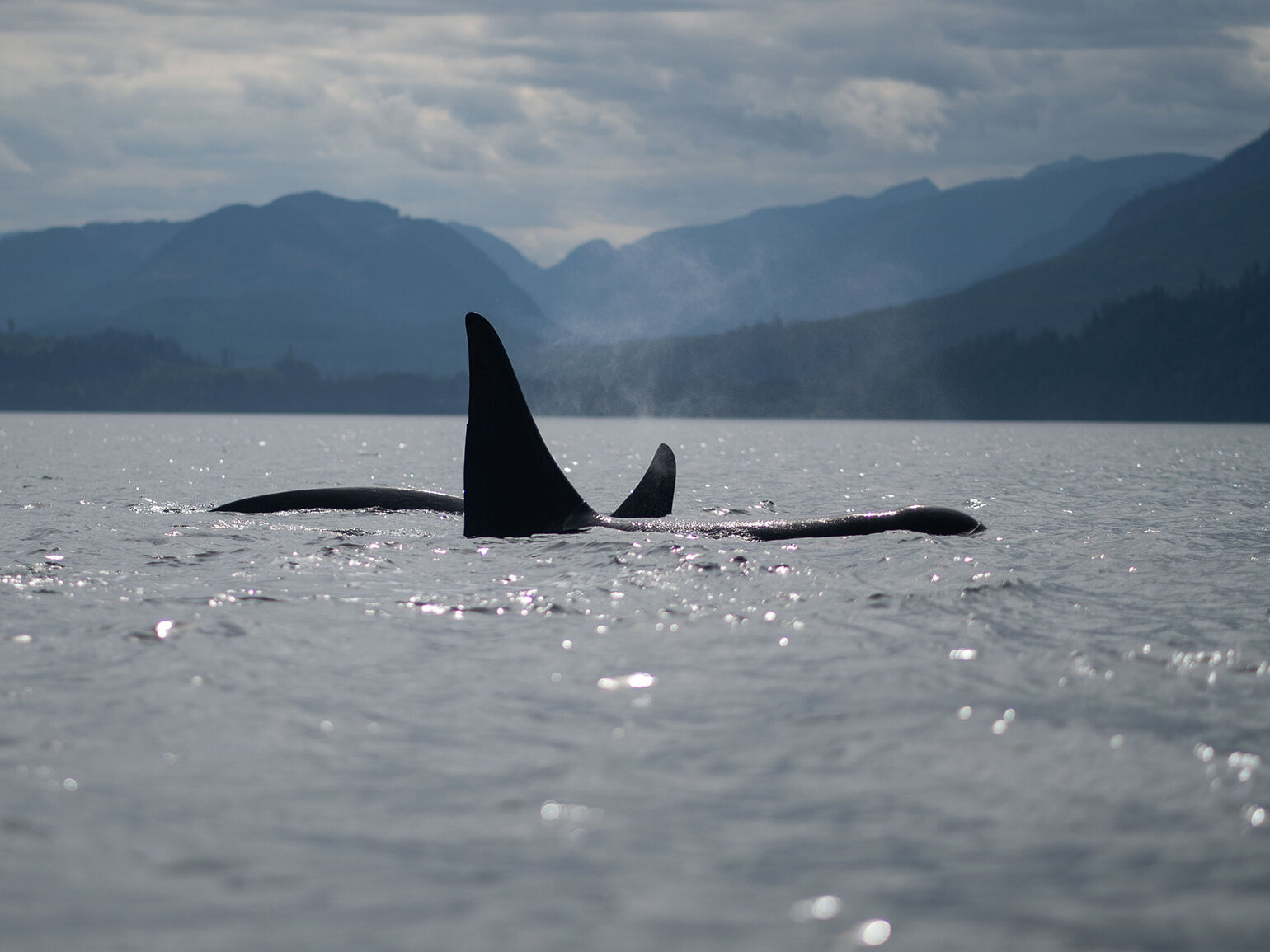
Two killer whales surfacing on the ocean.
Photo by John Kelsey.

Killer whale population health and dynamics

Killer whales live in small populations that from their size alone would appear to be vulnerable to negative effects of inbreeding.  We recently sequenced the entire genomes of 142 members of the Northern Resident population to directly  assess inbreeding, genetic diversity, and immune system strength. We are comparing this information in this dataset to one for Southern Residents compiled by NOAA in the United States. This will help us gain insight into the comparative health of these important fish-eating populations of killer whales. We are also finalizing a study of inbreeding in marine mammal-eating Bigg’s killer whales, which will inform our understanding of similarities and differences between North Pacific killer whale populations.

Environmental DNA to aid research focused on wild salmon and coastal wolves

Our research on wild salmon and coastal wolf populations has the potential to be expanded through the use of environmental DNA (eDNA) monitoring and analysis. Through eDNA, we can track and assess salmon populations and determine abundance and diversity. Using wolf scat samples we can identify specific individuals, their sex, and the prey consumed. By learning more about these important populations, we hope to drive policy change to protect biodiversity.

Research scientist Adam Warner holding two small beakers while wearing a lab coat in a lab.
Photo by Alex Harris / Raincoast Conservation Foundation.

Recent articles

A man and woman holding a baby in front of a tree.

Emerging from the den

Our spring field season has arrived and is led by Dr. Chris Darimont, Raincoast Director of Science by Chris Darimont Possessing only a rudimentary knowledge of gravity, delicate little claws for braking, and pure trust in their momma, brand new grizzly cubs are slip-sliding their way down snowfields this month as they emerge from their…
A wolf laying on a pile of wood.

Wolf kill to save caribou strongly opposed

The following open letter has been sent to BC Premier Gordon Campbell opposing the killing of wolves and cougars to save mountain caribou May 3, 2010BY FAX AND E-MAIL Premier Gordon CampbellPO Box 9041 STN PROV GOVTVictoria, BC V8W 9E1Fax: (250) 387-0087 Dear Premier Campbell: The undersigned organizations are strongly opposed to the killing of…
A man smiling on the deck of a boat.

Oil sands revenue and education

Letter to the Editor, Financial Post Re: Enbridge Chief Defends Gateway Pipline. April 30 It was fascinating to read how Enbridge CEO Patrick Daniel is advocating for corporate socialism as he flogs his company’s Northern Gateway Pipeline project. Mr. Daniel’s suggestion that Canadians will need to massively subsidize the transport of tar sands crude through…
Extent of gulf oil spill as of May 3 2010

Gulf oil spill spurs Canadian concerns

In the wake of the Gulf of Mexico oil spill disaster, federal opposition parties are calling for emergency hearings before the Commons Natural Resources Committee to discuss the need for more stringent safeguards against oil spills in Canada’s Arctic. But the public needs be properly and clearly informed as to the risks and tradeoffs with…
underwater photo of sockeye salmon in BC river

The Get Out Migration – Salmon are Sacred

Sidney Presentation by Alexandra Morton – Salmon are Sacred Alexandra Morton will be giving an evening presentation about her reasons for rallying the public around wild salmon. She’ll share her experiences about her journey on the Migration and her hopes for the next day’s rally in Victoria at the Parliament buildings. A table will be…
Oil tanker in BC waters

Coastal waters are no place for oil tankers
Special to the Vancouver Sun, Earth day April 22 2010 By Josh Paterson, Jen Lash, Nikki Skuce, Gerald Amos, Pat Moss, Eric Swanson, Jennifer Rice, Julia Hill and Chris Genovali. Federal studies have repeatedly concluded that oil tankers must be prohibited in some sensitive marine areas because of the severe risks. The Campbell government was…
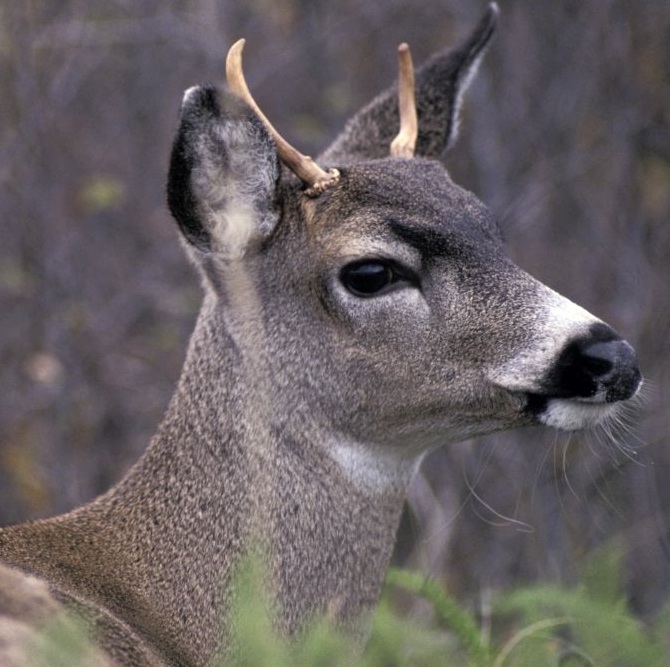
A close up of a deer with horns.

Would you like worms with that?

Raincoast researchers publish paper on unexpected discovery. Conservation research can lead to unexpected findings. Sometimes these surprises relate to our core questions while other times they belong in a science fiction film.  One of these findings occurred while we were studying diseases that might harm wildlife in coastal BC. Though not what we set out…
dummy-img

Identification of nematodes in feces of gray wolves

Heather M. Bryan, Kathrin A. Sim, Chris T. Darimont, Paul C. Paquet, Brent Wagner, Violeta Munoz- Fuentes,  Judit E. Smits, and Neil B. Chilton. 2o1o. Identification of Parelaphostrongylus odocoilei (Nematoda: Protostrongylidae) First-Stage Larvae in the Feces of Gray Wolves (Canis lupus) by Molecular Methods. Journal of Wildlife Diseases, 46(1) 297–302