Conservation Genetics Laboratory 

Our conservation genetics research addresses threats to cetaceans, fish, and coastal carnivores. 

The Conservation Genetics Lab is an integral part of Raincoast’s efforts to protect the land, waters and wildlife of coastal BC. The DNA and RNA analysis we perform provides our scientists with reliable insights into the population structure, health, diets, and resilience and genetic isolation of coastal species. The lab works closely with our Cetacean Conservation Research Program and also helps answer important questions for our other conservation initiatives. 
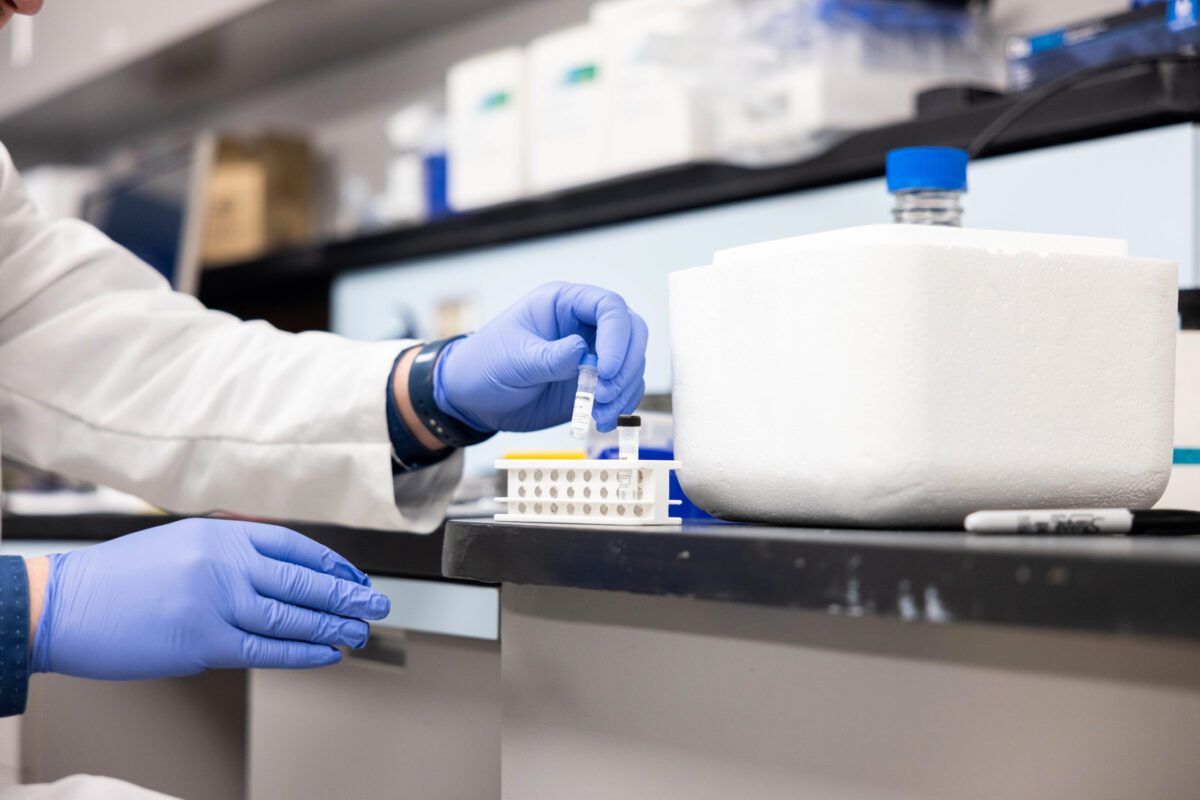
Two hands wearing blue gloves holding and organizing beakers.
Research scientist Adam Warner holding two small beakers while wearing a lab coat in a lab.

Cutting edge genetics and genomics analysis

The Raincoast Conservation Genetics Lab is equipped with a complete set of instrumentation to conduct molecular biology and genetics, including cutting-edge DNA sequencing technology. Our Research Scientist, Dr. Adam Warner, has extensive experience in genetics, genomics and DNA sequencing, has set up our lab space and has begun to carry out this research under the guidance of our Cetacean Research Program directors Dr. Lance Barrett-Lennard and Dr. Valeria Vergara. The lab works alongside Fisheries and Oceans Canada, which is hosting our lab space at the Pacific Science Enterprise Centre.

Understanding killer whale diet

A lack of sufficient Chinook salmon in the diets of Southern and Northern Resident killer whales has been linked to declines in population health. Our lab has the ability to extract and analyze salmon DNA from Resident killer whales feces, to identify the salmon stocks of most importance to the whales. Since we can identify the individual whales that produced fecal material genetically, we can link other health metrics such as stress hormone levels (also found in the fecal material) to individual killer whales. 
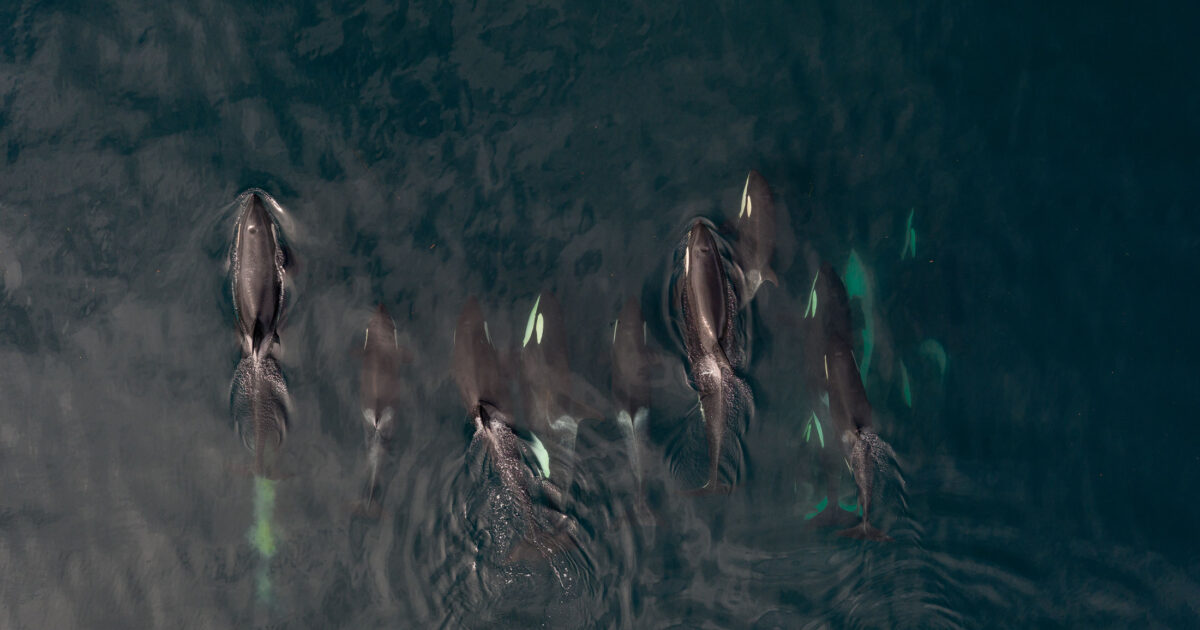
Overhead photo of a pod of killer whales swimming in the ocean.
Photo by Raincoast Conservation Foundation, taken under SARA Research License XMMS-2-2022.
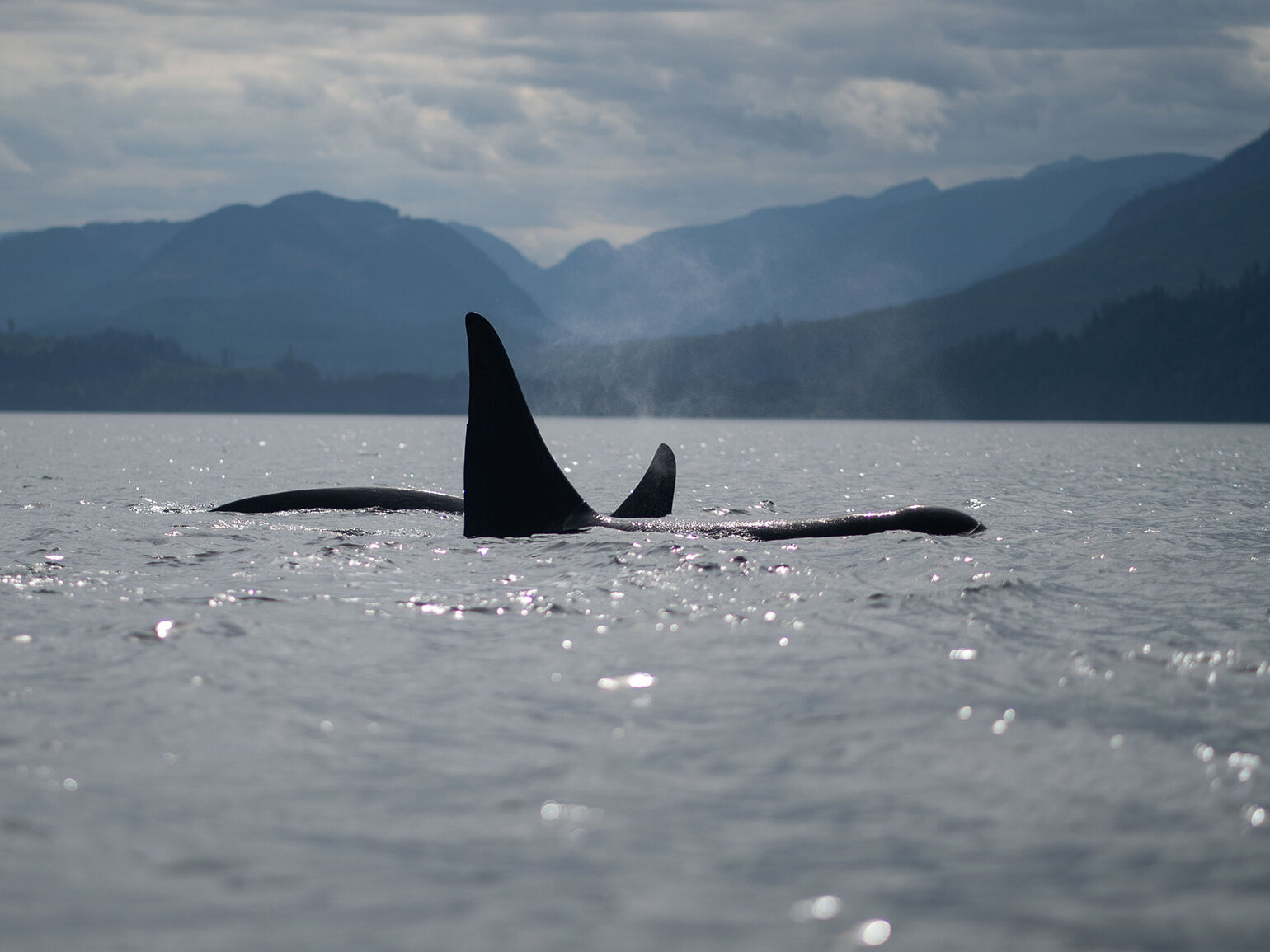
Two killer whales surfacing on the ocean.
Photo by John Kelsey.

Killer whale population health and dynamics

Killer whales live in small populations that from their size alone would appear to be vulnerable to negative effects of inbreeding.  We recently sequenced the entire genomes of 142 members of the Northern Resident population to directly  assess inbreeding, genetic diversity, and immune system strength. We are comparing this information in this dataset to one for Southern Residents compiled by NOAA in the United States. This will help us gain insight into the comparative health of these important fish-eating populations of killer whales. We are also finalizing a study of inbreeding in marine mammal-eating Bigg’s killer whales, which will inform our understanding of similarities and differences between North Pacific killer whale populations.

Environmental DNA to aid research focused on wild salmon and coastal wolves

Our research on wild salmon and coastal wolf populations has the potential to be expanded through the use of environmental DNA (eDNA) monitoring and analysis. Through eDNA, we can track and assess salmon populations and determine abundance and diversity. Using wolf scat samples we can identify specific individuals, their sex, and the prey consumed. By learning more about these important populations, we hope to drive policy change to protect biodiversity.

Research scientist Adam Warner holding two small beakers while wearing a lab coat in a lab.
Photo by Alex Harris / Raincoast Conservation Foundation.

Recent articles

Misty MacDuffee stands in the rain explaining the risks to SRKWs.

Misty MacDuffee speaks to lack of government action on Southern Resident killer whales

What is the Government of Canada doing to protect Southern Resident killer whales? Misty MacDuffee discusses how the overlapping risks to these whales have not been addressed as of May 2018, with host Adam Sterling at CFAX 1070
Southern Resident killer whale mother and juvenile.

Oil tankers: a killer for whales

The National Energy Board recommended approval of the Trans Mountain expansion knowing the Kinder Morgan project would jeopardize the survival of the Southern Residents…
Five Southern Resident killer whales swim side by side in the Salish Sea.

Feds’ fisheries announcement a welcome first step: groups renew call for killer whale emergency order

Conservation groups applaud today’s federal announcement that endangered Southern Resident killer whales face “imminent threats” to their survival and recovery. Prompted by this assessment, the Ministers also announced fisheries closures in key foraging areas …
A Pacific herring stops moving for a moment; figures from the research about herring are on the right hand side.

Pacific herring spawn events influence nearshore subtidal and intertidal species
Although we know that herring play a pivotal ecological role in nearshore ecosystems, from a scientific perspective little is known about the amount of energy and nutrients they transfer from the ocean to the land. Therefore, researchers at Raincoast Conservation Foundation, University of Victoria, and Dalhousie University, aimed to determine if the nutrients that herring…
A grizzly bear meanders in the Great Bear rainforest.

Confronting the elephant (head) in the room – researchers challenge the conservation community on the ethics of trophy hunting
Writing in the scientific journal, Conservation Letters, an international team of conservation scientists is challenging the conservation community to fully consider the ethics of trophy hunting and think critically about endorsing the practice as a key funding mechanism for wildlife protection. Read our new paper, “The elephant (head) in the room: A critical look at trophy…
A lion head is attached as a trophy to a post overlooking a large expanse of desert, and several University logos on the right hand side.

Conservation Letters: The elephant (head) in the room: A critical look at trophy hunting
Writing in the scientific journal, Conservation Letters, an international team of conservation scientists argue that trophy hunting – hunting that involves the collection of animal body parts, or “trophies,” – is morally wrong. Led by Chelsea Batavia from the Department of Forest Ecosystems and Society at Oregon State University, the authors identify trophy hunting as…
A bear stands in the distant grass and fog to get a better look or maybe smell.

On the hunt for science in ‘science-based’ hunts
For years, British Columbia’s wildlife management practices, especially its wolf cull and grizzly bear hunt, have been controversial. In 2015, then-Premier Christy Clark defended the province’s wildlife policies, stating they were grounded in sound science. That, at least, was the claim. And not one unique to British Columbia. In fact, hunting in Canada and the…
Kate Field and the bear research squad prepare for the imminent field season.

Notes from the (pre) field: “Caution – bear research in progress”

With spring comes organized chaos as graduate students and research associates transition from laboratory work, data analysis and writing, to a flurry of preparation for an upcoming season of monitoring bears on the central coast of British Columbia. We are headed to Gitga’at, Heiltsuk, Kitasoo/Xai’xais, Nuxalk and Wuikinuxv Territories to join…