
Climate change

We use a comprehensive approach to inform actions that benefit salmon ecosystems in a changing climate.

Photo by Fernando Tessa.

Climate change is causing severe hydrological shifts in salmon streams through long-term reductions in snowpack, earlier spring melts, increased frequency of heat waves, atmospheric rivers and flood events, and increased drought frequency. These impacts create conditions unsuitable for wild salmon to recover and thrive.

Juvenile salmon in a fish viewfinder.
Photo by Alex Harris / Raincoast Conservation Foundation.
School of coho in a river.
Photo by Fernando Lessa.

Unsustainable land use is compounding the impacts of climate change

Unsustainable land use occurring throughout the province is making these conditions even worse. Clear-cut logging, mining, and water withdrawal for industry and agriculture alter salmon habitat, reduce streamflow, and increase water temperatures. Stream-type Chinook and coho salmon that spend a year in freshwater before migrating to the ocean are particularly vulnerable to degraded freshwater habitat caused by logged forests, fires, droughts, and floods.

Forestry degrades salmon habitat

Logging can alter the delivery and storage of water, nutrients, wood, and sediment in streams. This results in changes to the habitat, growth, and survival of juvenile salmon. Clear-cut logging can increase turbidity in salmon-bearing streams affecting survival of eggs and fry, while the conversion of old growth forest into plantation monocultures can lower summer stream flow and increase temperatures. The legacies of antiquated forest management that prioritizes harvestable timber above all other values confounds the effects of climate change on freshwater habitat quality and quantity for salmon.

A rivers running through the forest right next to a large clearcut area.
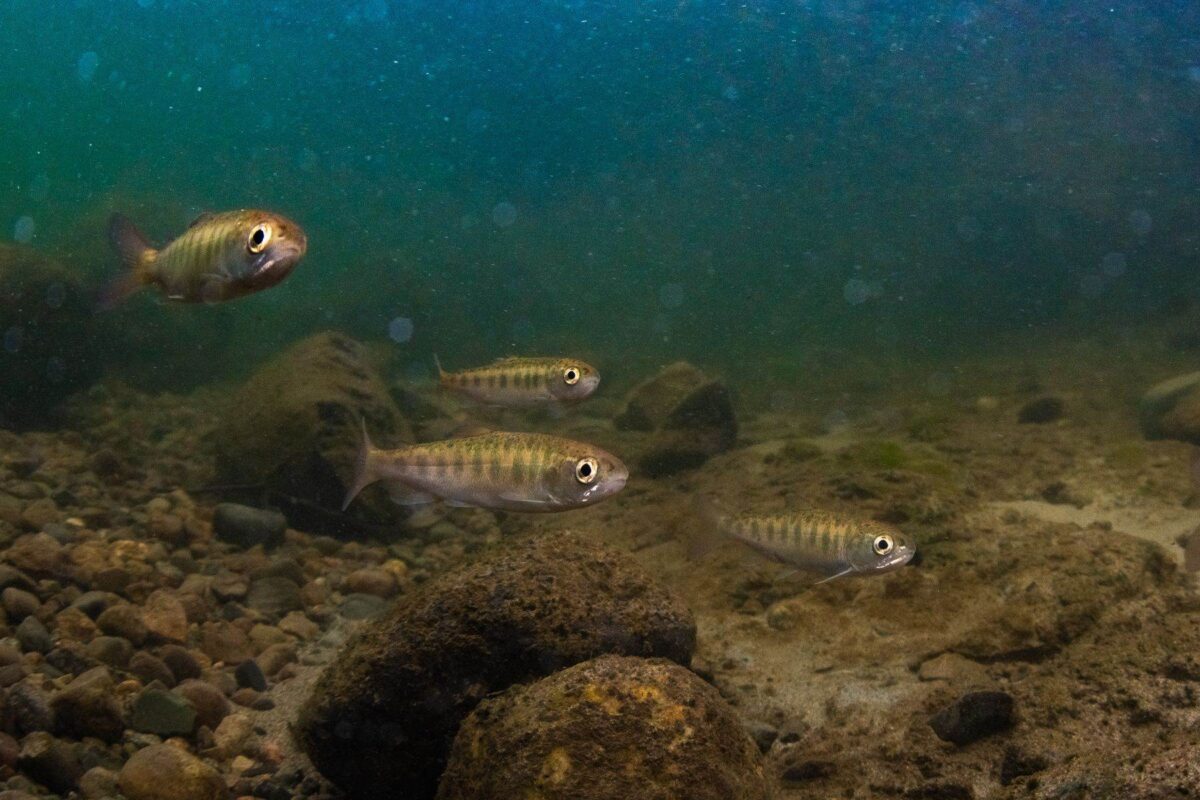
Four small salmon swimming near the bottom of the water.
Photo by Fernando Lessa.

Wildfires impact salmon

Recent wildfires in BC have brought climate-change related effects into focus: wildfires are getting larger, more intense, and more frequent. The suppression of wildfires can increase fuel load and the corresponding severity of wildfires, particularly in the drier and hotter regions of the province.

The loss of vegetation and alteration of soil properties from hot wildfires can dramatically change the way rainfall permeates soil, and can cause increased runoff, sedimentation, and landslides that can smother incubating salmon eggs. Additionally, fire retardants used to suppress fires contain compounds that are toxic to aquatic life and can increase fish mortality, particularly for young Chinook salmon. 

Floods impacting salmon

The forest management paradigm of British Columbia has increased the magnitude of and frequency of the biggest floods. In snow-dominant watersheds, such as those of the BC interior, reduced forest cover from logging leads to faster snowmelt and larger floods. Increased flood risk can degrade water quality through increased sedimentation and contaminants, and can kill incubating salmon eggs from riverbed scouring.

Underwater image of salmon swimming.
Photo by Fernando Lessa.
Coho salmon swimming in a river.
Photo by Fernando Lessa.

Engaging with decision-makers

Now is the time to improve federal and provincial land-use policies for the health and climate resiliency of ecosystems and to advance the recovery of at-risk salmon populations. These policies must support freshwater security at the community level and uplift the rights and priorities of Indigenous peoples.

Raincoast is engaging with decision-makers at all levels of government to advocate for science-based policy solutions that ensure wild salmon are resilient in a changing climate.   

Recent reports

Recent articles
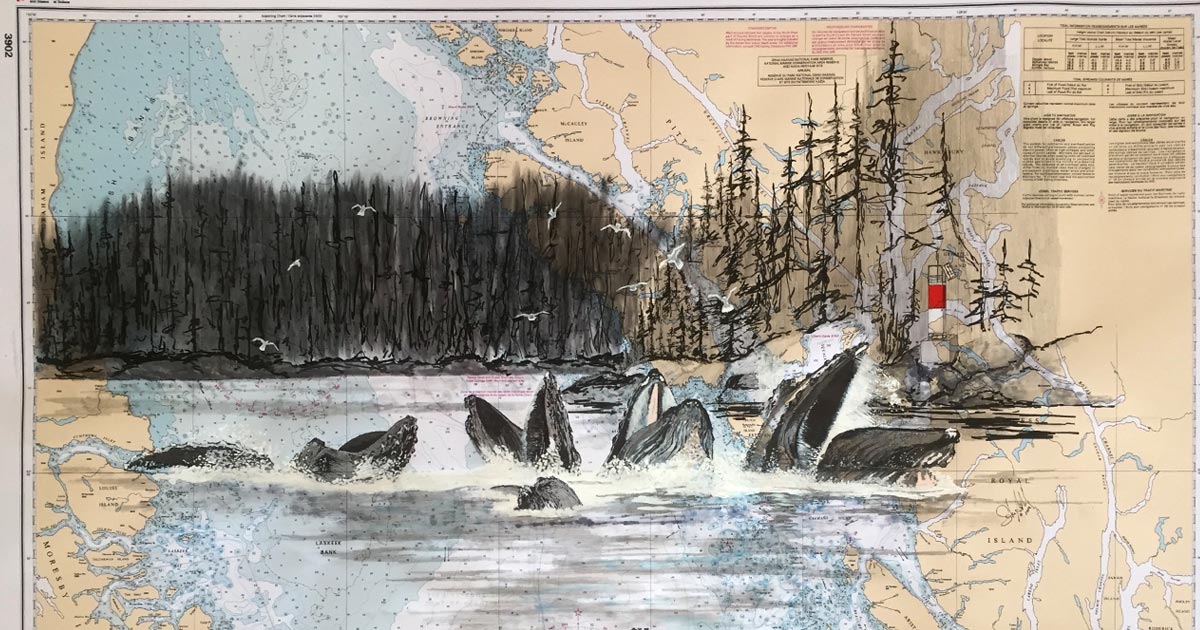
Forest and Humpbacks drawn over a map of the Hecate Strait.

Humpback whales, artistic cartography, for the coast

Watching these magnificent creatures work in unison to catch their meal was truly inspirational and became the idea behind my first Artistic Cartography piece for Raincoast. Listening to them, via the hydrophone that Captain Nick dropped over the side, still makes the hair on the back of neck stand on end and solidified the artistic idea that this hunting method had to be painted…
A single Southern Resident killer whale surfaces in the Salish Sea.

No half measures for Southern Resident killer whales
Right now, as we anticipate the return of these endangered whales to the Salish Sea, the federal government is considering exactly what measures they will take to aid recovery in 2019. They are asking you for your input, and it is critical that you encourage them to make the right choice. Many voices are advocating for less ambitious recovery actions…
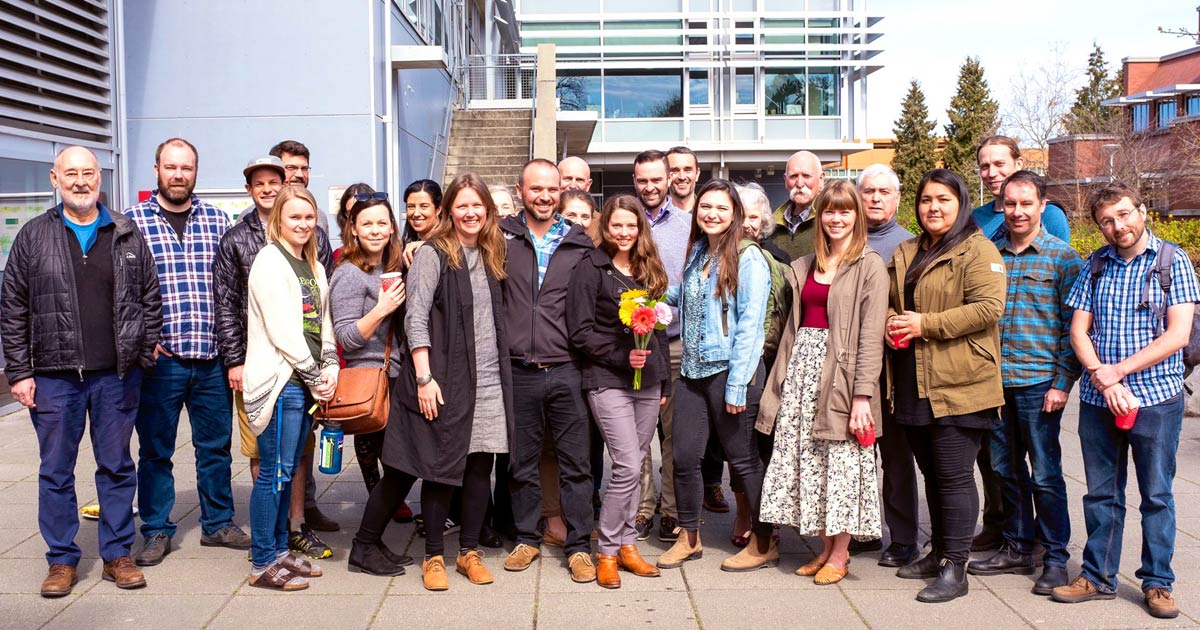
A group of scientists and students converge after Christina Service's dissertation defence.

The future of applied conservation science is bright

This has been a time of remarkable accomplishment for the Raincoast Applied Conservation Science Lab at the University of Victoria. The research that the lab produces is a dynamic mix of population analyses, biogeography, marine-terrestrial interactions and much more, all rooted in a ‘wildlife welfare’ ethic. Collaboration with Indigenous communities forms the hallmark of much of this work, which is being directly applied…
A wolf rests on the beach in the Great Bear Rainforest, with a chart from Figure 1 overlaid.

Research: Publication reform to safeguard wildlife from researcher harm

Scientists from Raincoast Conservation Foundation, University of Victoria, Alpha Wildlife Research & Management, and University of Saskatchewan reviewed more than 200 peer-reviewed academic journals that commonly publish wildlife research, evaluating the presence and comprehensiveness of ‘Animal Care’ requirements of authors. The study, “Publication reform to safeguard wildlife from researcher harm,” published as an open access article…
Chris Darimont speaks at Ocean Awards at the Vancouver Aquarium.

Oceans Awards win – Raincoast’s Dr. Chris Darimont honoured with Murray A. Newman Conservation Award

Darimont was recognized for the significance of his work as well as a career that already includes important and leading contributions, in coastal science and conservation…
Students aboard Achiever, cluster around the bow on the Salish Sea.

Creating transformative experiences for students on the Salish Sea

These experiences are transformative and what we strive to create for young people with the Salish Sea Emerging Stewards program. The program brings students on multi-day journeys aboard Achiever to learn about coastal environments and conservation challenges…
L121 and calf in the Salish Sea.

NEB recommends Trans Mountain proceed despite “significant adverse effects” to Southern Residents
The National Energy Board (NEB) has recommended that the Trans Mountain expansion project should proceed despite the “significant adverse effects” of oil tankers on the critically endangered population of Southern Resident killer whales. Although we disagree with the NEB’s conclusion, their review of the project effects on killer whales is forthright and portrays the severity of the current situation…
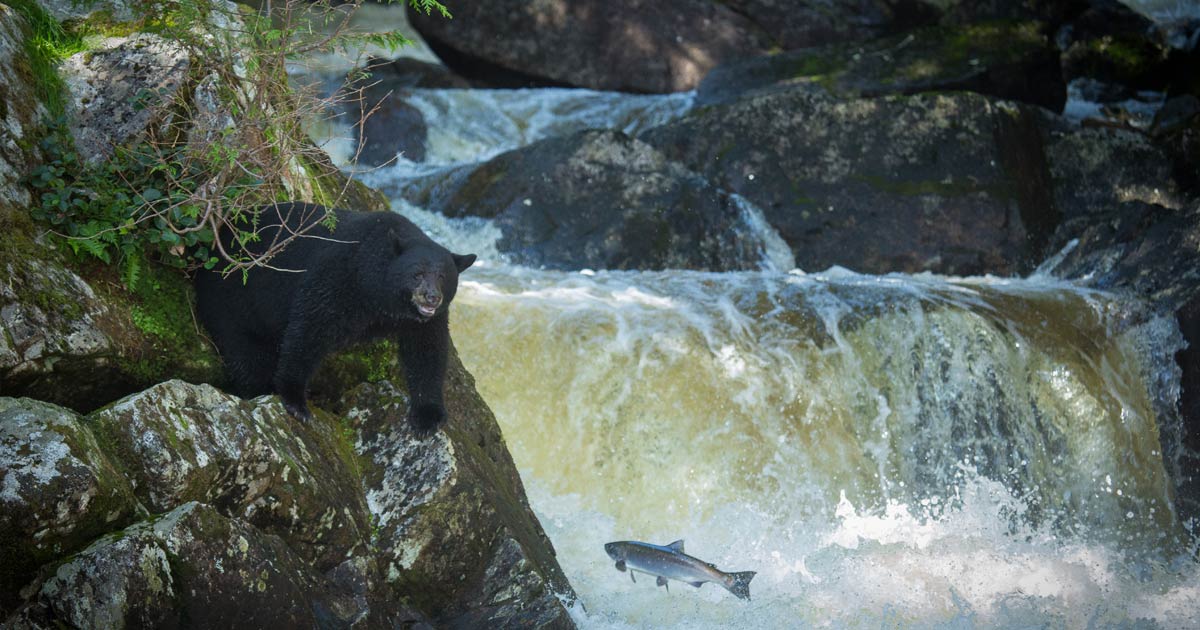
A black bear on the left is standing on large mossy rocks. There is a stream with a small water fall the right, and a salmon is jumping out of the water in the direction of the bear. The bear has its left paw extended. It looks like a sunny day, although the sky is not in the photo.

Diversity of salmon species a necessary metric to understanding how bears feed

Salmon biomass is a measure of the total kilograms of spawning salmon. Many who are in the role of implementing conservation strategies and policies think that when it comes to bears, or terrestrial wildlife, more salmon biomass simply means more eating. However, our recent research published…