
Climate change

We use a comprehensive approach to inform actions that benefit salmon ecosystems in a changing climate.

Photo by Fernando Tessa.

Climate change is causing severe hydrological shifts in salmon streams through long-term reductions in snowpack, earlier spring melts, increased frequency of heat waves, atmospheric rivers and flood events, and increased drought frequency. These impacts create conditions unsuitable for wild salmon to recover and thrive.

Juvenile salmon in a fish viewfinder.
Photo by Alex Harris / Raincoast Conservation Foundation.
School of coho in a river.
Photo by Fernando Lessa.

Unsustainable land use is compounding the impacts of climate change

Unsustainable land use occurring throughout the province is making these conditions even worse. Clear-cut logging, mining, and water withdrawal for industry and agriculture alter salmon habitat, reduce streamflow, and increase water temperatures. Stream-type Chinook and coho salmon that spend a year in freshwater before migrating to the ocean are particularly vulnerable to degraded freshwater habitat caused by logged forests, fires, droughts, and floods.

Forestry degrades salmon habitat

Logging can alter the delivery and storage of water, nutrients, wood, and sediment in streams. This results in changes to the habitat, growth, and survival of juvenile salmon. Clear-cut logging can increase turbidity in salmon-bearing streams affecting survival of eggs and fry, while the conversion of old growth forest into plantation monocultures can lower summer stream flow and increase temperatures. The legacies of antiquated forest management that prioritizes harvestable timber above all other values confounds the effects of climate change on freshwater habitat quality and quantity for salmon.

A rivers running through the forest right next to a large clearcut area.
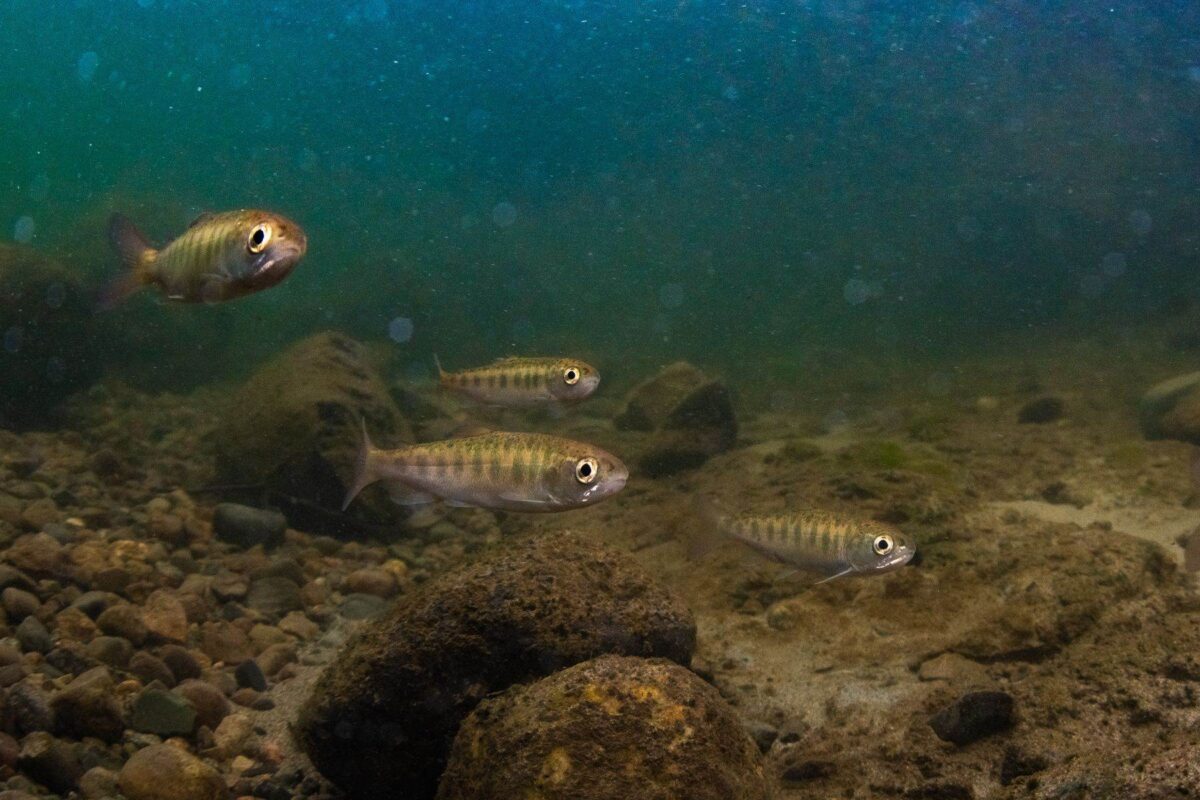
Four small salmon swimming near the bottom of the water.
Photo by Fernando Lessa.

Wildfires impact salmon

Recent wildfires in BC have brought climate-change related effects into focus: wildfires are getting larger, more intense, and more frequent. The suppression of wildfires can increase fuel load and the corresponding severity of wildfires, particularly in the drier and hotter regions of the province.

The loss of vegetation and alteration of soil properties from hot wildfires can dramatically change the way rainfall permeates soil, and can cause increased runoff, sedimentation, and landslides that can smother incubating salmon eggs. Additionally, fire retardants used to suppress fires contain compounds that are toxic to aquatic life and can increase fish mortality, particularly for young Chinook salmon. 

Floods impacting salmon

The forest management paradigm of British Columbia has increased the magnitude of and frequency of the biggest floods. In snow-dominant watersheds, such as those of the BC interior, reduced forest cover from logging leads to faster snowmelt and larger floods. Increased flood risk can degrade water quality through increased sedimentation and contaminants, and can kill incubating salmon eggs from riverbed scouring.

Underwater image of salmon swimming.
Photo by Fernando Lessa.
Coho salmon swimming in a river.
Photo by Fernando Lessa.

Engaging with decision-makers

Now is the time to improve federal and provincial land-use policies for the health and climate resiliency of ecosystems and to advance the recovery of at-risk salmon populations. These policies must support freshwater security at the community level and uplift the rights and priorities of Indigenous peoples.

Raincoast is engaging with decision-makers at all levels of government to advocate for science-based policy solutions that ensure wild salmon are resilient in a changing climate.   

Recent reports

Recent articles

Cecil Paul, Xenaksiala elder, at a book signing in Kitimat Valley.

Stories from the Magic Canoe of Wa’xaid

Cecil Paul has told the story of that long journey in–what his granny called–the magic canoe. “Build a canoe and it will be supernatural and no matter how many people will come aboard to help you paddle to save your place of birth, it will never be full.” Raincoast is one of the many organizations who stepped into the magic canoe to support and learn from the traditional knowledge systems of the Xenaksiala…
Grizzly bear in the water, in the Great Bear Rainforest.

A picture is worth 1000 words, but not at any price

As critical as these images are, we are committed to using only images that are ethically obtained. These considerations are informed by our own conservation ethics and what we learn along the way. The points below are those from a code of conduct, given to us by Brad Hill and available in full on Brad’s website…
Kloey and her mom, Vernadean, from Cowichan Secondary, SD79, in Duncan.

Salish Sea Emerging Stewards celebration

We recently closed our third season of Raincoast’s Salish Sea Emerging Stewards program with a new addition to the program – an event to connect, reflect and celebrate our precious coastline. People of all ages and backgrounds joined in the festivities as graduates of the 2018 season had the opportunity to take the stage and share their experiences and perspectives from the program…
Salmon circle on the rocky bottom of the Fraser River.

Approval of Trans Mountain expansion puts Fraser River salmon and Salish Sea estuaries at risk

The Fraser River in British Columbia remains one of the world’s most productive salmon rivers. Equally significant is the Fraser River’s estuary, which serves as vital habitat for fish, bird, and mammal species that are linked across thousands of kilometers of the Northeast Pacific Ocean. All Fraser River populations of salmon…
A killer whale in the foreground, with a container ship behind it in the mouth of the Fraser River.

We’re headed back to court for killer whales

Today we are returning to court with partners Ecojustice and Living Oceans Society to challenge the federal government’s re-approval of the Trans Mountain pipeline expansion. Our lawyers at Ecojustice submitted a motion to the Federal Court of Appeal this morning, asking for leave to launch a judicial review of Cabinet’s decision. We contend that Cabinet…
A stunning field of Lupin is framed by the epic mountains of the Kitlope.

A first grizzly bear in the Kitlope

Just days before being asked to go on a last-minute week-long trip to the Kitlope I had been glued to the pages of Cecil Paul and Briony Penn’s new book, Stories From the Magic Canoe. I was invited to visit as a guest aboard Maple Leaf, to capture visuals, to help with fundraising and awareness…
Aerial view of Maple Leaf in the Kitlope on emerald green water.

Maple Leaf’s commitment to coastal conservation
2019 marks the second year of a decade-long $100,000 commitment from Maple Leaf Adventures to our research and conservation efforts on the BC Coast and, in particular, the Great Bear Rainforest. As the spring field program for Raincoast’s Salmon Carnivore program comes to an end…
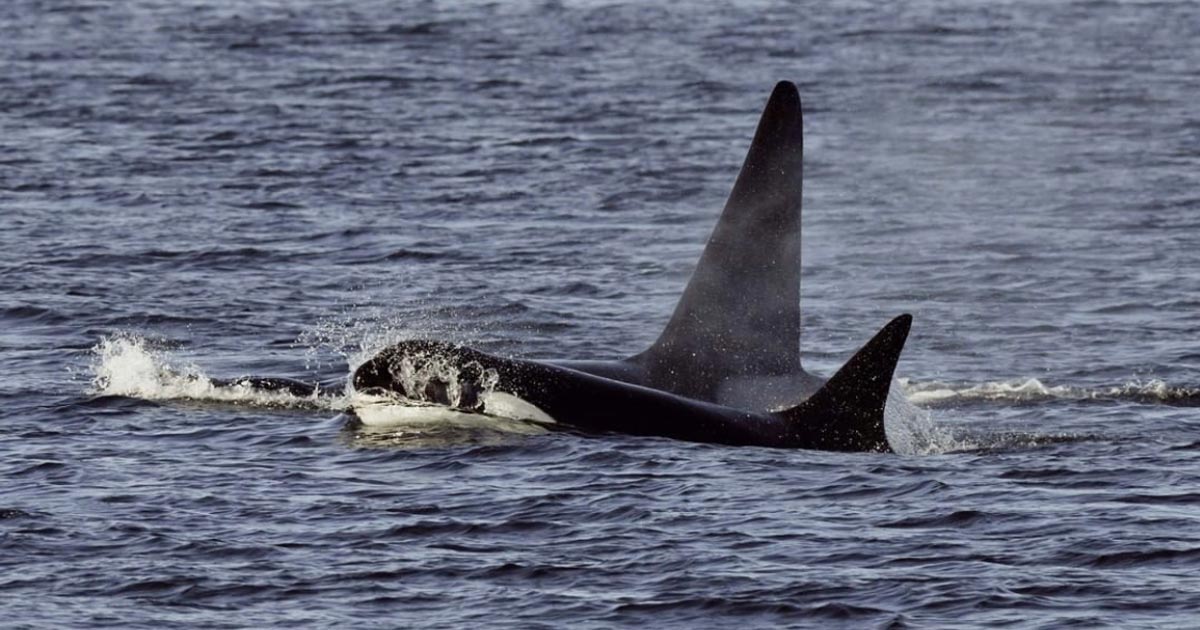
Two killer whales come to the surface of the Salish Sea.

Misty MacDuffee on CFAX 1070 talking about the approval of the Trans Mountain Pipeline

The day after the federal government approved the Trans Mountain Pipeline yet again, Raincoast’s Wild Salmon Program Director, Misty MacDuffee spoke with Mark Brennae on CFAX 1070 to talk pipelines, whales, and how humans are implicated in the disappearance of species. There is, of course, the risk of an oil spill or a vessel strike, but the noise and disturbance on both inbound and outbound tankers is always a certainty. And that noise can reduce the whales ability to echolocate and communicate…