Effects of boat- and land-based ecotourism on bears
This body of evidence will help guide ecotourism and conservation.

Chris Darimont is the director of science at Raincoast, and the lead scientist at the Raincoast Applied Conservation Science Lab at the University of Victoria. His work is in biology, evolution and ecology. You can find him on the coast, and sometimes in the waves, somewhere between San Diego and Haida Gwaii.

This body of evidence will help guide ecotourism and conservation.

Grizzlies involved in conflict and those killed by hunters are generally different members of the bear population.

Grizzlies don’t go looking for conflict. And conflict cannot be reduced by hunting.
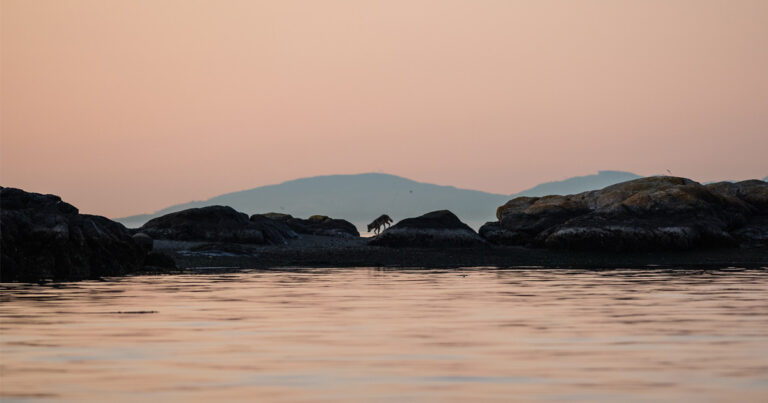
Without the crushing emotional burden of a pandemic, Takaya the grey wolf would surely and immediately emerge as British Columbia’s Cecil the Lion. His senseless killing by a hunter this week could – and should – leave a significant and enduring mark on society and provincial wildlife management. To get there, however, we need to…

When evidence informs advocacy, a potent approach to conservation becomes available. This philosophy underpins everything we do at Raincoast. One of the primary vehicles to support our unique delivery of what we call informed advocacy is the Raincoast Applied Conservation Science Lab at the University of Victoria. Partnered with a science-based non-profit and dedicated to…
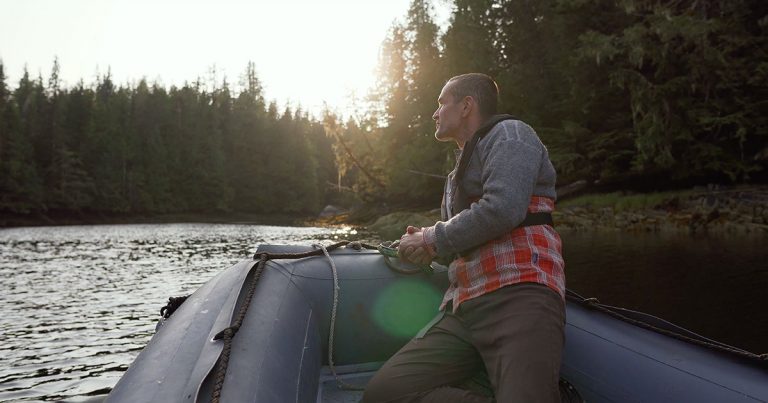
Last year the Raincoast lab at UVic marked an important new milestone with the creation of the Raincoast Chair in Applied Conservation Science at the University of Victoria. This five year Chaired Professorship allows us to expand our research, teaching and outreach programs in community-driven applied conservation science. Our long-term vision is to train next…

British Columbia has begun an ambitious effort to review the province’s approach to managing wildlife, with $14 million committed so far. The Province’s interest in reform is encouraging. As explained in a letter we recently published in the journal Science…

Writing in the scientific journal, Conservation Letters, an international team of conservation scientists is challenging the conservation community to fully consider the ethics of trophy hunting and think critically about endorsing the practice as a key funding mechanism for wildlife protection. Read our new paper, “The elephant (head) in the room: A critical look at trophy…

Most people can accept the idea of suffering and death if the hunter kills to fulfill a basic life requisite, such as feeding one’s family; in contrast, most people oppose killing inedible animals for trivial reasons, such as feeding one’s ego…
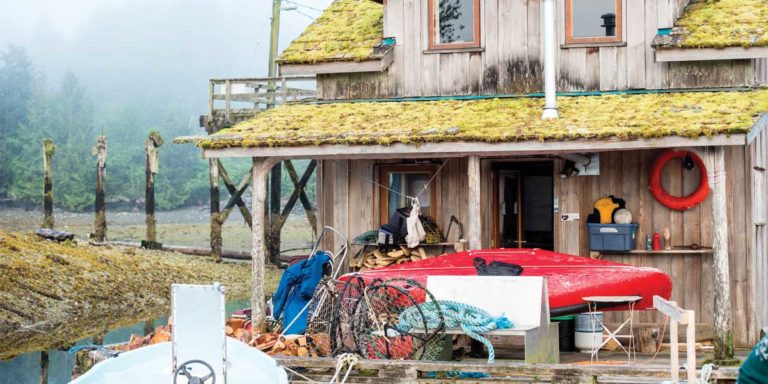
As the year closes, I look back on what Raincoast has achieved in 2017. I envision a 2018 comprised of more accomplishments for nature, people, and the places we love. What a year 2017 was! Our research and informed advocacy…

Science can predict outcomes of policy options, but how society ought to act is ultimately decided by values. The hunting ban aligns with most of society’s moral compass: trophy hunting of inedible animals is no longer acceptable…

Research from Raincoast and UVic has shed new light on what satisfies hunters. Reporting in the Wildlife Society Bulletin, we found that appreciation of nature and affiliation are common, but less pronounced ‘satisfactions’ expressed by hunters.