

Mapping thermal refuges: Identifying critical cooling centres for salmon in the Coldwater River
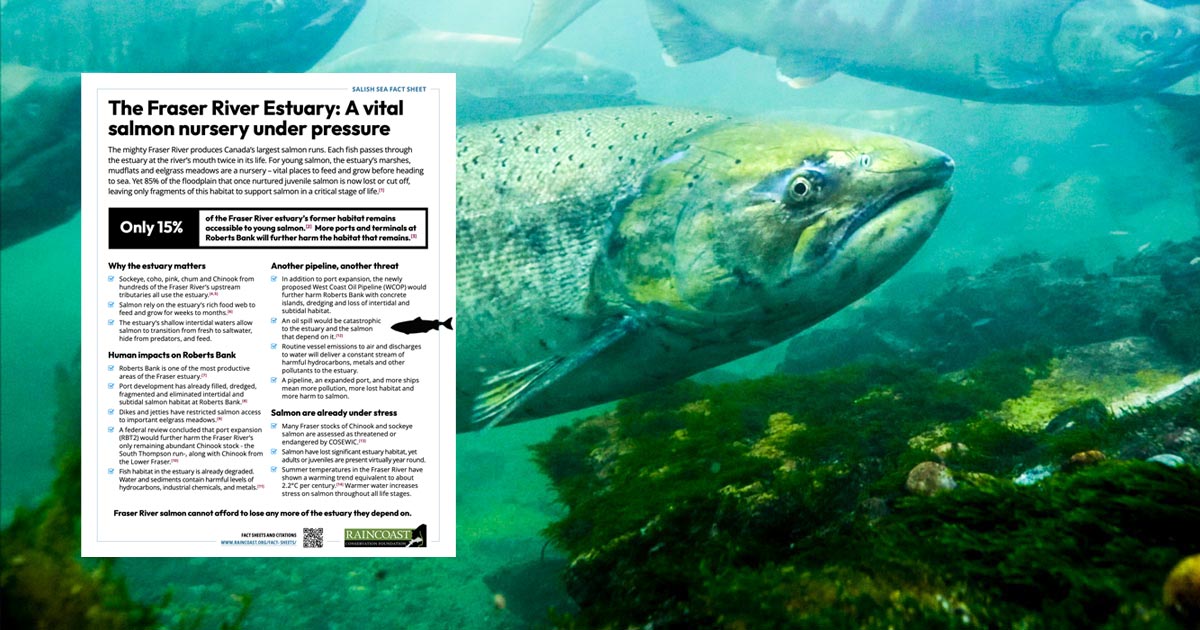
The salmon populations in the Nicola watershed are among the most endangered in BC. The Coldwater River provides critical spawning and rearing habitat for Interior Fraser Coho, Lower Thompson Chinook, and Interior Fraser Steelhead.
As climate change drives river temperatures to record highs across Western North America, the ability of salmon to survive depends on “thermal refuges” – pockets of cold water that remain cooler than the main river. In collaboration with the Scw’exmx Tribal Council and nłeʔképmx Guardians from Citxw Nlaka’pamux Assembly, Raincoast has completed a mapping project of the Coldwater River to identify these vital areas.
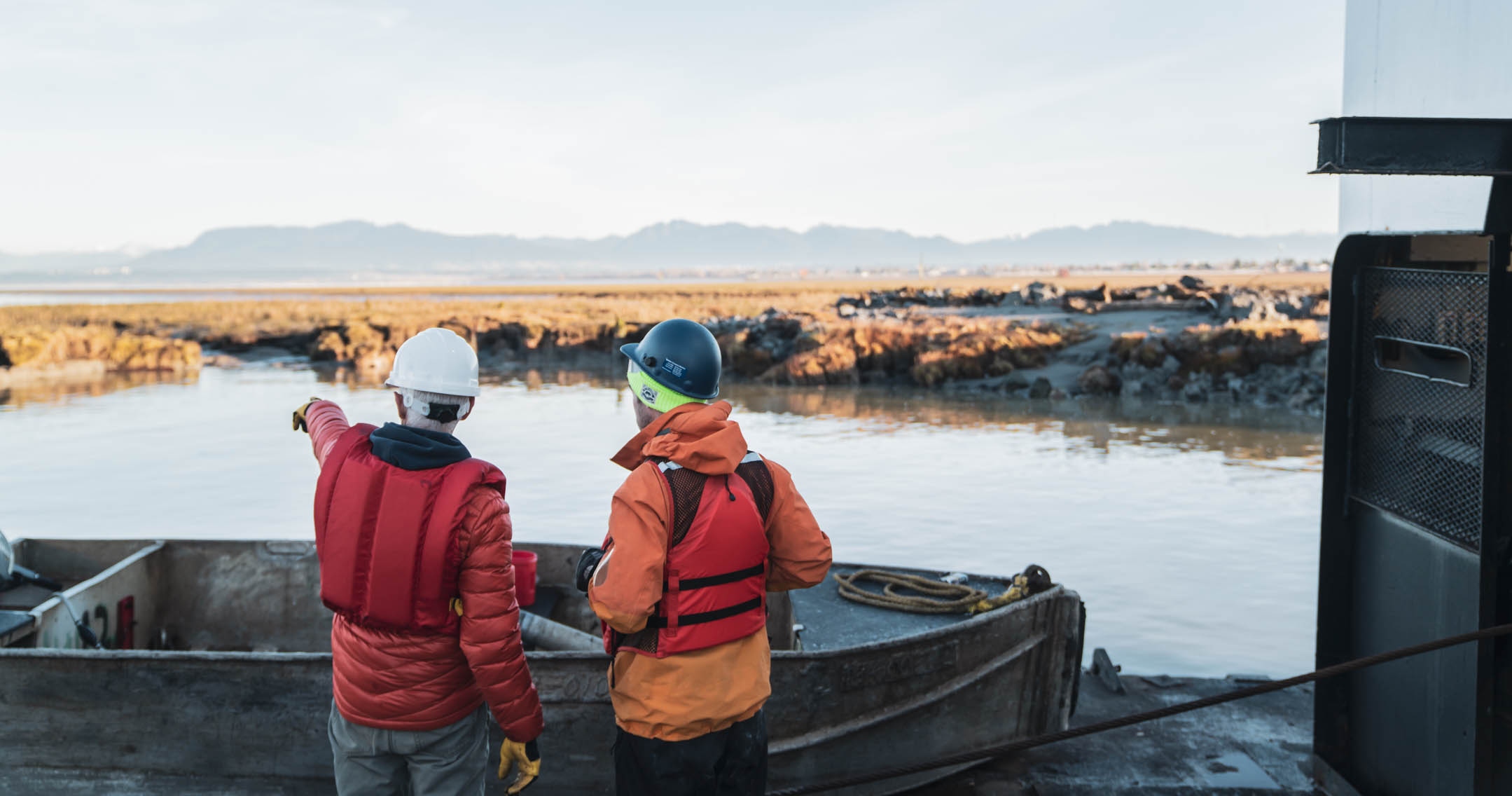
Using thermal infrared drone imaging, researchers identified groundwater-fed areas that provide salmon with a place to escape lethal summer temperatures. The researchers also conducted snorkel surveys throughout the study area to characterize riparian and aquatic habitat at thermal refuges and identify how salmon use them.
Key findings
- The project identified 38 thermal refuges within a 40 km stretch of the lower Coldwater River. Identified refuges were up to 8°C cooler than the surrounding river. These sites ranged in size, from small 10 m² trickles to 2,500 m² off-channel pools. Many of these sites lacked riparian vegetation and shade due to recent fires, floods, human infrastructure, and agricultural land use.
- The project also identified three distinct “gaps” between thermal refuges. Each gap was a roughly 4 kilometer stretch of river that did not contain thermal refuges. These gaps could prevent fish from moving to cooler habitats during heatwaves.
- A comparison of historical satellite imagery and the distribution of identified thermal refuges indicate that the 2021 flood event may have played a major role in creating new thermal refuges. Major floods reconnect the river with its floodplain and introduce pathways for groundwater to infiltrate the river.
Why it matters
The salmon populations in the Nicola watershed are among the most endangered in BC. The Coldwater River provides critical spawning and rearing habitat for Interior Fraser Coho, Lower Thompson Chinook, and Interior Fraser Steelhead, which are currently assessed by COSEWIC as endangered or threatened. Climate change, and its impact on river temperatures, has been identified as a major driver of their decline.
This applied project directly informs restoration, enhancement, and habitat protection actions that are planned for the near future. These include planting riparian vegetation to increase shade and protecting groundwater, which is the ultimate source of thermal refuges.
More research is necessary to better understand how natural river processes (floods, avulsion, sedimentation, etc) interact to create and maintain thermal refuges, and how land use practices can be altered to support these processes.
Citation
Chhor A, Lustig N, and Spahan B. 2026. Identifying thermal refuges for salmon in the Coldwater River. Raincoast Conservation Foundation. DOI: https://doi.org/10.70766/436.452
Affiliations
Raincoast Conservation Foundation: A team of scientists and conservationists who use rigorous, peer-reviewed science and community engagement to protect the lands, waters, and wildlife of coastal British Columbia.
Scw’exmx Tribal Council (STC): A non-profit organization located in Merritt, BC, representing the “People of the Creeks” (Coldwater, Nooaitch, Shackan, and Upper Nicola Indian Bands). The Council provides leadership in resource management and land stewardship (Tmixʷ research) to ensure the long-term prosperity of its member communities.
Citxw Nlaka’pamux Assembly (CNA) & NLX Guardians: The CNA manages agreements on behalf of eight Participating Bands to ensure resource development respects Nlaka’pamux Title and Rights. Their nłeʔképmx (NLX) Guardians program serves as the “eyes and ears” of the territory, utilizing boots-on-the-ground stewards to monitor water quality and bridge traditional knowledge with modern environmental management.