

What it will take to recover the Southern Resident killer whales
Raincoast brought together 31 international scientists to create a roadmap that answers this daunting question.
Canada’s federal and provincial governments increasingly prioritize economic growth at the expense and exclusion of species and natural systems. Under this model, safeguarding British Columbia’s ‘most iconic symbol’ – endangered, salmon-dependent Southern Resident killer whales (SRKW) – is slipping from the nation’s list of priorities.
In early 2025, the federal government acknowledged that current measures have failed to initiate signs of recovery. Their statement recognized that Southern Resident killer whales remain at imminent risk of extinction under ongoing conditions of noise, pollution, and inadequate prey.
In response, Raincoast, in collaboration with academic and NGO partners, brought together 31 international scientists to address a critical question: “what will it take to save this population?” The goal of the three-day expert workshop, convened in Vancouver in March 2025, was to assess the effectiveness of current management measures and to identify the most urgent, evidence-based actions required for recovery.
The workshop culminated in a comprehensive report calling for urgent, bold, and practical action to reverse the extinction trajectory of these endangered whales. Drawing on more than three decades of focused research, the panel issued 26 recommendations designed to provide governments, Indigenous Nations, industry, and conservation groups with a clear, science-driven path forward. Findings from the workshop have been shared with governments on both sides of the Canada-US border.
Raincoast’s team of killer whale, salmon, and marine pollution scientists continues to champion the solutions identified in the report, with specific approaches to reduce underwater noise from vessels, reduce pollutants to the ocean, and improve the quality, quantity, and year round availability of Chinook salmon prey.
The fate of the Southern Residents need not be a choice between human ambition and ecological responsibility. With bold, coordinated action, recovery of this population can co-occur with a thriving future for people and the coast. We remain steadfast in our commitment to ensure a future for these whales. Their recovery can be our shared success.
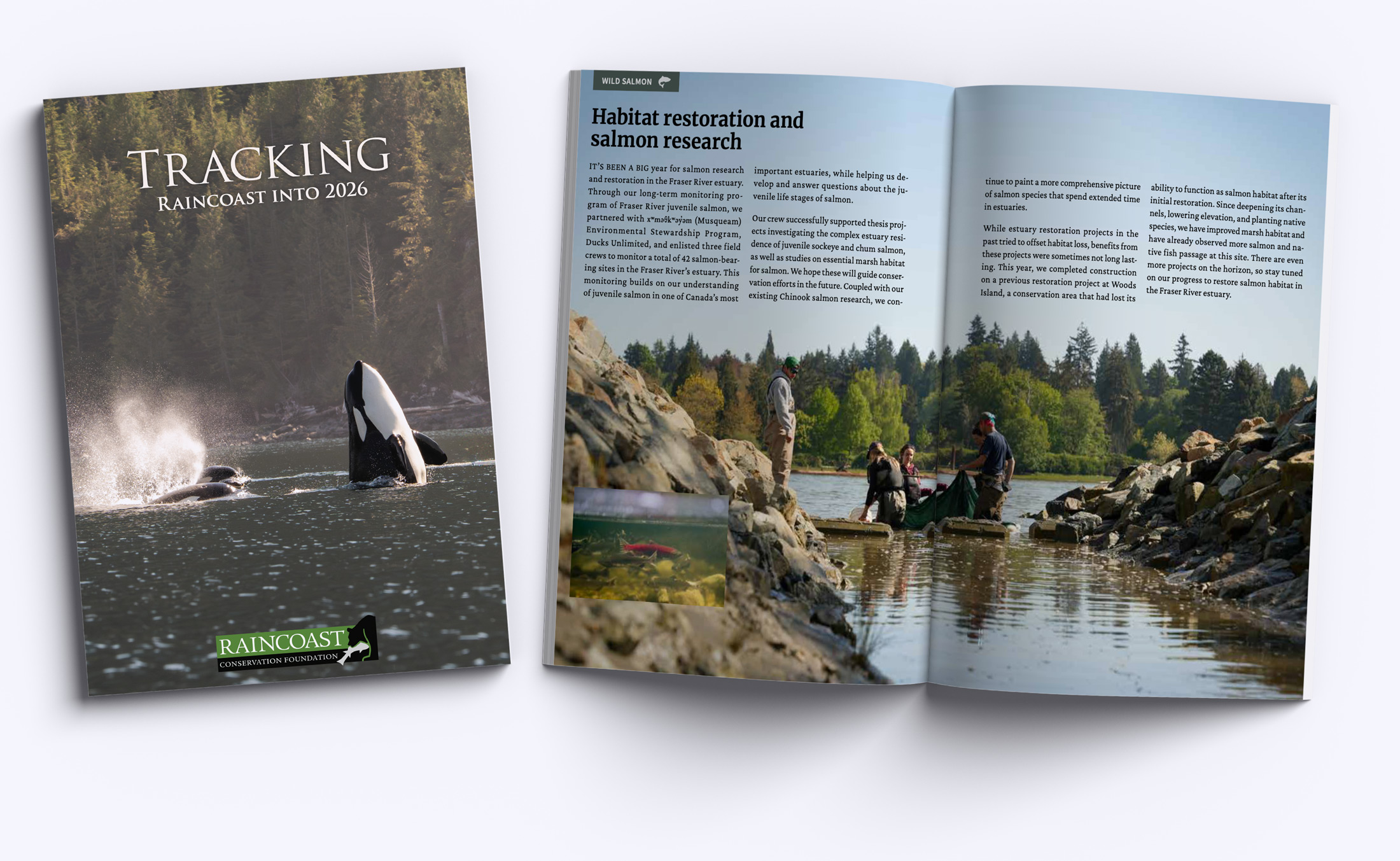
This is an excerpt from our annual report, Tracking Raincoast into 2026.