

Allison Dennert, PhD
Quantitative Salmon Ecologist
Dr. Allison Dennert is the Quantitative Salmon Ecologist on Raincoast’s Wild Salmon Program team. She conducts scientific research and applied conservation initiatives to advance ecologically sustainable salmon management in BC and support the recovery of at-risk populations.
She completed her Doctorate in Biology at Simon Fraser University in the Earth2Ocean Research Group. Her research examines the role of nutrients from spawning Pacific salmon in terrestrial ecosystems, and she is passionate about coastal wildflowers and their pollinators. As a part of her doctoral work she spent several years living and working in Haíɫzaqv Territory in the heart of the Great Bear Rainforest, boating to salmon watersheds and whale watching on the way to work. She also holds a Bachelor of Science degree from the University of British Columbia in Biology, with a specialization in Marine Biology.
Prior to her work on Pacific salmon, Allison conducted research on the ecology and speciation of other freshwater fishes in the salmon family. She has worked in eelgrass meadows, inland lakes, behind the microscope, and in a herbarium caring for species of marine algae new to science.
She is also passionate about science education, museums, and science fairs. She is a member of the board of directors of the Evans Lake Forest Education Society, a charitable organization that has provided forest education programs to children and youth since 1960.
In her spare time, Allison enjoys gardening, running, hiking, skiing, and camping. She is often distracted on her adventures and spends much of this time excitedly crouched over interesting insects and plants she finds on the ground.

Publications
A.M. Dennert, E. Elle, and J.D. Reynolds. 2023. Experimental addition of marine-derived nutrients affects wildflower traits in a coastal meta-ecosystem. Royal Society Open Science, 10: 221008. DOI
N.F. Rammell*, A.M. Dennert1, C.M. Ernst, and J.D. Reynolds. 2021. Effects of spawning Pacific salmon on terrestrial invertebrates: Insects near spawning habitat are isotopically enriched with nitrogen‐15 but display no differences in body size. Ecology and Evolution, 11(18): 12728-12738. DOI
L.D. Siemens, A.M. Dennert2, D.S. Obrist, and J.D. Reynolds. 2020. Spawning salmon density influences fruit production of salmonberry (Rubus spectabilis). Ecosphere, 11: e03282. DOI
A.M. Dennert, S.L. May-McNally, M.H. Bond, T.P. Quinn, and E.B. Taylor. 2016. Trophic biology and migratory patterns of sympatric Dolly Varden (Salvelinus malma) and Arctic char (Salvelinus alpinus). Canadian Journal of Zoology, 94: 529-539. DOI
In the news
Stefan Labbé. ‘Smelly work’: B.C. study finds dead salmon make plants grow bigger, Times Colonist, 2023.
SFU Com.s, How salmon feed flowers & flourishing ecosystems: study, SFU News, 2023.
GrrlScientist. How Salmon Feed Wildflowers And Transform Entire Landscapes. Forbes. 2023.
Molly Campbell. Nutrients From Salmon Carcass Feed Flowers. Technology Network Applied Sciences. 2023.
Nancy MacDonald, Months-long drought on B.C.’s Sunshine Coast prompts water ban, climate anxiety, Globe and Mail, 2022.
Recent articles
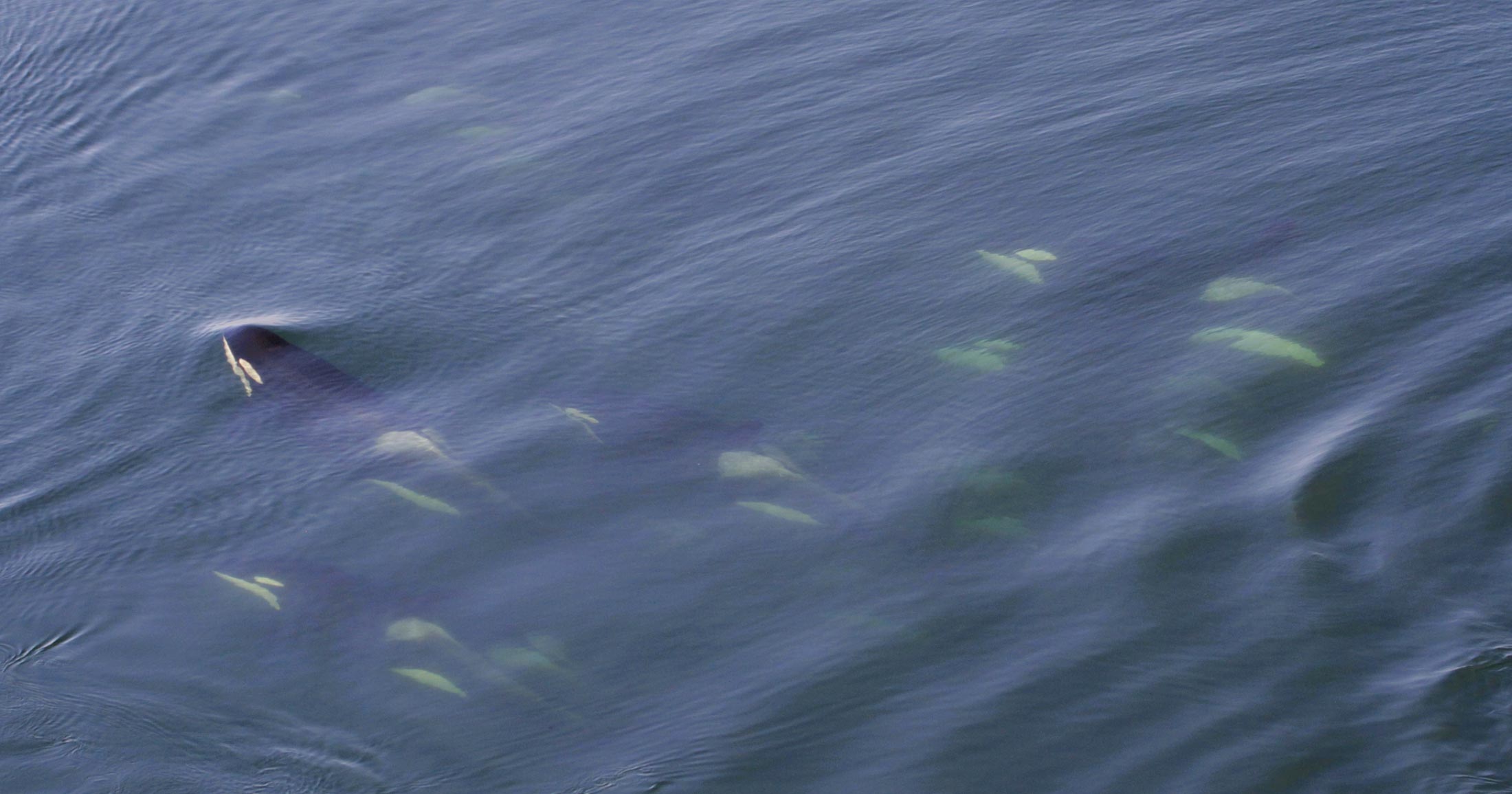
A window for survival: Act now to protect Chinook and save Southern Residents
A ‘’whale safe” window can help this endangered population.
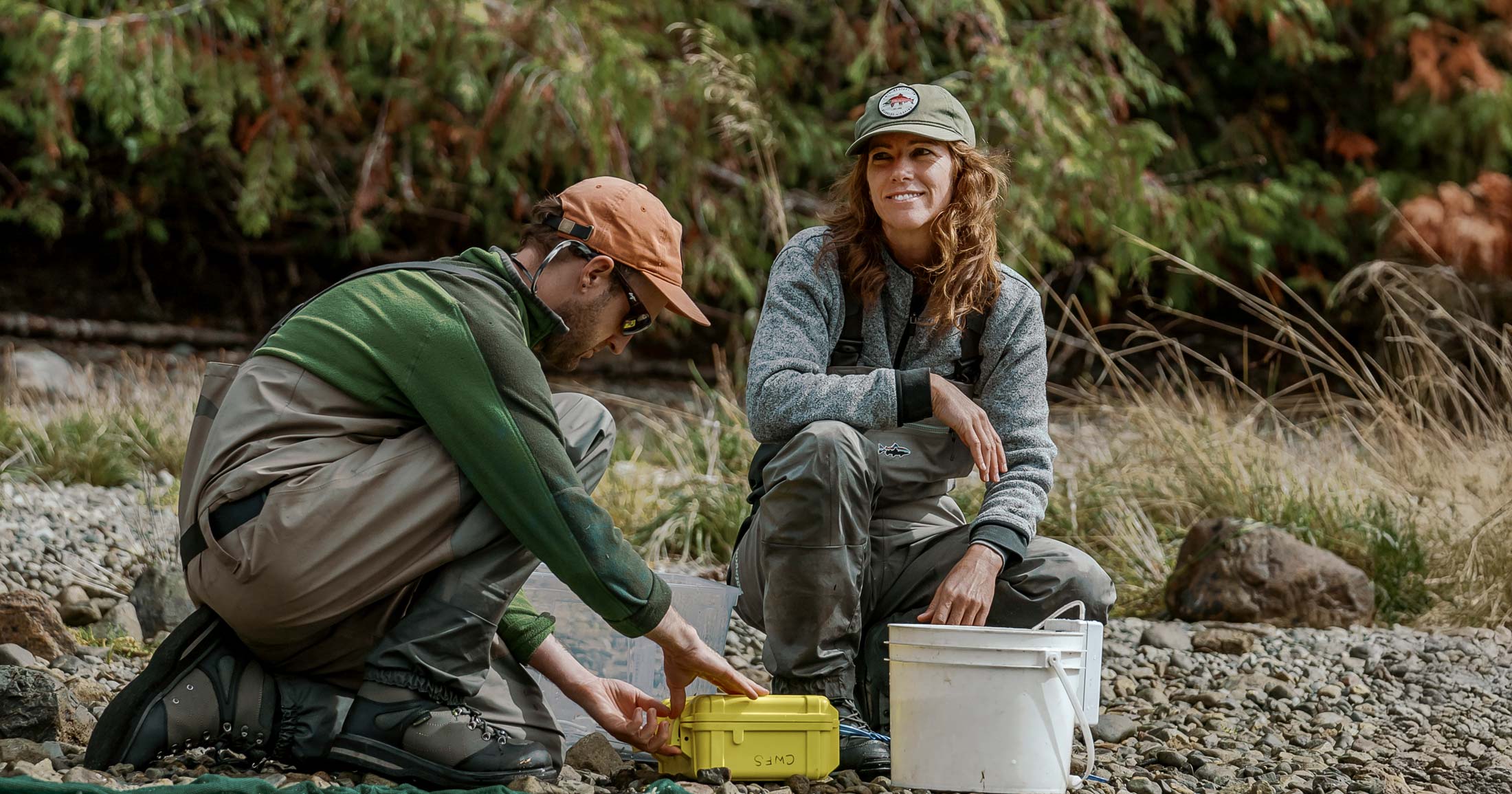
Episode 12: Enriching relationships with watersheds and people, with Redd Fish Restoration Society’s Jessica Hutchinson
How process restoration is banishing band-aid solutions (and commitment issues).
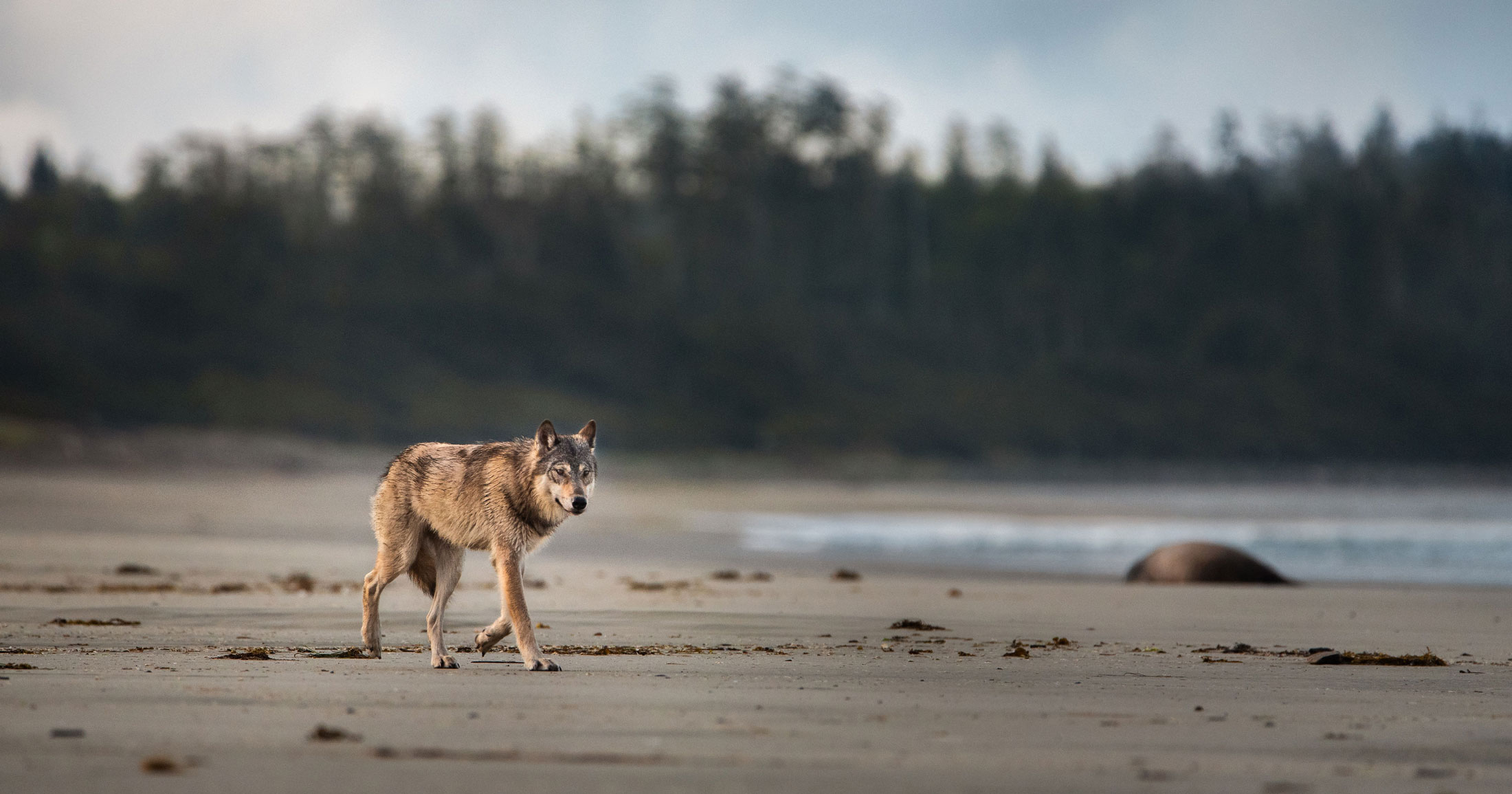
Together, let’s rewrite the story of wolves in BC
Protecting wolves is about more than one species – it’s…
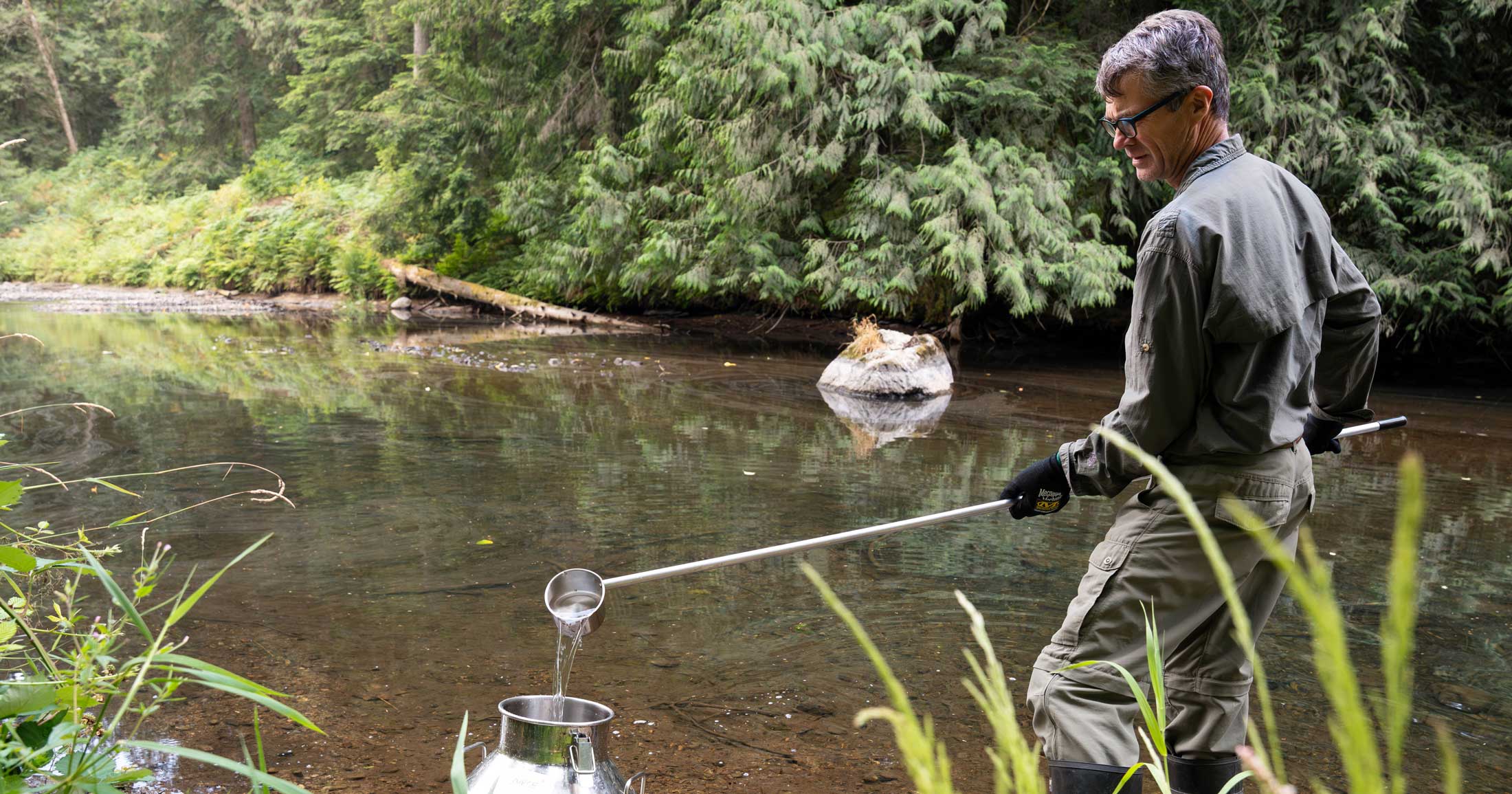
What is a watershed?
How can we use the movement of water through the…
Help us keep our programs moving forward, uninterrupted
Why monthly giving is crucial for long-term conservation success.
Episode 11: Communicating the “why care?”, the importance of listening and community empowerment with Tom Rutherford
“My theory is there’s not enough of us who are…
Notes and references
- Shared joint first-authorship.
- Cover image © Allison M. Dennert, Ecosphere (Volume 11, Issue 12)