Habitat restoration occurring in the Woods Island Marsh in the Fraser River Estuary
We are restoring marsh habitats to improve conditions for juvenile salmon and other wildlife.


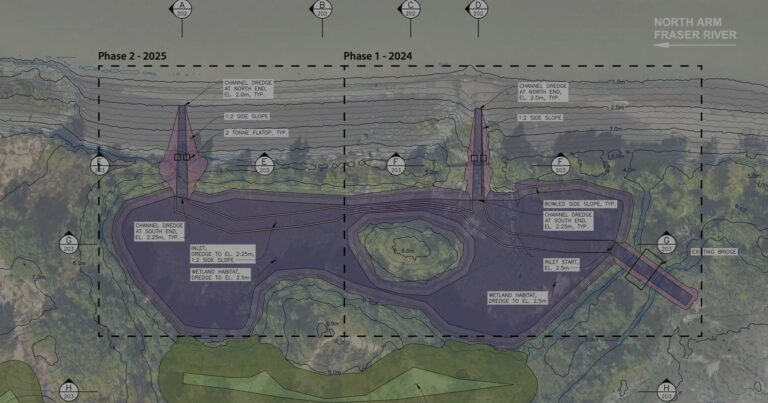
We are restoring marsh habitats to improve conditions for juvenile salmon and other wildlife.

The letter, asking whether Canada will permit killer whale extinction, identifies Canada’s conflicting aspirations and obligations to protect biodiversity while continuing to permit megaprojects that destroy the critical habitat of threatened and endangered species.
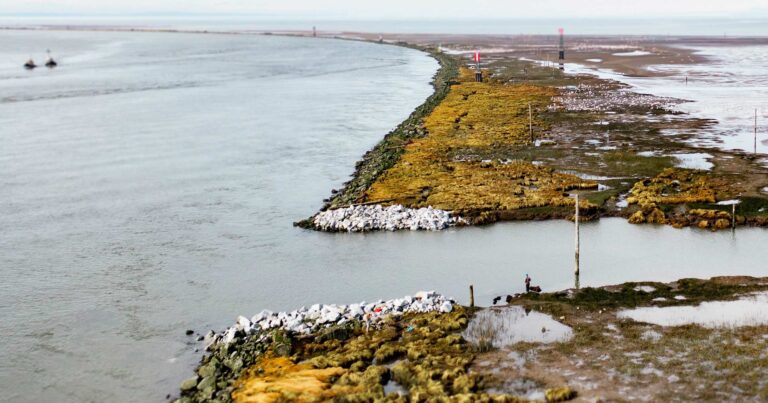
As we move into 2022, our Fraser River Estuary restoration efforts move towards the next target, the North Arm jetty. In late 2021, we finished our Coastal Restoration Fund project, a five year multi-million dollar initiative to restore connectivity between the main arm of the Fraser River and the marsh on Lulu Island’s Sturgeon Bank….

Salmon have lost access to as much as 85 per cent of their historical floodplain habitat – the biologically rich wetlands next to a river or stream that typically harbour wildlife – due to dikes and similar infrastructure.

This collaborative work to recover wild salmon and restore the ecological resilience of the Lower Fraser River and Estuary is outlined in the Lower Fraser Salmon Recovery Brief.
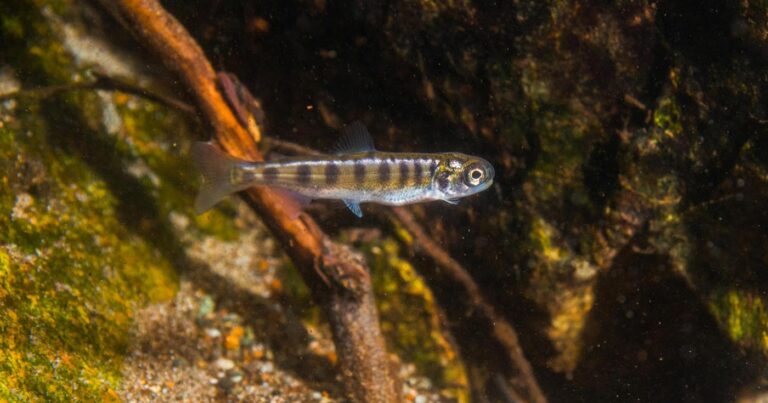
Join Dave Scott, Raincoast’s Lower Fraser Salmon Program Research and Restoration Coordinator, for an online information session about the upcoming North Arm Jetty Breaches Project and the importance of improved connectivity in the Fraser River Estuary. The session will include an opportunity for participants to ask questions and provide input on the project.

A new paper, “Chinook salmon exhibit long-term rearing and early marine growth in the Fraser River, B.C., a large urban estuary,” has highlighted the importance of the Fraser estuary as critical habitat for Chinook salmon. The researchers used salmon ear bones, or otoliths, to study how juvenile salmon were using the Fraser estuary, and found…

Join us Wednesday April 7 at 1pm Pacific for Coastal Insights as we look at key conservation issues facing wildlife and their habitat along BC’s coast. The lesson will also discuss how we can take action to protect and sustain the Salish Sea.

Just as we were getting excited about starting our field season to monitor the effectiveness of Raincoast’s Fraser Estuary Connectivity Project, conditions with the pandemic began to get serious and we realized our plans had to change…
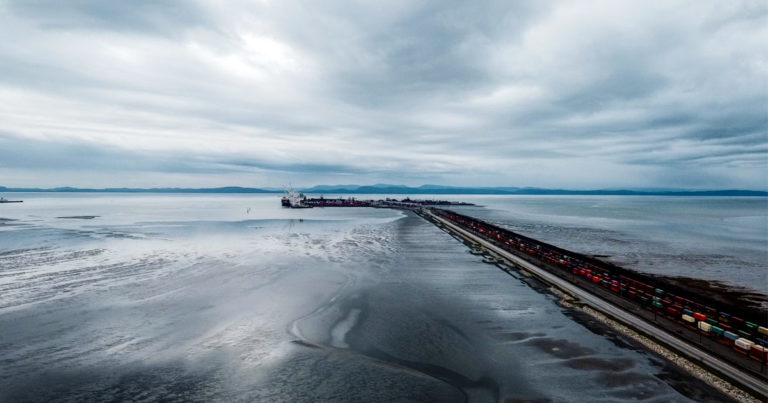
The Port of Vancouver is proposing to double the size of its shipping terminal beside the Tsawwassen Ferry Terminal, putting further stress on an estuary that has already lost more than 70% of its natural habitat…
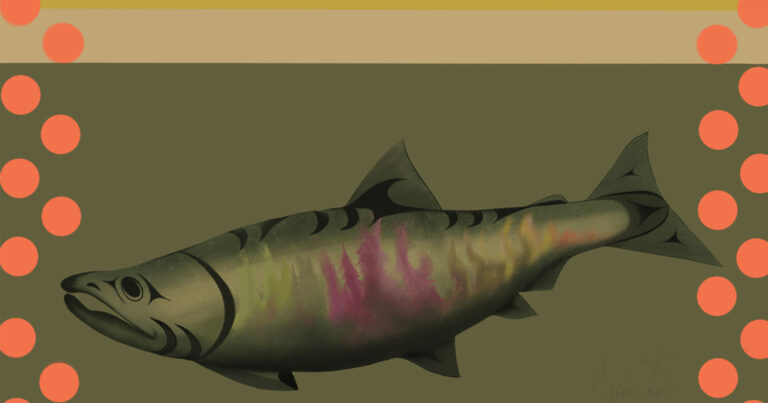
Our new report, Toward a Vision for Salmon Habitat in the Lower Fraser River sets bold recommendations to address the loss of salmon habitat that has been identified as a key factor in the crisis many recognize for Fraser River salmon…

Pacific salmon, especially Chinook and Chum, reside and feed in estuaries during downstream migrations. But the extent to which they rely on estuaries, and which habitats within estuaries, is not well understood. We need to understand this complexity if we are going to enact effective conservation policies. This is especially important in urban systems where habitat loss is ongoing, and at different rates across the estuarine mosaic. The Fraser River estuary, for example, supports a multitude of fish species…