Oil and chemical spill tracking

Spills of oil and chemicals into freshwater and ocean environments have killed fish, degraded habitat, and led to closures of commercial, recreational, and Indigenous fisheries. Raincoast’s Healthy Waters Program is positioned to collect data at the scene of a spill and collaborate with various organizations and First Nations to understand the impact of a spill. 

Tracker will host a number of rugged analytical instruments, and enable the measurement of several contaminants in the field, including coliform bacteria, nutrients, metals, pesticides, and tracers of wastewater effluent.
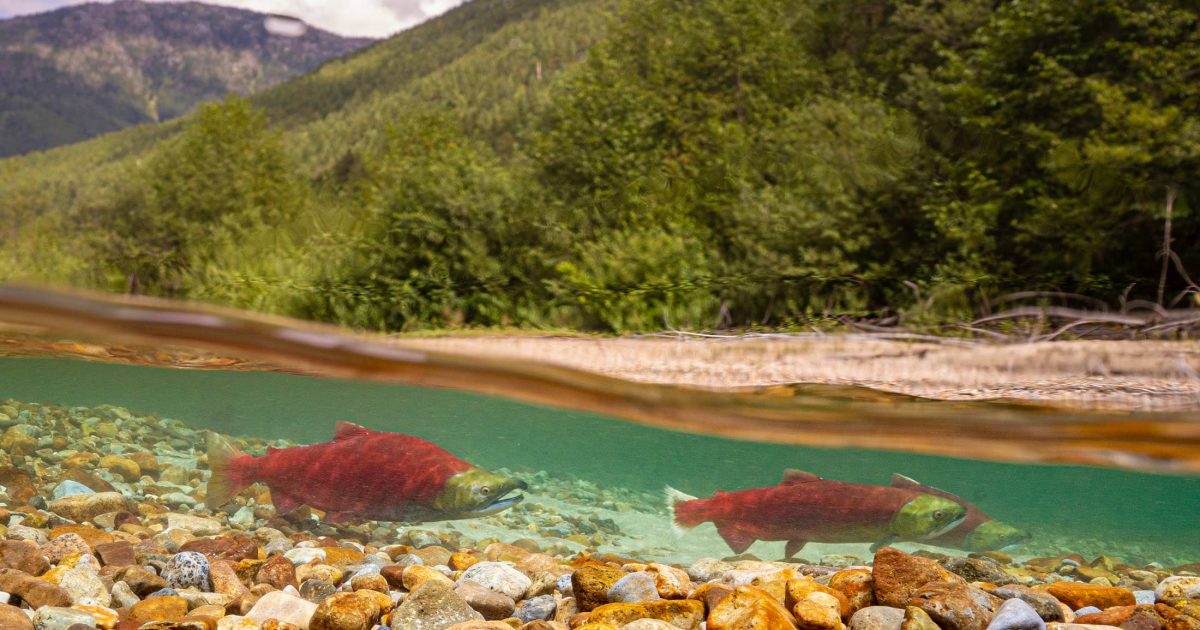
Photo by Peter Ross.
Two sockeye salmon swimming in a river.
Photo by Fernando Lessa.

Spills happen

Spills originate from all manner of accidents. The 2005 train derailment that spilled caustic soda into the Cheakamus River that killed 500,000 fish, The 2015 spill of 3,000 L of Bunker C oil from the MV Marathassa into English Bay. The 2020 fire aboard the MV ZIM Kingston in Juan de Fuca Strait that resulted in the loss of 104 mixed cargo shipping containers into the ocean. Each and every accident is bad news, and threatens the health of fish and whales, and contributes to the degradation of their habitats.

Being prepared is key

Given the sudden and unpredictable nature of oil and chemical spills, our oil and chemical spill response work entails being agile and available for support to First Nations, government agencies, and industry during a major spill. We are developing science protocols, and acquiring sampling kits, field equipment, and safety gear, and are poised to deploy our team to the scene of a spill. 

Being prepared on all fronts is key to limiting the damage from a spill. We recognize that with spills, it’s not a matter of if, but when. Research and monitoring to confirm the origin of the spill, track the fate of the spilled product, and monitor the recovery of ecosystem components routinely fails to be a priority. We will deploy expert capacity where and when needed, and work to prevent harm to valued ecosystem components.
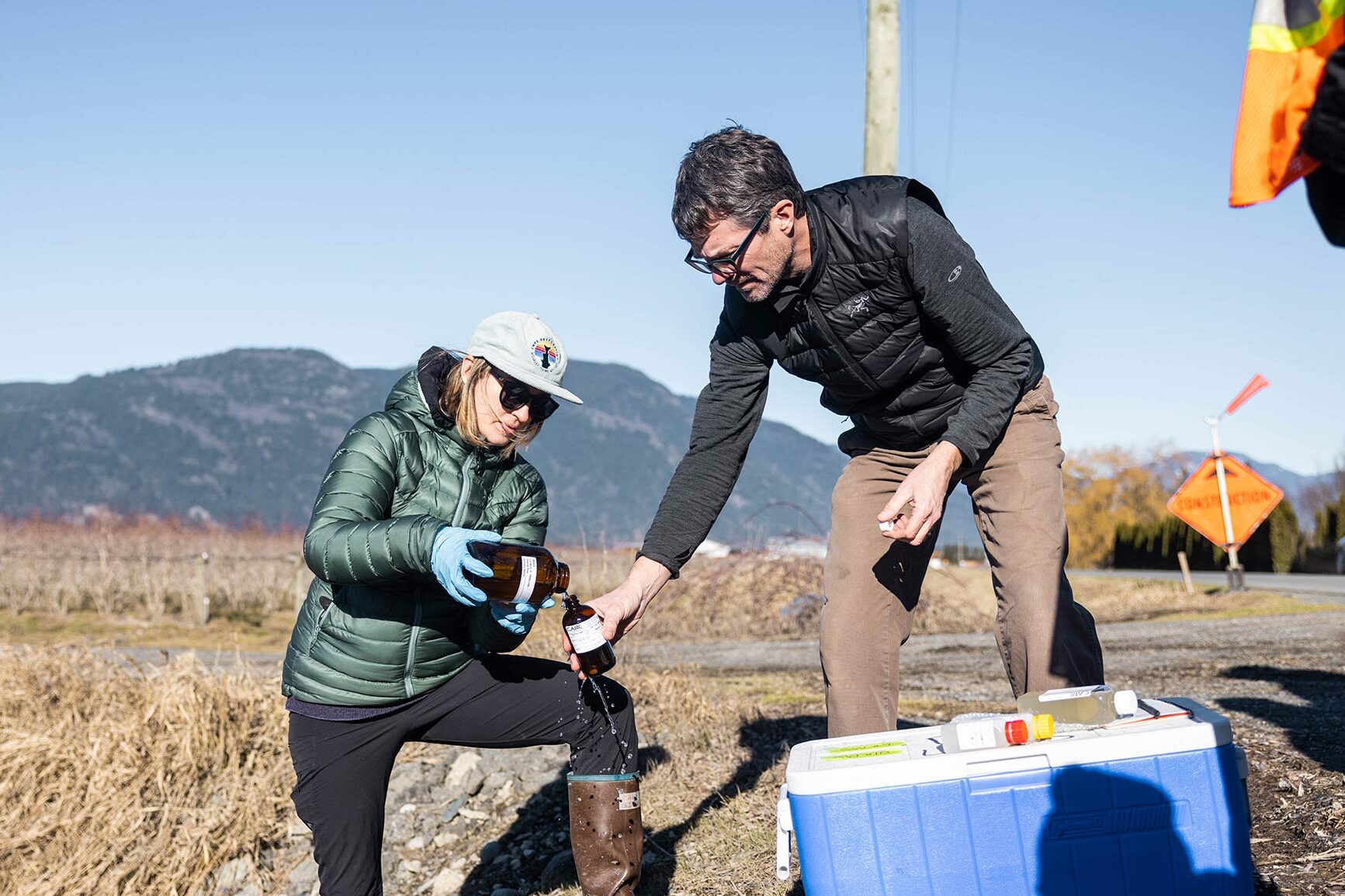
Two people working together to collect water samples in a farm field with the mountains in the background.
Photo by Alex Harris.
https://www.raincoast.org/reports/flood

Semá:th X̱ó:tsa (Sumas Lake) Floods of 2021

The catastrophic floods of late 2021 in southern British Columbia (Canada) and neighbouring Washington State (USA) destroyed homes, farms and businesses, with excess water spilling debris, animal carcasses and diesel fuel into historically productive fish habitat. 

We assembled a team to assess water quality in the former Semá:th X̱ó:tsa (Sumas Lake) area of the Fraser Valley over a seven-week period after the floods. We collected water samples from 11 surface water sites and four groundwater sites for comprehensive contaminant analysis and a subsequent risk-based evaluation. We measured 379 analytes (chemical components and bacteria), including 262 anthropogenic contaminants. We examined excess nutrients, metals, fecal coliform, hydrocarbons, pesticides, pharmaceuticals, and personal care products, perfluorinated compounds, sucralose, and tire-related chemicals.

Recent articles

Two painting float in the foreground of an out of focus fern from Flycatcher Forest.

How art will help protect S,DÁYES Flycatcher Forest

We are incredibly grateful to every person who transformed this initiative from the hopes of one person into reality, and because we cannot thank each of you individually, we wanted to recognize a few of the artists who have donated their time and talent to the permanent protection of local ecosystems.
Wetland at the S,DÁYES Flycatcher Forest with the sun in the background.

You did it: 13 acres in 3 months!

We are excited to announce that together with the Pender Islands Conservancy, we have raised the funds required to purchase and permanently protect S,DÁYES Flycatcher Forest on North Pender Island…
A snapshot of the Conservation Biology research article floats in front of a giant grizzly bear in the mist.

Research: The eroding social license to hunt carnivores

A new study suggests killing predators like wolves, grizzly bears, and cougars for trophy is a potential threat not only to these sensitive animals, but also to other hunters…
Close up photo of a cedar bough.

BC’s Coastal Douglas-fir zone needs protection now
In an era where climate change is a modern reality and biodiversity is in crisis the world over, the province’s continued support of industrial logging in old growth forests is out of sync with global scientific consensus and policy objectives. This is especially true in the Coastal Douglas-fir (CDF) biogeoclimactic zone, the smallest and most endangered of 16 such zones in BC…
Shauna Doll looking up at a large Douglas-Fir tree.

Permanent protection of S,DÁYES Flycatcher Forest now within reach!

In November, when Raincoast teamed up with the Pender Islands Conservancy to purchase 13-acres of Coastal Douglas Fir forest on S,DÁYES, North Pender Island, we were given 6-months to raise the required funds. Now, less than three months later, and thanks to your overwhelming generosity, we are only $4,018 away from reaching our goal…
Coastal Insights education series – Season 2 launch

Coastal Insights education series – Season 2 launch

It is with great excitement that we launch our newest season of our Coastal Insights, aptly named ‘Eyes on the Coast’. Taking off where season 1 ended, we will be diving deeper into coastal British Columbia’s rich history, ecosystems and conservation issues using a two-eyed approach…
A tiny juvenile Chinook salmon in a viewfinder in the Lower Fraser River.

Chinook salmon exhibit long-term rearing and early marine growth in the Fraser River, B.C., a large urban estuary

Using tiny salmon ear bones, or otoliths, Raincoast researchers and partners were able to demonstrate that Chinook salmon from Harrison River rely on the Fraser estuary for one to two months while they feed and grow. These findings underscore the critical nature of this habitat for the persistence and recovery of Chinook salmon…
A Coastal Douglas-fir landscape.

Volunteering with the Big Tree Registry

Taeven Lopatecki volunteering with the Big Tree Registry is a way of quantifiably supporting conservation and awareness for this Island and this coast that she calls home. Raincoast’s scope of work, stretching from coastal landscapes to the waters of the Salish Sea and beyond, satisfies her interest in conservation topics.