Oil and chemical spill tracking

Spills of oil and chemicals into freshwater and ocean environments have killed fish, degraded habitat, and led to closures of commercial, recreational, and Indigenous fisheries. Raincoast’s Healthy Waters Program is positioned to collect data at the scene of a spill and collaborate with various organizations and First Nations to understand the impact of a spill. 

Tracker will host a number of rugged analytical instruments, and enable the measurement of several contaminants in the field, including coliform bacteria, nutrients, metals, pesticides, and tracers of wastewater effluent.
Photo by Peter Ross.
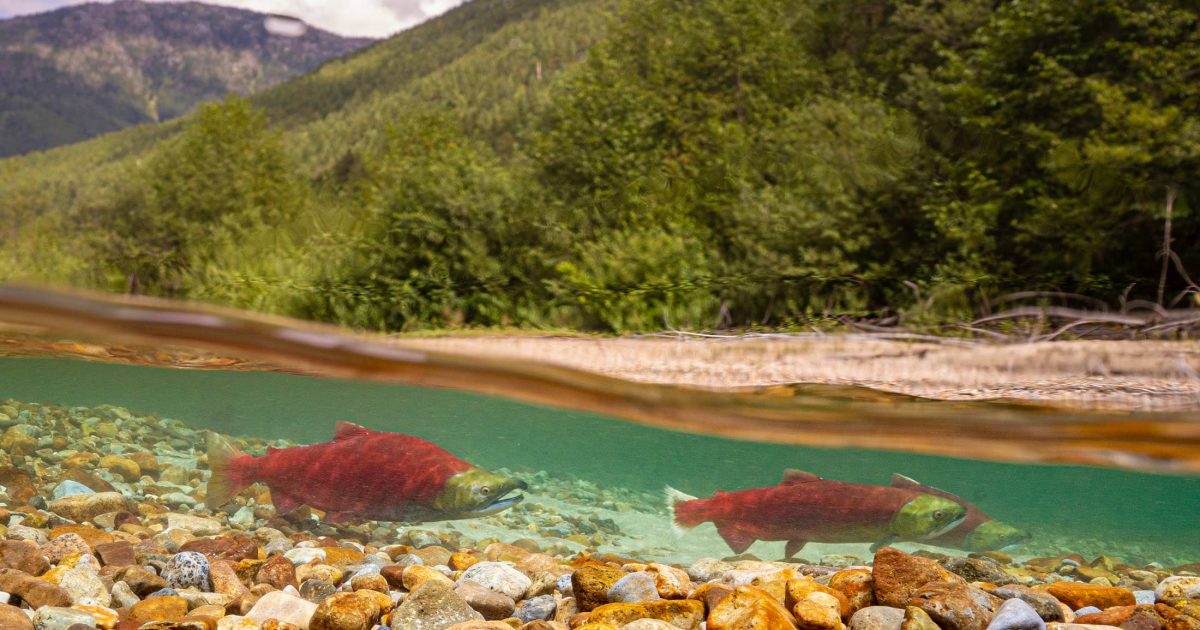
Two sockeye salmon swimming in a river.
Photo by Fernando Lessa.

Spills happen

Spills originate from all manner of accidents. The 2005 train derailment that spilled caustic soda into the Cheakamus River that killed 500,000 fish, The 2015 spill of 3,000 L of Bunker C oil from the MV Marathassa into English Bay. The 2020 fire aboard the MV ZIM Kingston in Juan de Fuca Strait that resulted in the loss of 104 mixed cargo shipping containers into the ocean. Each and every accident is bad news, and threatens the health of fish and whales, and contributes to the degradation of their habitats.

Being prepared is key

Given the sudden and unpredictable nature of oil and chemical spills, our oil and chemical spill response work entails being agile and available for support to First Nations, government agencies, and industry during a major spill. We are developing science protocols, and acquiring sampling kits, field equipment, and safety gear, and are poised to deploy our team to the scene of a spill. 

Being prepared on all fronts is key to limiting the damage from a spill. We recognize that with spills, it’s not a matter of if, but when. Research and monitoring to confirm the origin of the spill, track the fate of the spilled product, and monitor the recovery of ecosystem components routinely fails to be a priority. We will deploy expert capacity where and when needed, and work to prevent harm to valued ecosystem components.
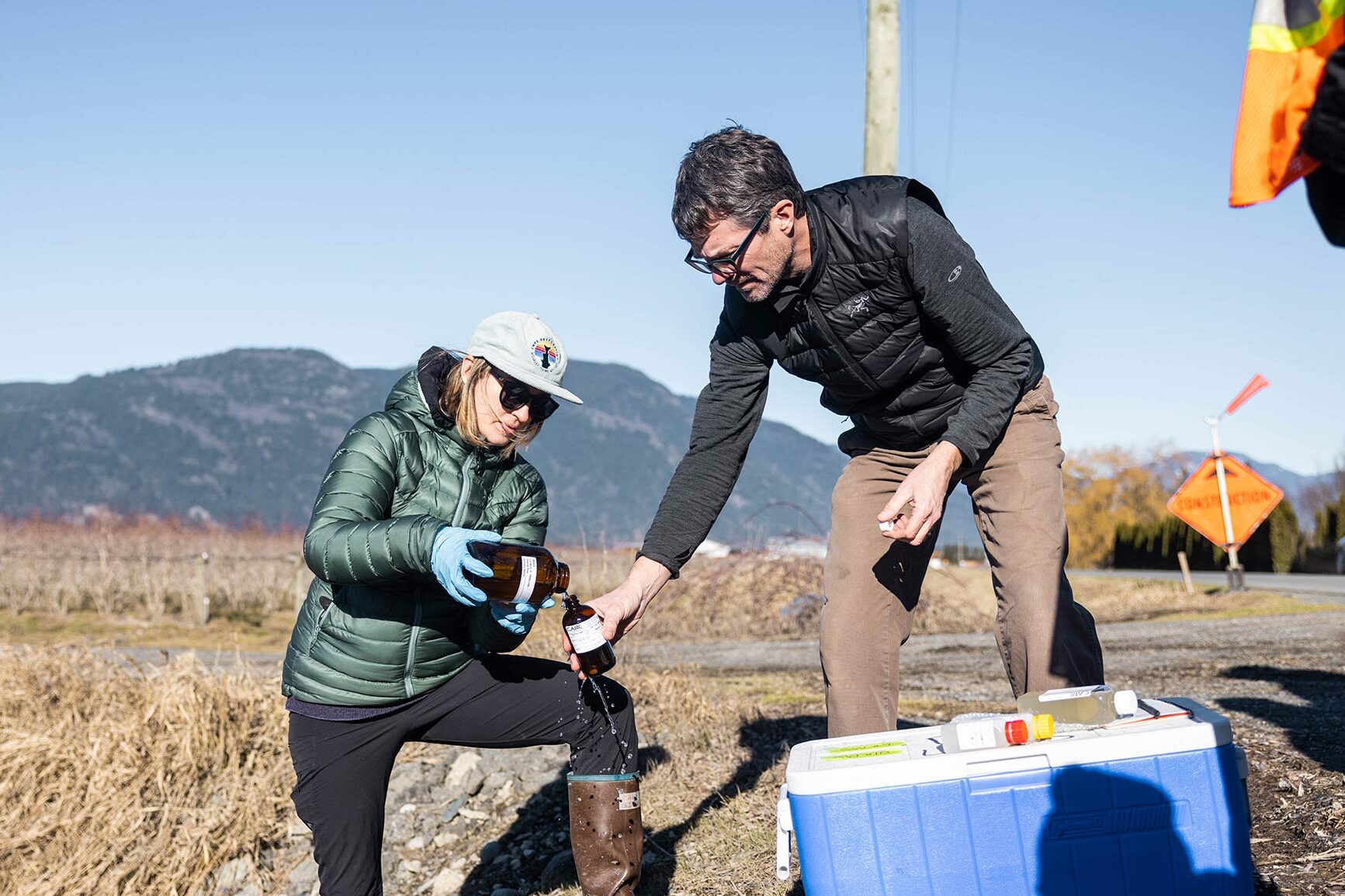
Two people working together to collect water samples in a farm field with the mountains in the background.
Photo by Alex Harris.
https://www.raincoast.org/reports/flood

Semá:th X̱ó:tsa (Sumas Lake) Floods of 2021

The catastrophic floods of late 2021 in southern British Columbia (Canada) and neighbouring Washington State (USA) destroyed homes, farms and businesses, with excess water spilling debris, animal carcasses and diesel fuel into historically productive fish habitat. 

We assembled a team to assess water quality in the former Semá:th X̱ó:tsa (Sumas Lake) area of the Fraser Valley over a seven-week period after the floods. We collected water samples from 11 surface water sites and four groundwater sites for comprehensive contaminant analysis and a subsequent risk-based evaluation. We measured 379 analytes (chemical components and bacteria), including 262 anthropogenic contaminants. We examined excess nutrients, metals, fecal coliform, hydrocarbons, pesticides, pharmaceuticals, and personal care products, perfluorinated compounds, sucralose, and tire-related chemicals.

Recent articles

dummy-img

First Days

Chris Williamson, From Bella Bella, BC May 2006 First Days tend to hold a special place in our minds. The feelings, whether they are excitement, nervousness, or anticipation, burn a lasting impression in our brains that can be recalled with a vividness rarely achieved by any day thereafter. Among the First Days etched most deeply…
dummy-img

Exploring the Land of C’idawai

Briony PennSalt Spring Island, BCMay 2006 In 1916, populations of sandhill crane were pushed to the verge of extinction from overhunting in the United States prompting the introduction of the US Migratory Bird Treaty Act. In Heiltsuk memory, these cranes, called c’idawai, that typically arrived in mid-April from their southern wintering grounds in the lower…
dummy-img

Modelling Gray Wolf (Canis lupus) Distribution and Habitat in Coastal Temperate Rainforests of British Columbia, Canada

Swan, P.L. 2005. Modelling Gray Wolf (Canis lupus) Distribution and Habitat in Coastal Temperate Rainforests of British Columbia, Canada. MSc. Thesis. University of Calgary. Department of Geography.
A woman in a black jacket standing in a wooded area.

The Zen of Isotopes

I am master of the world’s smallest spoon. To be spoon master, one’s hand must be steady. My little spoon with its few grains of silt and sand must be placed into what seems like the world’s smallest capsule of foil. Once the sediment is inside, that capsule gets transferred to the balance. If it…
dummy-img

Great Bear Rainforest wins partial protection

Sixteen years ago, a small team of biologists and explorers traveled north from Vancouver Island. The weeks turned into months as they quietly sailed from river valley to river valley documenting for the first time the full extent of the Great Bear Rainforest. It was a life-changing voyage for those on board, sailing through the…
Nicola Temple sits in a boat in her rain gear.

Fish out of Water

As I crouched down to photograph a pure white banana slug, I was taken aback by how incredible it was to find this small, slow moving, salt-intolerant creature on an outer coastal island.
dummy-img

Raincoast Outfitters Ltd.

The old saying, “if you can’t beat ’em, join ’em” has taken on a new meaning here at Raincoast. In an unprecedented move, Raincoast, with the support of coastal First Nations, has successfully purchased one of the largest exclusive commercial trophy hunting tenures in the province. The license area covers over 20,000 square kilometres of…
dummy-img

Notes from the Office

Inspiration comes in many different forms. With Raincoast, I have found it among schools of migrating salmon and with grizzlies wrestling in the estuaries, and this month I found it in our Victoria office. Raincoast dreams big, and this year we needed the resources to significantly expand our protection efforts with new research, marine resources…