Oil and chemical spill tracking

Spills of oil and chemicals into freshwater and ocean environments have killed fish, degraded habitat, and led to closures of commercial, recreational, and Indigenous fisheries. Raincoast’s Healthy Waters Program is positioned to collect data at the scene of a spill and collaborate with various organizations and First Nations to understand the impact of a spill. 

Tracker will host a number of rugged analytical instruments, and enable the measurement of several contaminants in the field, including coliform bacteria, nutrients, metals, pesticides, and tracers of wastewater effluent.
Photo by Peter Ross.
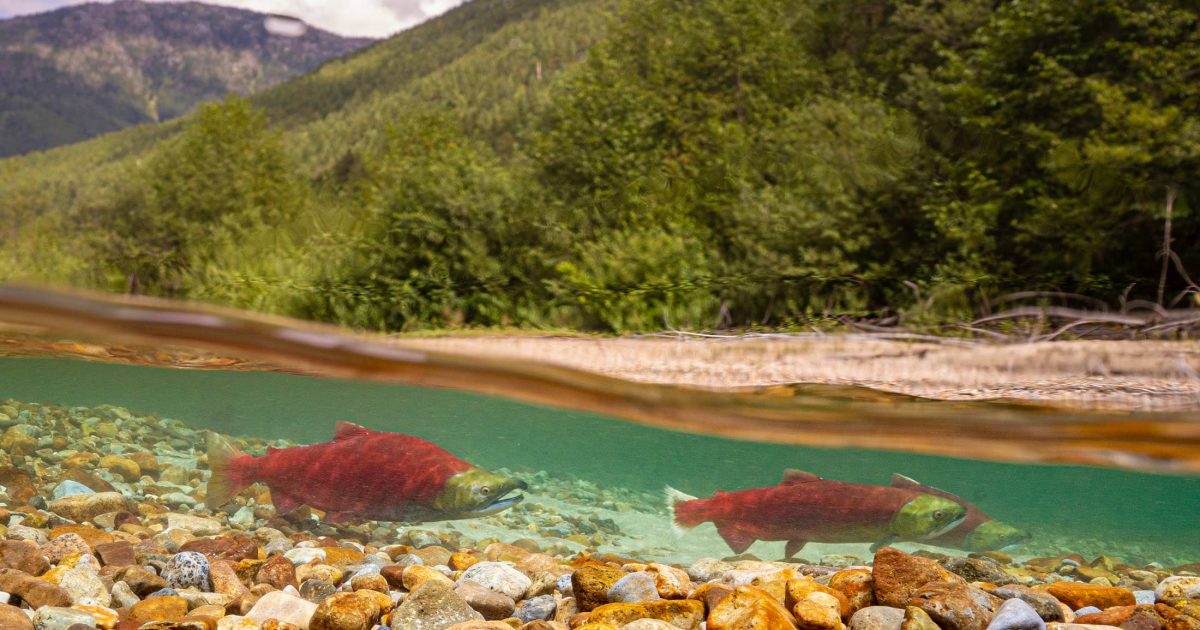
Two sockeye salmon swimming in a river.
Photo by Fernando Lessa.

Spills happen

Spills originate from all manner of accidents. The 2005 train derailment that spilled caustic soda into the Cheakamus River that killed 500,000 fish, The 2015 spill of 3,000 L of Bunker C oil from the MV Marathassa into English Bay. The 2020 fire aboard the MV ZIM Kingston in Juan de Fuca Strait that resulted in the loss of 104 mixed cargo shipping containers into the ocean. Each and every accident is bad news, and threatens the health of fish and whales, and contributes to the degradation of their habitats.

Being prepared is key

Given the sudden and unpredictable nature of oil and chemical spills, our oil and chemical spill response work entails being agile and available for support to First Nations, government agencies, and industry during a major spill. We are developing science protocols, and acquiring sampling kits, field equipment, and safety gear, and are poised to deploy our team to the scene of a spill. 

Being prepared on all fronts is key to limiting the damage from a spill. We recognize that with spills, it’s not a matter of if, but when. Research and monitoring to confirm the origin of the spill, track the fate of the spilled product, and monitor the recovery of ecosystem components routinely fails to be a priority. We will deploy expert capacity where and when needed, and work to prevent harm to valued ecosystem components.
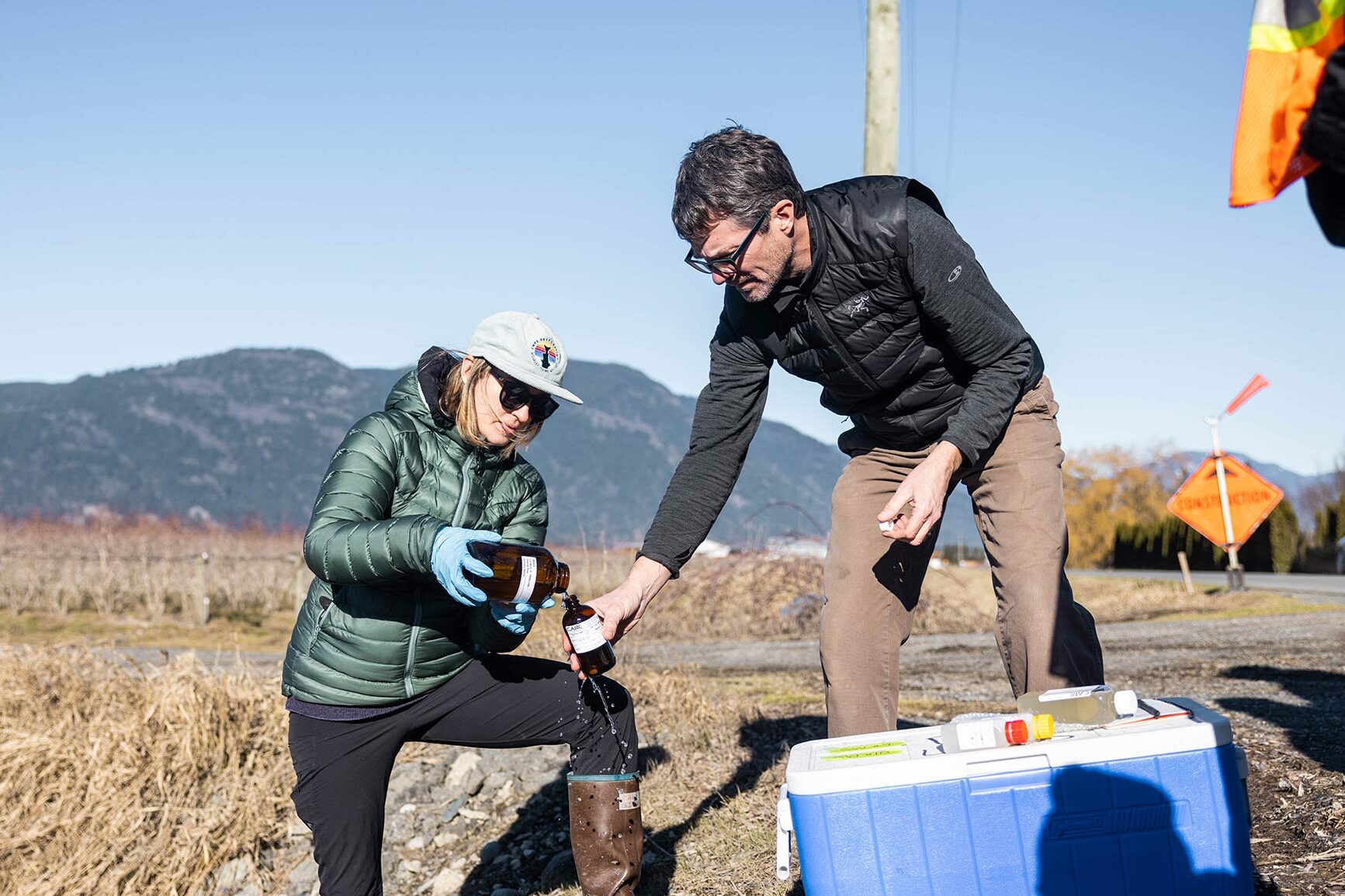
Two people working together to collect water samples in a farm field with the mountains in the background.
Photo by Alex Harris.
https://www.raincoast.org/reports/flood

Semá:th X̱ó:tsa (Sumas Lake) Floods of 2021

The catastrophic floods of late 2021 in southern British Columbia (Canada) and neighbouring Washington State (USA) destroyed homes, farms and businesses, with excess water spilling debris, animal carcasses and diesel fuel into historically productive fish habitat. 

We assembled a team to assess water quality in the former Semá:th X̱ó:tsa (Sumas Lake) area of the Fraser Valley over a seven-week period after the floods. We collected water samples from 11 surface water sites and four groundwater sites for comprehensive contaminant analysis and a subsequent risk-based evaluation. We measured 379 analytes (chemical components and bacteria), including 262 anthropogenic contaminants. We examined excess nutrients, metals, fecal coliform, hydrocarbons, pesticides, pharmaceuticals, and personal care products, perfluorinated compounds, sucralose, and tire-related chemicals.

Recent articles

dummy-img

Great Bear Rainforest Agreement

An ongoing assessment of British Columbia’s efforts in protecting the Great Bear Rainforest September 1, 2005 Proposed land use plans for Great Bear Rainforest scientifically inadequate The British Columbia government is currently deciding whether or not to legally implement a new conservation blueprint for the Great Bear Rainforest. After years of consultation with the forestry…
dummy-img

Grizzly Politics in British Columbia

Raincoast has attained a copy of a soon-to-be published opinion piece that calls for the grizzly bear to be de-listed from the US Endangered Species Act. The opinion piece is scheduled to appear in the next issue of the International Bear Association’s official publication, urging the association’s membership to support the Bush administration’s proposed grizzly…
dummy-img

What Comes Around, Goes Around

As I set out, at first all I hear are the drips from my paddle as I enter a secluded lagoon. After several hundred strokes,however, their howls begin to echo along the rolling hills on either side of me. I’m searching for signs of the elusive coastal wolf near an estuary sheltered from the powerful…
dummy-img

You Are What You Eat

Our grizzly bear field crew canoed leisurely down the winding Koeye River, in search of not only the elusive bear itself, but all the evidence it had left behind. Our paddling became soft and rhythmic, yet our eyes scanned each shadow beneath every cedar, and our ears were tuned to any wrestling of leaves or…
dummy-img

The Longest Journey

“You only get one propeller,” someone shouts half-jokingly as we head off from his dock towards Roscoe Inlet.  We are all excited to finally be starting Raincoast’s juvenile salmon migration project.  As we cruise the boat near the shore in search of salmon fry that have recently left their spawning streams for the open ocean,…
dummy-img

Hope Springs Eternal

Hope springs eternal – at least that’s how it feels right now on BC’s c Central coast. The juncos, warblers and sandhill cranes have returned from their wintering grounds in the south. Hummingbirds are everywhere, searching out the sweet salmonberry blossoms. And grizzly bears have been awake and active for almost a month, gorging themselves…
dummy-img

Fish Farm Link to Sea Lice Infections on B.C. Wild Salmon Confirmed

Martin Krkos­ek, Centre for Mathematical Biology, Depts. of Mathematical and Statistical Sciences and Biological Sciences, University of Alberta, Edmonton, AB. The paper described here is published in the Proceedings of the Royal Society of London, Series B, March 2005 as, Krkošek, M., Lewis, M. A., & Volpe, J. P. Transmission dynamics of parasitic sea lice…
dummy-img

Down to the Wire

by Faisal Moola Large Carnivore Projects Coordinator Victoria, BC, March 2005 It’s election time in British Columbia this spring (May 17) and campaigning by the various political parties has already begun in earnest.   In addition to the persistent concerns of the electorate on health care and education, the environment could also be a factor in…