Oil and chemical spill tracking

Spills of oil and chemicals into freshwater and ocean environments have killed fish, degraded habitat, and led to closures of commercial, recreational, and Indigenous fisheries. Raincoast’s Healthy Waters Program is positioned to collect data at the scene of a spill and collaborate with various organizations and First Nations to understand the impact of a spill. 

Tracker will host a number of rugged analytical instruments, and enable the measurement of several contaminants in the field, including coliform bacteria, nutrients, metals, pesticides, and tracers of wastewater effluent.
Photo by Peter Ross.
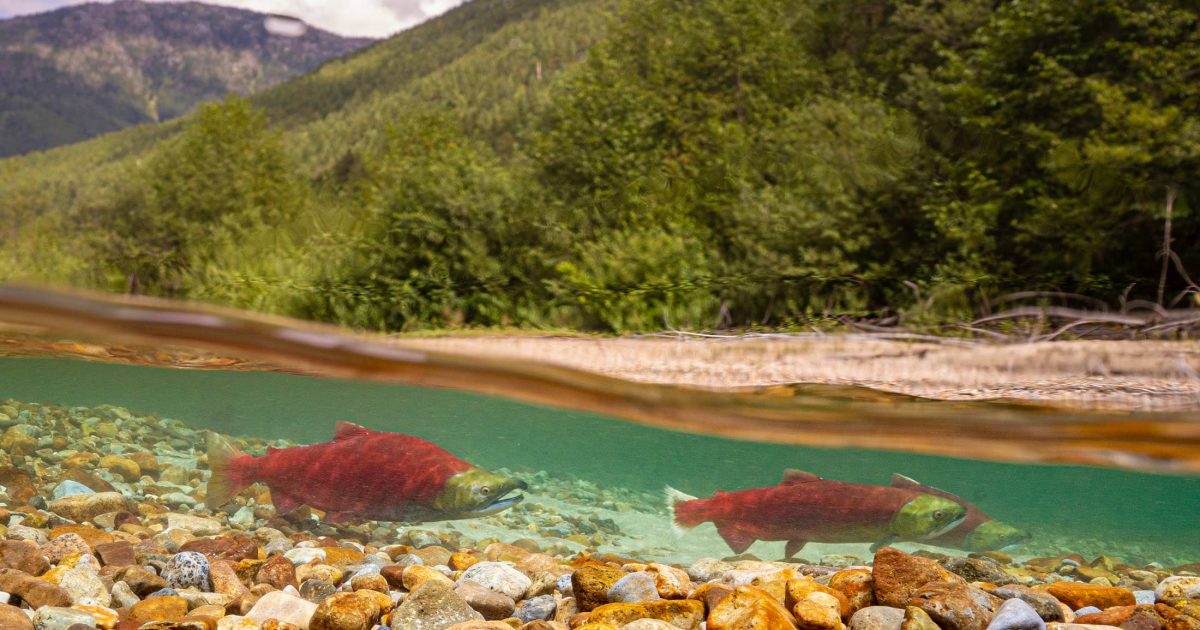
Two sockeye salmon swimming in a river.
Photo by Fernando Lessa.

Spills happen

Spills originate from all manner of accidents. The 2005 train derailment that spilled caustic soda into the Cheakamus River that killed 500,000 fish, The 2015 spill of 3,000 L of Bunker C oil from the MV Marathassa into English Bay. The 2020 fire aboard the MV ZIM Kingston in Juan de Fuca Strait that resulted in the loss of 104 mixed cargo shipping containers into the ocean. Each and every accident is bad news, and threatens the health of fish and whales, and contributes to the degradation of their habitats.

Being prepared is key

Given the sudden and unpredictable nature of oil and chemical spills, our oil and chemical spill response work entails being agile and available for support to First Nations, government agencies, and industry during a major spill. We are developing science protocols, and acquiring sampling kits, field equipment, and safety gear, and are poised to deploy our team to the scene of a spill. 

Being prepared on all fronts is key to limiting the damage from a spill. We recognize that with spills, it’s not a matter of if, but when. Research and monitoring to confirm the origin of the spill, track the fate of the spilled product, and monitor the recovery of ecosystem components routinely fails to be a priority. We will deploy expert capacity where and when needed, and work to prevent harm to valued ecosystem components.
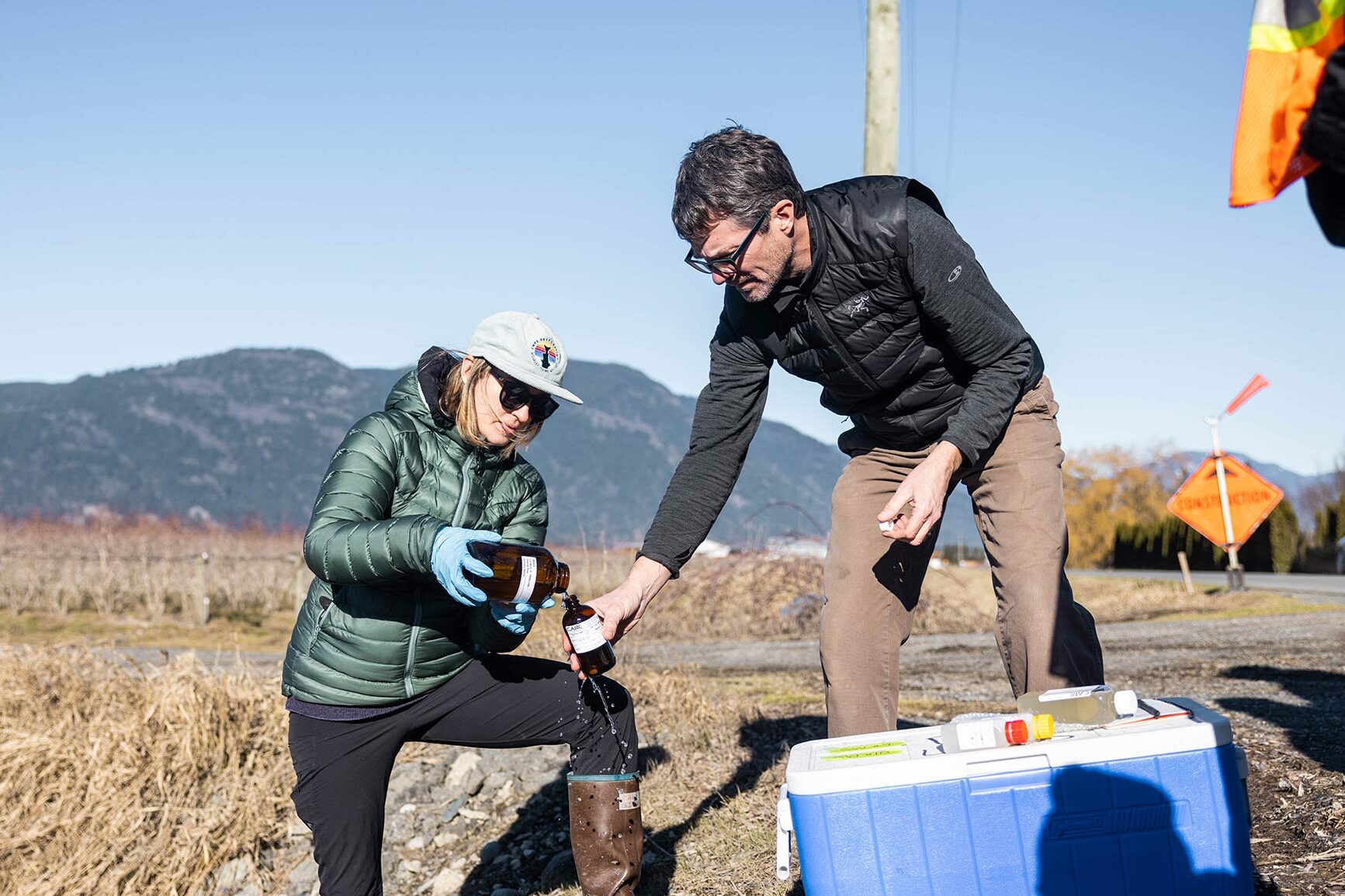
Two people working together to collect water samples in a farm field with the mountains in the background.
Photo by Alex Harris.
https://www.raincoast.org/reports/flood

Semá:th X̱ó:tsa (Sumas Lake) Floods of 2021

The catastrophic floods of late 2021 in southern British Columbia (Canada) and neighbouring Washington State (USA) destroyed homes, farms and businesses, with excess water spilling debris, animal carcasses and diesel fuel into historically productive fish habitat. 

We assembled a team to assess water quality in the former Semá:th X̱ó:tsa (Sumas Lake) area of the Fraser Valley over a seven-week period after the floods. We collected water samples from 11 surface water sites and four groundwater sites for comprehensive contaminant analysis and a subsequent risk-based evaluation. We measured 379 analytes (chemical components and bacteria), including 262 anthropogenic contaminants. We examined excess nutrients, metals, fecal coliform, hydrocarbons, pesticides, pharmaceuticals, and personal care products, perfluorinated compounds, sucralose, and tire-related chemicals.

Recent articles

dummy-img

The Potlatch Journey

By Misty MacDuffee, Biologist, Wild Salmon Program Rivers Inlet, April 2008 The pilings and ruins of old canneries dot the shoreline as I make my way to the head of Rivers Inlet. Like glimpses to the past, they stand as testament to the famed abundance of sockeye salmon that I only know through stories and…
dummy-img

Logging, Habitat Loss the Real Threat

by Chris Darimont Times Colonist Published: Saturday, June 28, 2008 Two recent Times Colonist articles have quoted Environment Minister Barry Penner and Victoria Jackson of the Vancouver Island Marmot Foundation, who promoted the oversimplified assertion that wolves and cougars are primary factors in the decline of Vancouver Island marmots.
Pacific salmon swimming underwater along a creek bed.

Small streams surveys

Our interest in small streams stems from their importance to genetic diversity, as nutrient corridors for riparian habitats, food and access sources for bears and other predators, evolutionary opportunities, and fresh water rearing habitat for juvenile salmon, especially coho. When combined, small streams can also provide moderate salmon production which can be important for subsistence fisheries.
dummy-img

Open-net fish farms sell out the future

Times Colonist Thursday, May 17, 2007 Re: “The coastal economy: Let’s keep options open,” May 14. I am a fourth-generation Vancouver Islander and have lived long enough to recognize an outdated ideology. Dan Miller is privileged to have held such responsible positions as minister of forests, energy, mines and premier. Yet under his watch, coastal…
dummy-img

Grizzly viewing beats hunting

by Chris Genovali letters – Victoria Times Colonist and Vancouver Province Published: Sunday, June 15, 2008 Re: ” Poll: Ban grizzly hunting in B.C.,” June 11. British Columbians have been strongly opposed to the grizzly hunt for several years. In 2001, the International Fund for Animal Welfare commissioned Strategic Communications to conduct a province wide…
dummy-img

Fear and Loathing: Is it better to be a wolf in Canada than the U.S.?

By CHRIS GENOVALI Monday Magazine May 28 2008 Having recently attended the 20th annual North American Wolf Conference in Pray, Montana, it has been particularly dismaying to learn that literally days after the gray wolf was de-listed from the Endangered Species Act in the United States, trophy hunters in Wyoming had already shot numerous wolves.
dummy-img

No thanks….. dirty oil not wanted

Calgary Herald Published: Saturday, May 17, 2008 Re: “Premier counters dirty oil threat,” May 9. Premier Ed Stelmach is in for a rude awakening if he thinks he’s going to snap his fingers and build a pipeline to the north coast of British Columbia in order to send oilsands products to Asia.
dummy-img

A Lousey Time in Clayoquot Sound

By Mike Price, Biologist, Raincoast Wild Salmon Project Clayoquot Sound; the name conjures up images of mist-shrouded emerald forests, islands of volcanic shapes, wave-pounded shorelines blessed with white-sand beaches, and the site of massive civil uprising against natural destruction; a World Heritage Biosphere Reserve.