Oil and chemical spill tracking

Spills of oil and chemicals into freshwater and ocean environments have killed fish, degraded habitat, and led to closures of commercial, recreational, and Indigenous fisheries. Raincoast’s Healthy Waters Program is positioned to collect data at the scene of a spill and collaborate with various organizations and First Nations to understand the impact of a spill. 

Tracker will host a number of rugged analytical instruments, and enable the measurement of several contaminants in the field, including coliform bacteria, nutrients, metals, pesticides, and tracers of wastewater effluent.
Photo by Peter Ross.
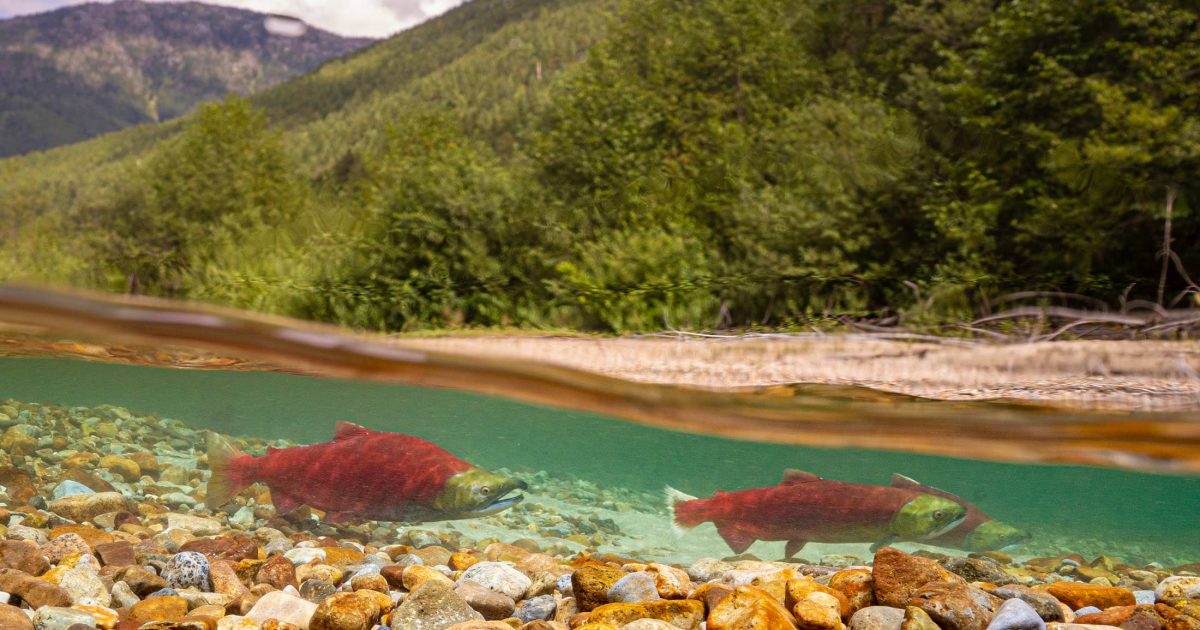
Two sockeye salmon swimming in a river.
Photo by Fernando Lessa.

Spills happen

Spills originate from all manner of accidents. The 2005 train derailment that spilled caustic soda into the Cheakamus River that killed 500,000 fish, The 2015 spill of 3,000 L of Bunker C oil from the MV Marathassa into English Bay. The 2020 fire aboard the MV ZIM Kingston in Juan de Fuca Strait that resulted in the loss of 104 mixed cargo shipping containers into the ocean. Each and every accident is bad news, and threatens the health of fish and whales, and contributes to the degradation of their habitats.

Being prepared is key

Given the sudden and unpredictable nature of oil and chemical spills, our oil and chemical spill response work entails being agile and available for support to First Nations, government agencies, and industry during a major spill. We are developing science protocols, and acquiring sampling kits, field equipment, and safety gear, and are poised to deploy our team to the scene of a spill. 

Being prepared on all fronts is key to limiting the damage from a spill. We recognize that with spills, it’s not a matter of if, but when. Research and monitoring to confirm the origin of the spill, track the fate of the spilled product, and monitor the recovery of ecosystem components routinely fails to be a priority. We will deploy expert capacity where and when needed, and work to prevent harm to valued ecosystem components.
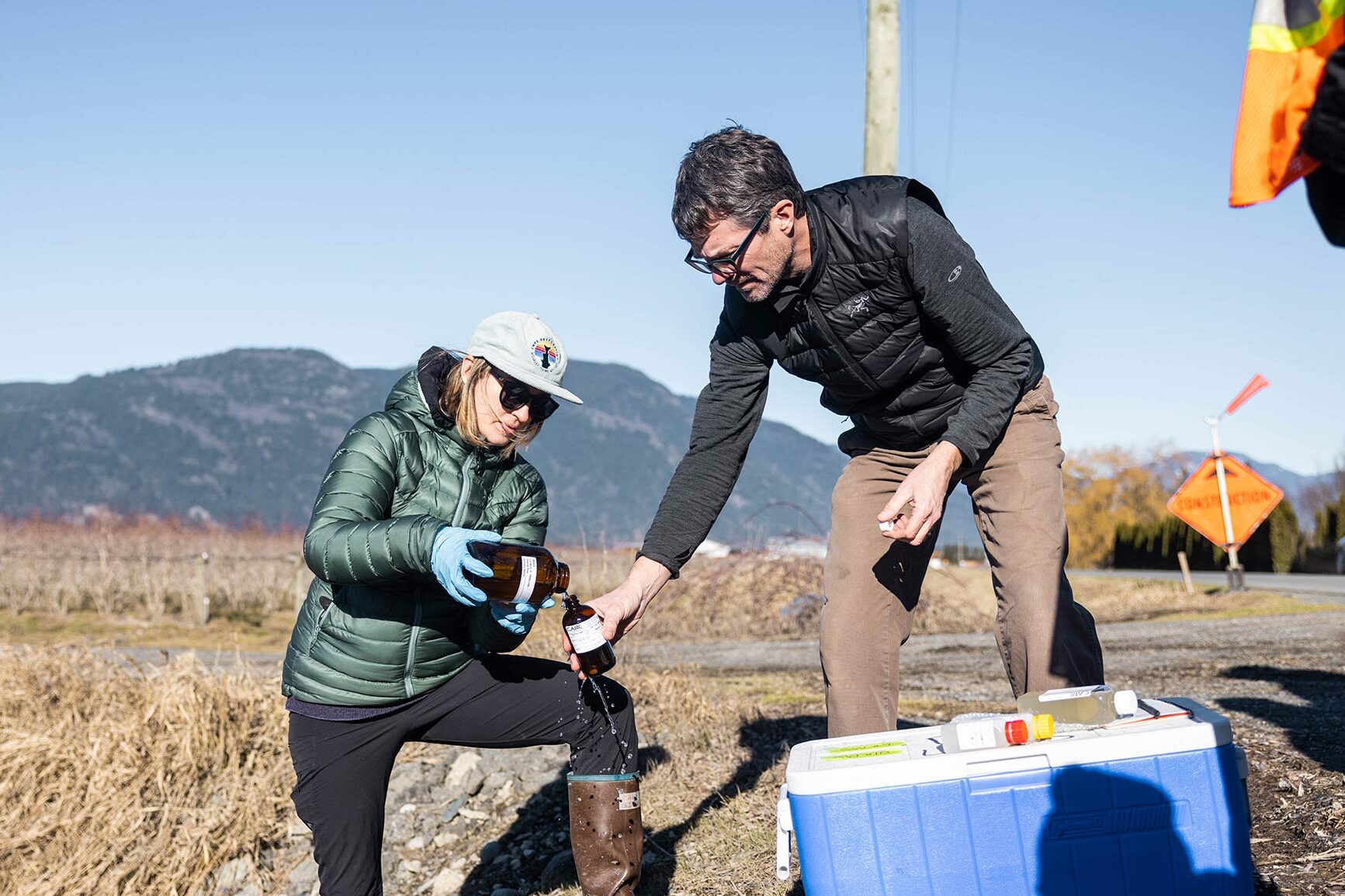
Two people working together to collect water samples in a farm field with the mountains in the background.
Photo by Alex Harris.
https://www.raincoast.org/reports/flood

Semá:th X̱ó:tsa (Sumas Lake) Floods of 2021

The catastrophic floods of late 2021 in southern British Columbia (Canada) and neighbouring Washington State (USA) destroyed homes, farms and businesses, with excess water spilling debris, animal carcasses and diesel fuel into historically productive fish habitat. 

We assembled a team to assess water quality in the former Semá:th X̱ó:tsa (Sumas Lake) area of the Fraser Valley over a seven-week period after the floods. We collected water samples from 11 surface water sites and four groundwater sites for comprehensive contaminant analysis and a subsequent risk-based evaluation. We measured 379 analytes (chemical components and bacteria), including 262 anthropogenic contaminants. We examined excess nutrients, metals, fecal coliform, hydrocarbons, pesticides, pharmaceuticals, and personal care products, perfluorinated compounds, sucralose, and tire-related chemicals.

Recent articles

dummy-img

‘Climategate’ is the first in a new wave of attacks

by Chris Genovali The Ecologist The emails hacked from the servers of the University of East Anglia continue to cause controversy. But it was not a singular attack, says Chris Genovali,just the only successful one so far… Sceptics in Canada have used the so-called ‘Climategate’ controversy to call for a cautious approach at COP 15…
dummy-img

Hopenhagen or Dopenhagen?

by Chris Genovali Truthout.org Dec. 18, 2009 Georgia Strait, Dec 17, 2009 Common Dreams, Dec 15, 2009 In the run-up to the United Nations Climate Change Conference (COP 15) in Copenhagen, an eclectic group made up primarily of corporations and media outlets put forward the notion of “Hopenhagen.” The following is extracted from their mission…
dummy-img

Climate change: policy in the dark

Toronto Star Re: Climate change: policy in the dark, Editorial Dec. 11 Kudos to the Star for its thoughtful editorial. Reflecting on the federal government’s continued foot dragging on the climate change file, as well as its predilection for “shouting down critics and environmental activists,” as your editorial points out, one has to wonder what…
dummy-img

Now the ball is in Canada’s court

Montreal Gazette, December 11, 2009 Re: “U.S. EPA moves on climate as Congress stalls” (Gazette, Dec. 8) Now that the U.S. Environmental Protection Agency has ruled that greenhouse-gas emissions pose a threat to public health and welfare, will Canada follow suit and harmonize with this policy?
dummy-img

Take Action!! ‘Control kills’ of grizzlies out of control.

Bella Coola grizzly bears need your voice.  Send a letter to Environment Minister Barry Penner. A disturbing number of grizzly bears are being shot as ‘control kills’ in BC’s Bella Coola valley.  Most of these kills are as a result of humans who don’t secure bear attractants.  Despite this, virtually no enforcement action is being…
A white bear walking through the woods.

The Gift of Conservation

Three pillars form the underpinnings of Raincoast Conservation Foundation’s mission: informed advocacy, scientific research, and environmental ethics. Informed advocacy drives all Raincoast’s conservation efforts; it’s a distinctive approach that has earned us a unique niche in the environmental movement. Our advocacy is informed by rigorous scientific research and guided by environmental ethics. This allows us…
dummy-img

Oil sands, tankers and climate. Raincoast speaks out

Climate change is real and demands a concerted effort Vancouver Sun Climategate’s a convenient sideshow to the real issue Victoria News Climategate a convenient sideshow Ottawa Citizen Climategate is first in a new wave of attacks The Ecologist Hopenhagen or Dopenhagen? Common Dreams, Georgia Strait, Climate change policy in the dark Toronto Star Now the…
A spirit bear looks into the camera, we see its head, shoulders, and front two legs as it looks up.

The black and white world of spirit bears

The spirit bear’s white fur chest was covered in bright red blood, as if he’d been spattered with paint. The blood red dye job was from the all the salmon he had been eating.With rapt attention, we had been watching him catch fish at river’s edge and then bring them back into the forest to…