

Shifting salmon policy
Photo by Alex Harris.
Ecosystems are complex. They are communities of living organisms connected through interacting processes and features on the land, in water, and between the two. Yet BC’s antiquated environmental policy doesn’t reflect this. Colonial society governs ecosystems by siloing them into distinct ministries and resources instead of reflecting the interconnected nature of habitats that make them function in the living world. This “siloed decision making”is the root cause of many of the ecological challenges we face today.
Our policy goals
1. Manage fisheries for ecosystems
- Set salmon harvest at levels that optimize the benefits of spawning salmon to watersheds and wildlife.
- Shift away from historic management paradigms that minimize the number of spawning salmon reaching rivers and maximize harvest (called Maximum Sustainable Yield). Move towards fisheries management that meets salmon spawning targets that are ecologically based, not harvest-based.
- Shift harvest toward selective terminal fisheries (conducted in or near the rivers of origin) that respect the ‘place-based’ nature of salmon, and optimize the benefits to ecosystems, Indigenous cultures, and local communities.
2. Implement ecological-based governance
- Conservation planning and a commitment to sustainability that looks 7 generations ahead.
- A “whole-of-government” approach that implements shared solutions by Indigenous, federal, provincial, and municipal governments to achieve salmon recovery from inland watersheds and rivers, to the open ocean.
- Governance that honours Aboriginal rights and title, inherent Indigenous jurisdiction and law, and the United Nations Declaration on the Rights of Indigenous Peoples (UNDRIP) and the Declaration on the Rights of Indigenous Peoples Act (DRIPA).
- Sustainable funding strategies for watershed-scale restoration and planning.
3. Advance land-use policies that prioritize the health of wild salmon and biodiversity
- Zoning that bolsters functioning watersheds and riparian habitat (i.e.protect natural features, limit impervious surfaces, reduce urban sprawl, adopt nature-based solutions).
- Forestry policy that prioritizes salmon health by restricting clear-cutting in salmon watersheds, and incentivizes a sustainable, second or third-growth forest economy.
- Climate adaptation policy that incentivizes nature-based solutions including natural shorelines, intact riparian areas, unrestricted floodplains, managed retreat, and use of rain-gardens in urban areas.
Our recent reports
Recent articles
Delegating to the Islands Trust: The 30×30 challenge
Forest Conservation Program Director Shauna Doll made a delegation to Islands Trust Council urging them to incorporate biodiversity protection.
Proposed green waste facility in burnaby axed after public outcry and grassroots organizing
The battle over the location of Burnaby’s Green Recycling and Organics (GRO) facility has been framed as a choice between climate progress and habitat preservation, when in fact its ability to advance climate progress is weak at best.

Reduced genetic diversity: another challenge facing the Southern Resident killer whales?
As charismatic mega-predators, killer whales have no equal. Historically feared, respected, in some cultures revered, we now know them to be intelligent and highly social. They also have fascinatingly strong ideas about what constitutes food, with different populations having vastly different preferred prey. Not surprisingly, then, the plight of the critically endangered salmon-eating Southern Resident…
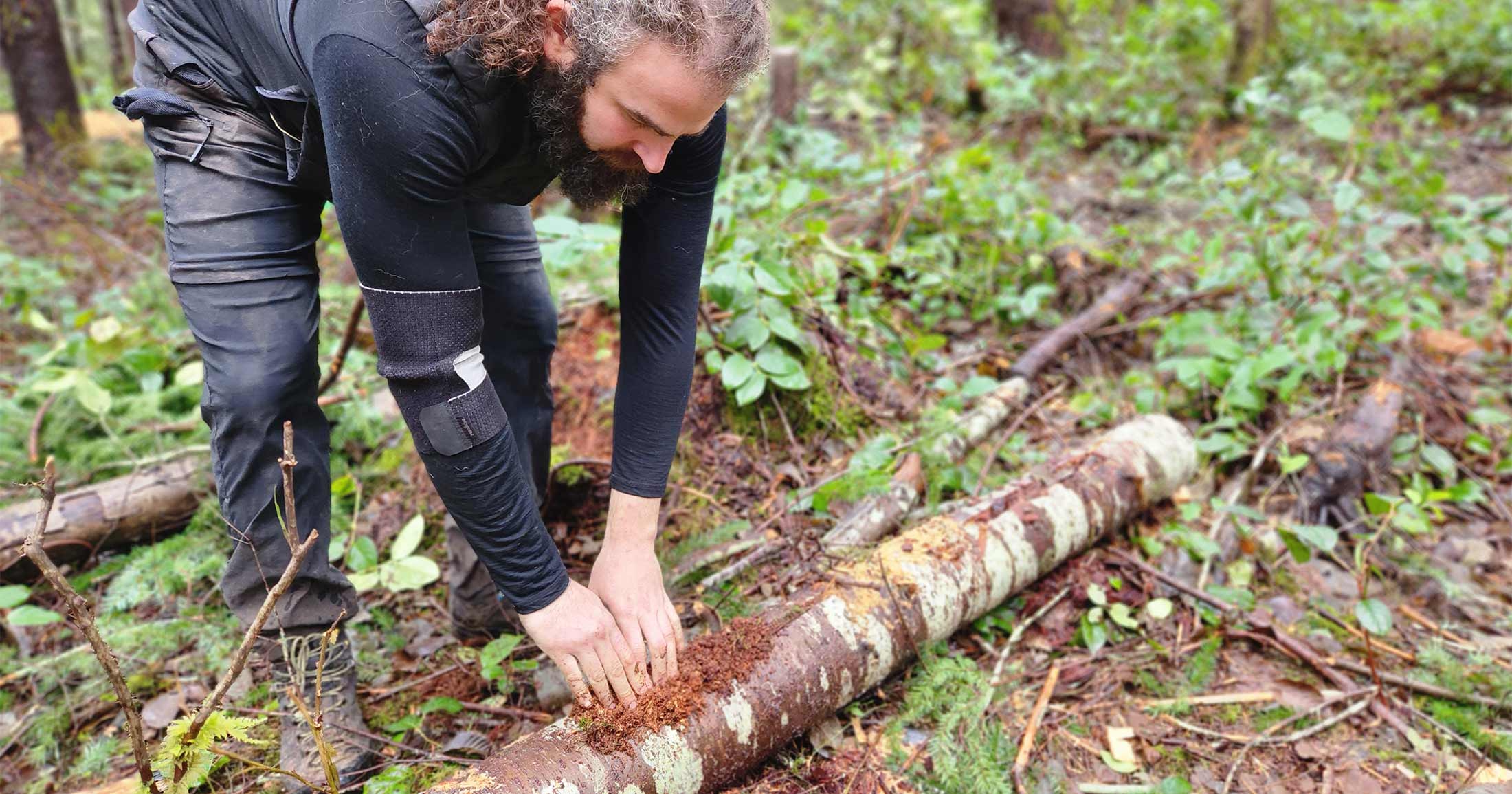
Maxwell Creek Watershed Project Field Files Part 5: Experimental forest restoration methodologies
Together this community of practice has been developing new approaches to manage growing concerns around the degraded condition of BC’s forests.

Local engagement: letters to elected representatives can help make change
Raincoast scientists have been engaging in work related to conservation action on the Gulf Islands for many years.

Join us for After the Groundswell: film and discussion panel events in Vancouver, Victoria, and Tofino
We invite you to join us in Vancouver, Victoria, or Tofino for a special evening and ‘re-premiere’ of Groundswell, a 25 minute short film with a new prologue.