

Shifting salmon policy
Photo by Alex Harris.
Ecosystems are complex. They are communities of living organisms connected through interacting processes and features on the land, in water, and between the two. Yet BC’s antiquated environmental policy doesn’t reflect this. Colonial society governs ecosystems by siloing them into distinct ministries and resources instead of reflecting the interconnected nature of habitats that make them function in the living world. This “siloed decision making”is the root cause of many of the ecological challenges we face today.
Our policy goals
1. Manage fisheries for ecosystems
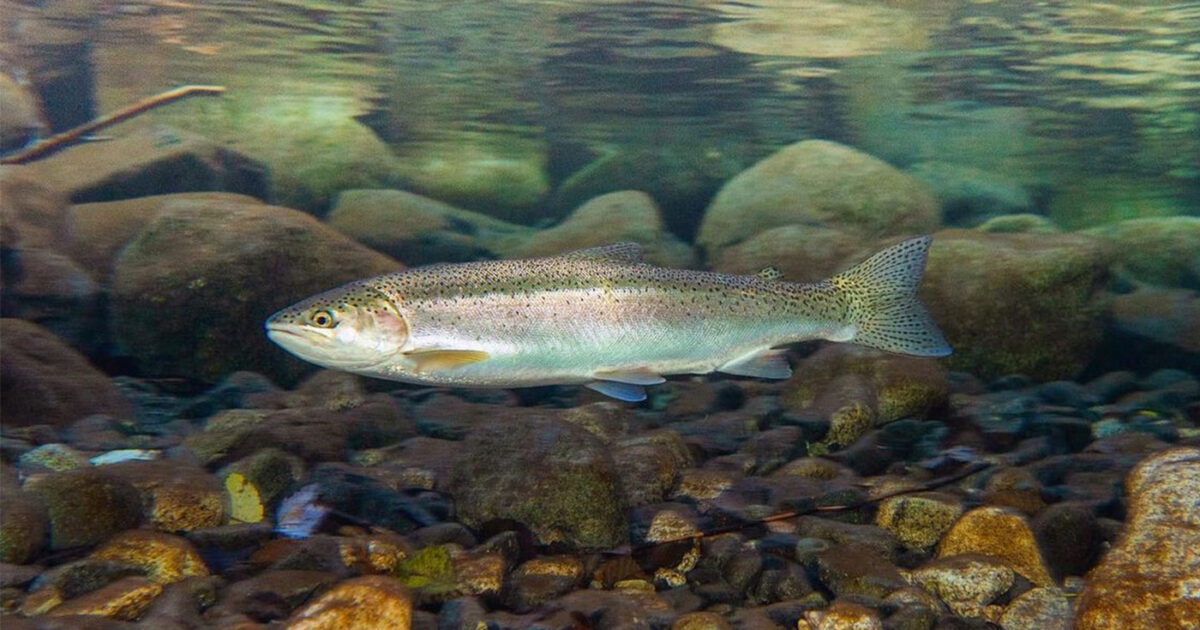
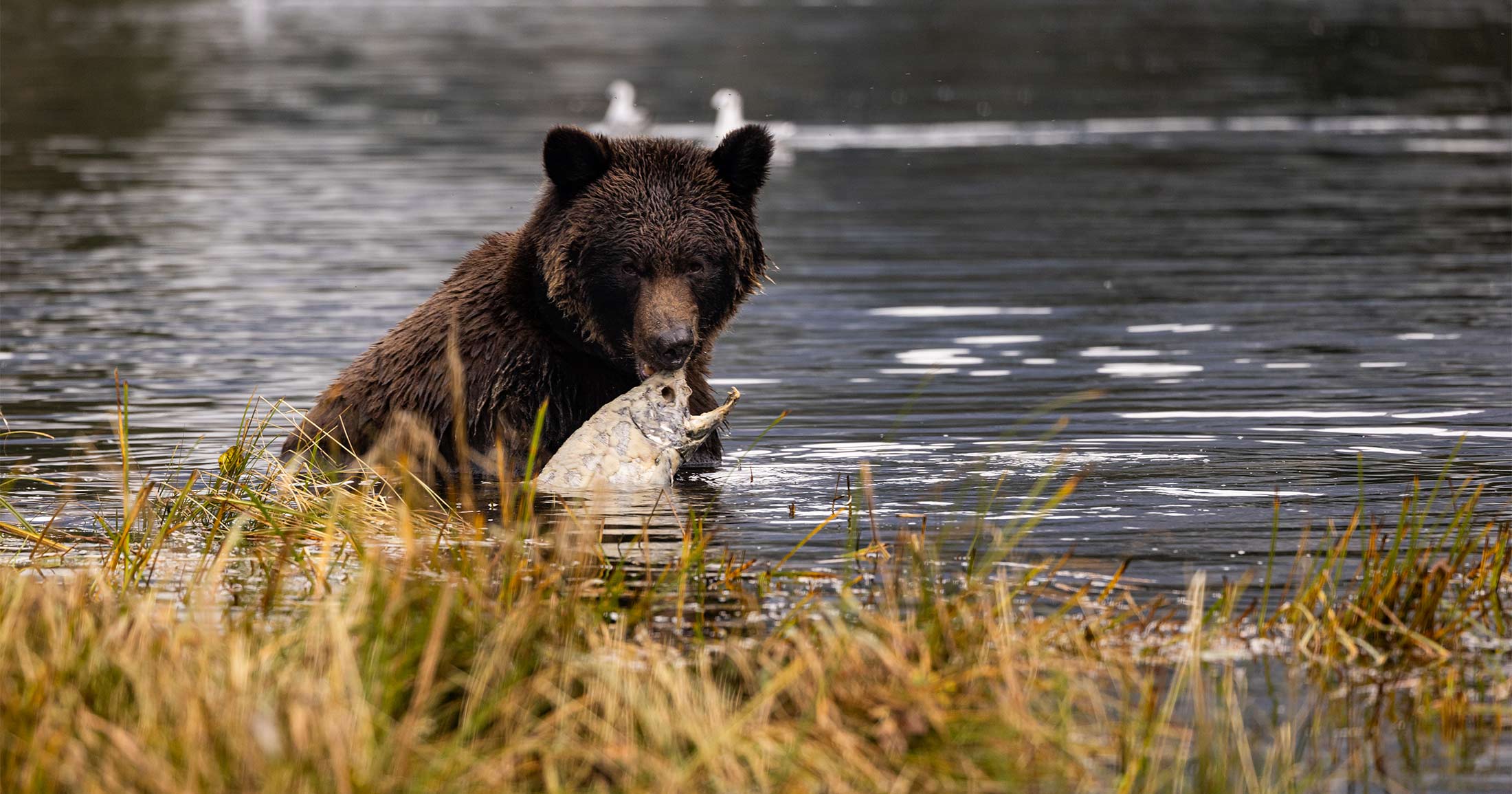
- Set salmon harvest at levels that optimize the benefits of spawning salmon to watersheds and wildlife.
- Shift away from historic management paradigms that minimize the number of spawning salmon reaching rivers and maximize harvest (called Maximum Sustainable Yield). Move towards fisheries management that meets salmon spawning targets that are ecologically based, not harvest-based.
- Shift harvest toward selective terminal fisheries (conducted in or near the rivers of origin) that respect the ‘place-based’ nature of salmon, and optimize the benefits to ecosystems, Indigenous cultures, and local communities.
2. Implement ecological-based governance
- Conservation planning and a commitment to sustainability that looks 7 generations ahead.
- A “whole-of-government” approach that implements shared solutions by Indigenous, federal, provincial, and municipal governments to achieve salmon recovery from inland watersheds and rivers, to the open ocean.
- Governance that honours Aboriginal rights and title, inherent Indigenous jurisdiction and law, and the United Nations Declaration on the Rights of Indigenous Peoples (UNDRIP) and the Declaration on the Rights of Indigenous Peoples Act (DRIPA).
- Sustainable funding strategies for watershed-scale restoration and planning.
3. Advance land-use policies that prioritize the health of wild salmon and biodiversity
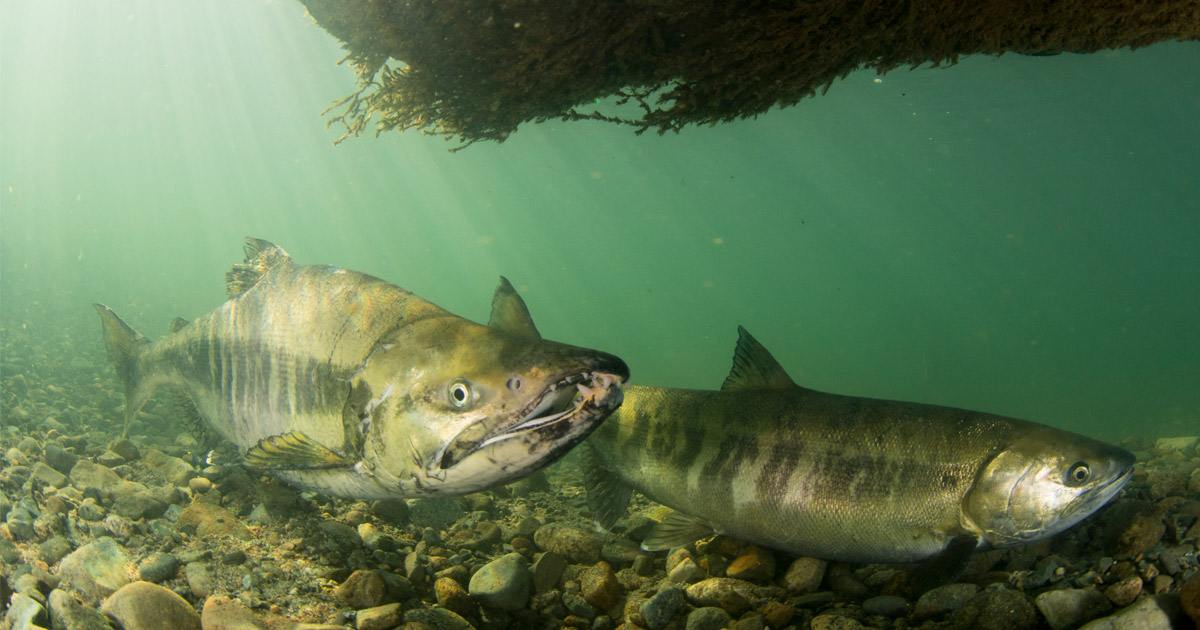
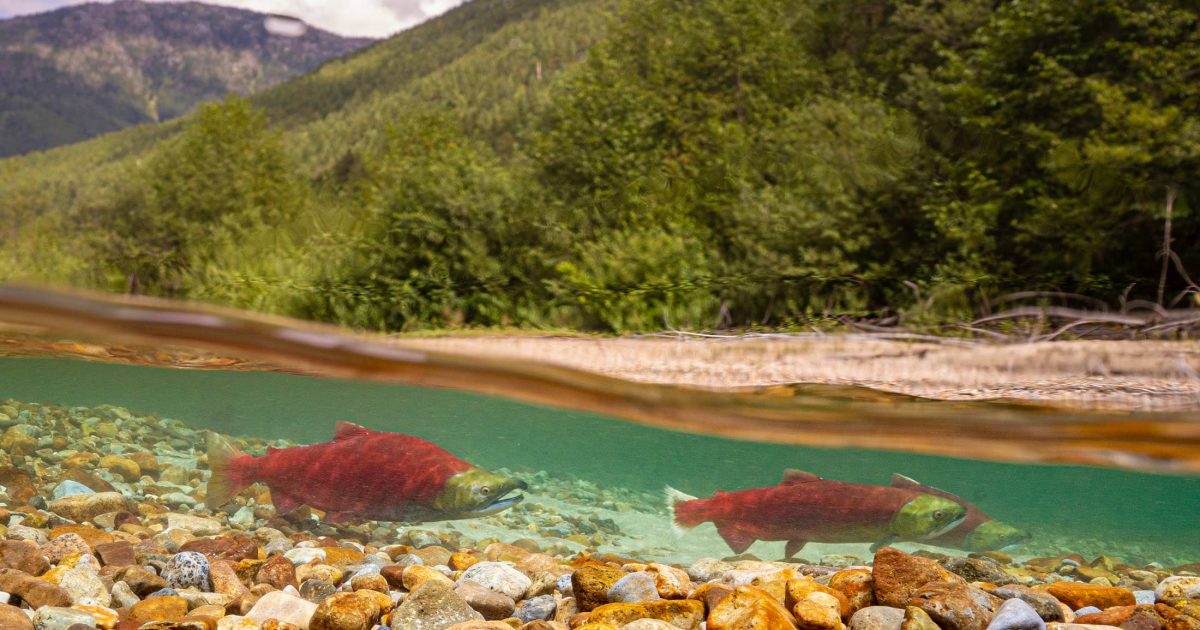
- Zoning that bolsters functioning watersheds and riparian habitat (i.e.protect natural features, limit impervious surfaces, reduce urban sprawl, adopt nature-based solutions).
- Forestry policy that prioritizes salmon health by restricting clear-cutting in salmon watersheds, and incentivizes a sustainable, second or third-growth forest economy.
- Climate adaptation policy that incentivizes nature-based solutions including natural shorelines, intact riparian areas, unrestricted floodplains, managed retreat, and use of rain-gardens in urban areas.
Our recent reports
Recent articles

A Silver Cycle
Michelle Nelson, PhD candidate, Simon Fraser University Bella Bella Field Station Spring 2007 The wolf hasn’t smelled us yet. Anxiously pacing the stream bank, he trots forward and back, nose to the ground, eyes on the water, intent on the movement beneath. He’s watching and waiting for the precise moment when he’ll leap, suddenly and…
Bear Interactions
By Heather Bryan, PhD Candidate and Rainforest Wolf Project From the white sands of Koeye River September 2007 Twilight at Koeye River flushes white sand dunes pink, softens the sound of howling wind in Fischer channel, and dampens the roar of the wave standing at river’s mouth. In these short moments of calm, a big…
Marine Survey – onboard the Achiever
By Jody Weir Marine Program Coordinator Spring 2007 In early spring we left Nanaimo, aboard our research vessel, Achiever. Our goal is to survey the coastal waters of British Columbia for marine mammals (whales, dolphins, porpoises, seals, sealions) and seabirds in order to document the marine life in these waters and identify their most critical…
Special Committee on Sustainable Aquaculture – Final Report Volume 1
Report to the Government of British Columbia from the Government-appointed Special Committee on Sustainable Aquaculture, volume 1. The Legislative Assembly of British Columbia. ISBN 978-0-7726-5787-9 SPSA Final Report Vol 1
Special Committe on Sustainable Aquaculture – Final Report – Volume 2
Report to the Government of British Columbia from the Government-appointed Special Committee on Sustainable Aquaculture, volume 2. The Legislative Assembly of British Columbia. ISBN 978-0-7726-5787-9 Appendix – Economic Impact Study SPSA Final Vol 2
Wake-up Call
By Jennie Christensen PhD Candidate, Wildlife Toxicologist, Grizzly Contaminant Project Spring is here – sunnier days, warmer weather and the growth and blossoming of plants and flowers. It is a time of heightened spirits, and many species will begin their annual rituals celebrating a renewal of life and nature. While we may begin to clean…