
Shifting salmon policy
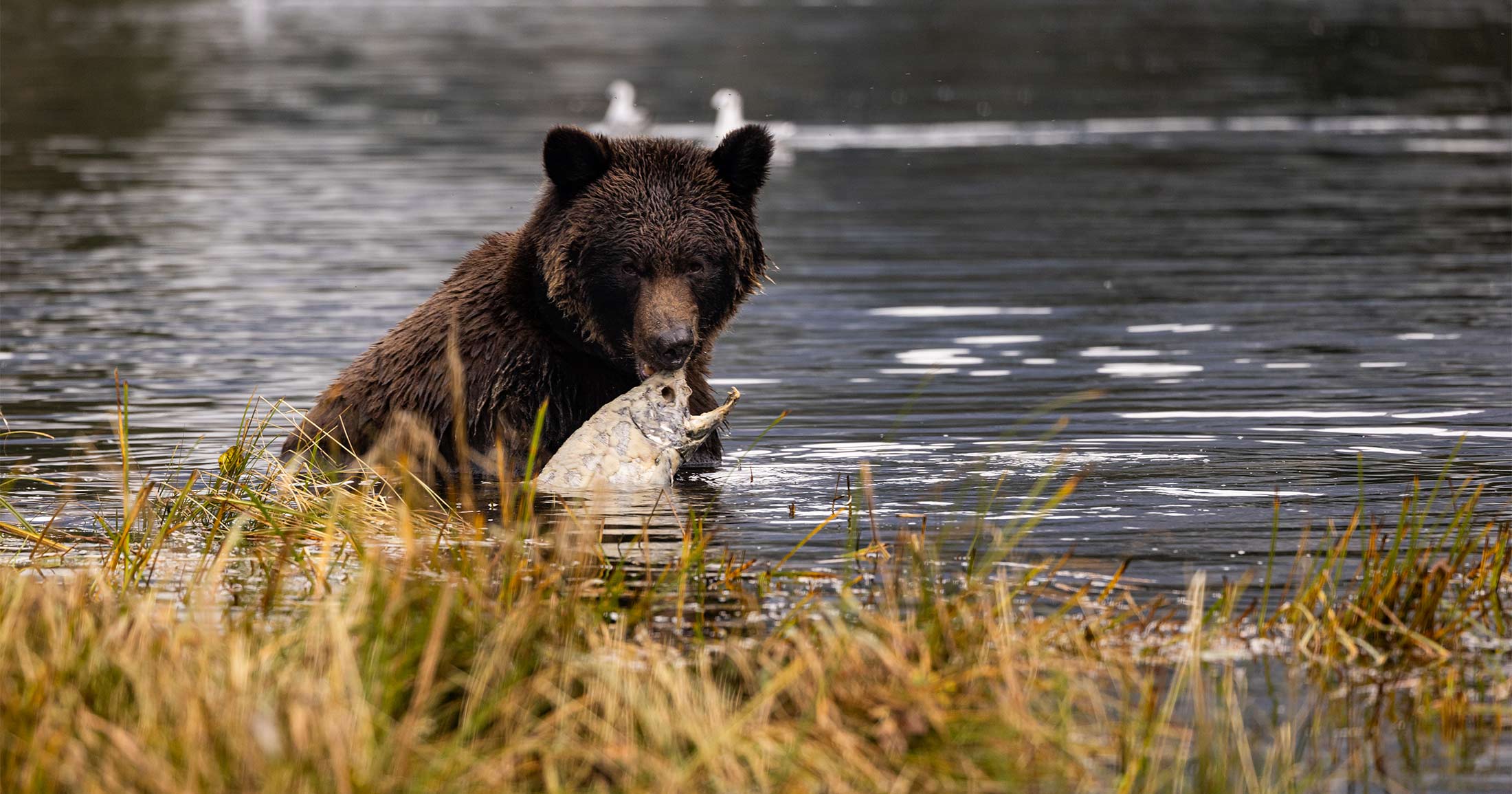
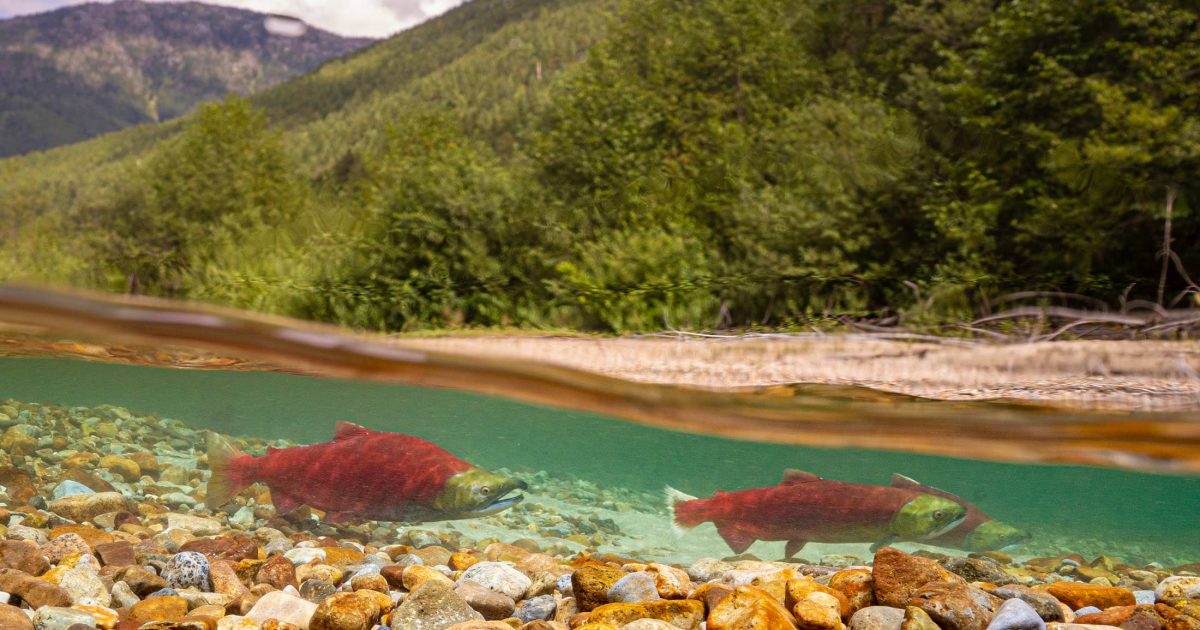
Photo by Alex Harris.
Ecosystems are complex. They are communities of living organisms connected through interacting processes and features on the land, in water, and between the two. Yet BC’s antiquated environmental policy doesn’t reflect this. Colonial society governs ecosystems by siloing them into distinct ministries and resources instead of reflecting the interconnected nature of habitats that make them function in the living world. This “siloed decision making”is the root cause of many of the ecological challenges we face today.
Our policy goals
1. Manage fisheries for ecosystems
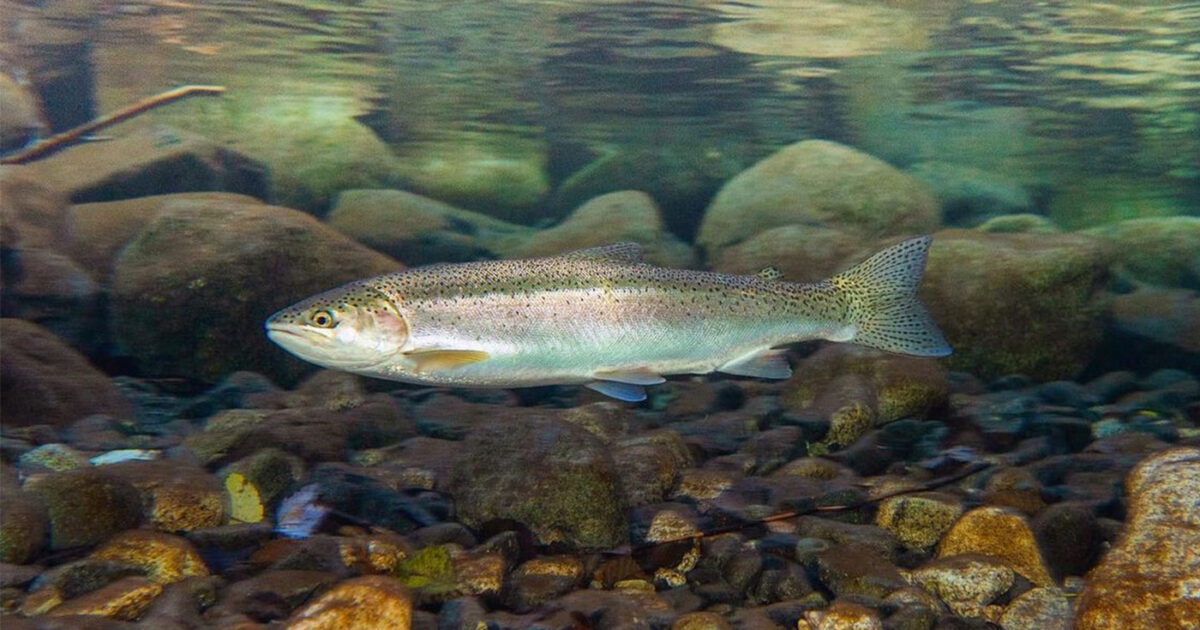
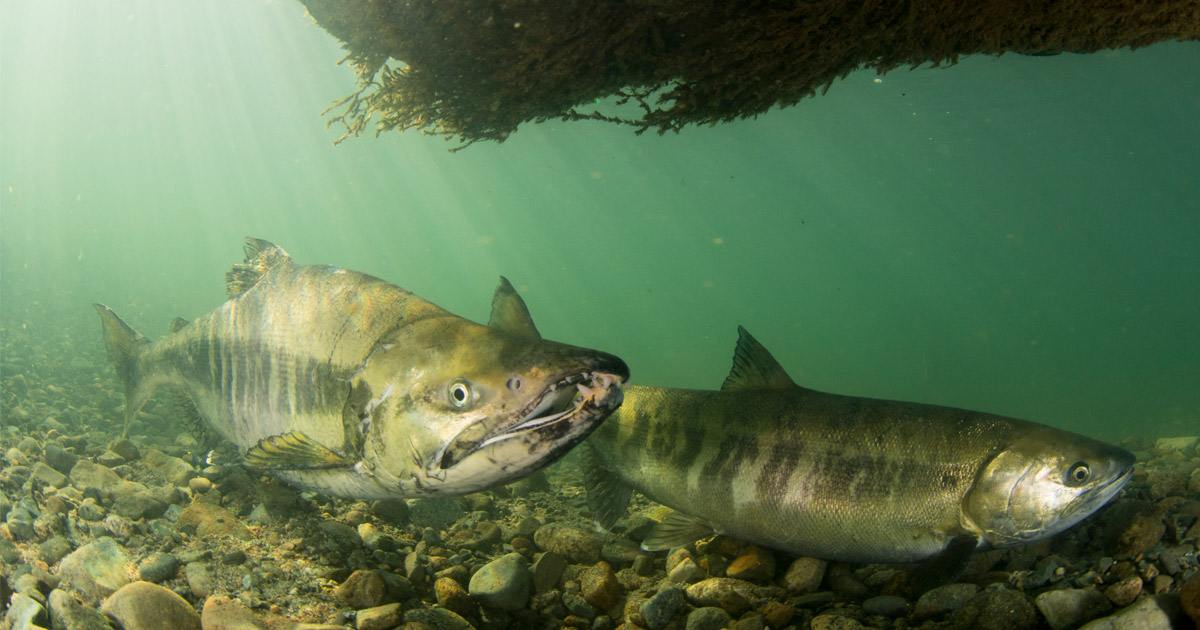
- Set salmon harvest at levels that optimize the benefits of spawning salmon to watersheds and wildlife.
- Shift away from historic management paradigms that minimize the number of spawning salmon reaching rivers and maximize harvest (called Maximum Sustainable Yield). Move towards fisheries management that meets salmon spawning targets that are ecologically based, not harvest-based.
- Shift harvest toward selective terminal fisheries (conducted in or near the rivers of origin) that respect the ‘place-based’ nature of salmon, and optimize the benefits to ecosystems, Indigenous cultures, and local communities.
2. Implement ecological-based governance
- Conservation planning and a commitment to sustainability that looks 7 generations ahead.
- A “whole-of-government” approach that implements shared solutions by Indigenous, federal, provincial, and municipal governments to achieve salmon recovery from inland watersheds and rivers, to the open ocean.
- Governance that honours Aboriginal rights and title, inherent Indigenous jurisdiction and law, and the United Nations Declaration on the Rights of Indigenous Peoples (UNDRIP) and the Declaration on the Rights of Indigenous Peoples Act (DRIPA).
- Sustainable funding strategies for watershed-scale restoration and planning.
3. Advance land-use policies that prioritize the health of wild salmon and biodiversity
- Zoning that bolsters functioning watersheds and riparian habitat (i.e.protect natural features, limit impervious surfaces, reduce urban sprawl, adopt nature-based solutions).
- Forestry policy that prioritizes salmon health by restricting clear-cutting in salmon watersheds, and incentivizes a sustainable, second or third-growth forest economy.
- Climate adaptation policy that incentivizes nature-based solutions including natural shorelines, intact riparian areas, unrestricted floodplains, managed retreat, and use of rain-gardens in urban areas.
Our recent reports
Recent articles

Marine Birds of Queen Charlotte Sound
By Caroline Fox Marine Bird Specialist, Marine Conservation Program Journal entry – November 2007: It’s our last night and tomorrow will be our final marine bird and mammal survey transect back to the mainland coast. I am helping keep watch aboard Achiever and it’s a night to remember: a starry sky above us, aurora borealis…
Alarm over sea lice spreads
By Stephen Hume Vancouver Sun January 28, 2008 If British Columbia’s wild salmon runs were damaged by a sea lice crisis similar to those in Norway, Scotland and Ireland, who should be accountable?

Citizen Science
Are you venturing into the Great Bear Rainforest and looking for a way to help out? Our Citizen Science Project lets you contribute to our research in this beautiful area! What is Citizen Science? Citizen science is a term used when scientific work is carried out using a network of volunteers, many of whom may…
Many scientists cheer decision
By Jody Weir, Raincoast Conservation Foundation Prince Rupert Daily News, January 11, 2008 In response to the article titled “Scientists furious at Canada as project is ditched”1 (Prince Rupert Daily News, January 4th, 2008), it is important for readers to know that several scientists (myself included) are pleased, if not delighted, at the fact that…
From the Field Station
by Alison Calestagne-Morelli, Field Station Co-ordinator and Chris Darimont, Research Scientist October 2007 We were startled by what sounded like raindrops too large for even the Great Bear Rainforest. Splish…. splosh!…. splash… followed by what sounded like a frantic churning of water. We ran to the beach to take a look.
Grizzlies
Grizzly Bears are under pressure from hunting, habitat loss and declining food supply. In 2005, Raincoast and its partners at the Institute of Ocean Sciences and the University of Victoria, published a paper on an additional concern, the threat from global pollution. This paper documented the presence of Persistent Organic Pollutants (such as DDT and…