

Shifting salmon policy
Photo by Alex Harris.
Ecosystems are complex. They are communities of living organisms connected through interacting processes and features on the land, in water, and between the two. Yet BC’s antiquated environmental policy doesn’t reflect this. Colonial society governs ecosystems by siloing them into distinct ministries and resources instead of reflecting the interconnected nature of habitats that make them function in the living world. This “siloed decision making”is the root cause of many of the ecological challenges we face today.


Our policy goals
1. Manage fisheries for ecosystems
- Set salmon harvest at levels that optimize the benefits of spawning salmon to watersheds and wildlife.
- Shift away from historic management paradigms that minimize the number of spawning salmon reaching rivers and maximize harvest (called Maximum Sustainable Yield). Move towards fisheries management that meets salmon spawning targets that are ecologically based, not harvest-based.
- Shift harvest toward selective terminal fisheries (conducted in or near the rivers of origin) that respect the ‘place-based’ nature of salmon, and optimize the benefits to ecosystems, Indigenous cultures, and local communities.
2. Implement ecological-based governance
- Conservation planning and a commitment to sustainability that looks 7 generations ahead.
- A “whole-of-government” approach that implements shared solutions by Indigenous, federal, provincial, and municipal governments to achieve salmon recovery from inland watersheds and rivers, to the open ocean.
- Governance that honours Aboriginal rights and title, inherent Indigenous jurisdiction and law, and the United Nations Declaration on the Rights of Indigenous Peoples (UNDRIP) and the Declaration on the Rights of Indigenous Peoples Act (DRIPA).
- Sustainable funding strategies for watershed-scale restoration and planning.


3. Advance land-use policies that prioritize the health of wild salmon and biodiversity
- Zoning that bolsters functioning watersheds and riparian habitat (i.e.protect natural features, limit impervious surfaces, reduce urban sprawl, adopt nature-based solutions).
- Forestry policy that prioritizes salmon health by restricting clear-cutting in salmon watersheds, and incentivizes a sustainable, second or third-growth forest economy.
- Climate adaptation policy that incentivizes nature-based solutions including natural shorelines, intact riparian areas, unrestricted floodplains, managed retreat, and use of rain-gardens in urban areas.
Our recent reports
Recent articles
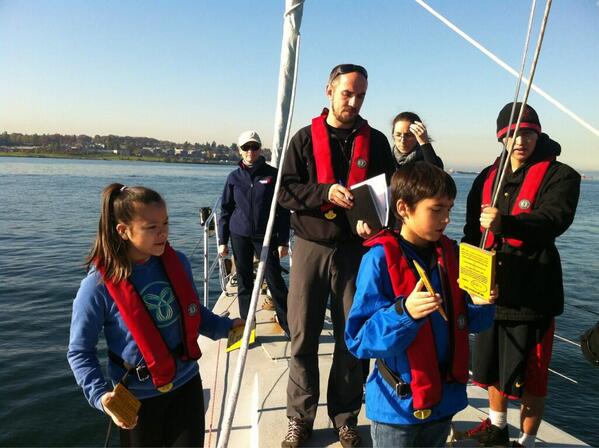
‘Drift card’ project shows potential impact of oil spill
Andrea Woo / The Globe and Mail
A small piece of plywood that washed up in Haida Gwaii shows the potentially massive reach of an oil spill in the Salish Sea, say environmental groups studying the risks…
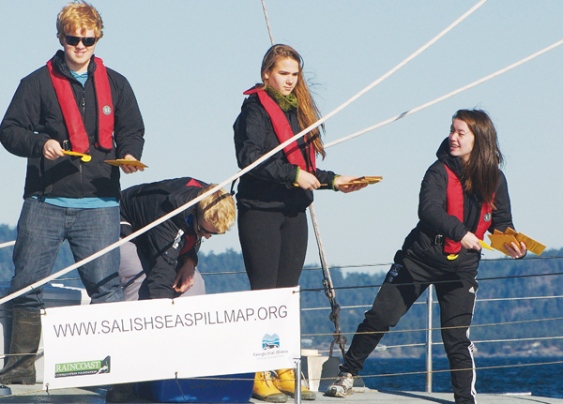
Drift cards plot extent of oil spill
Julie Bertrand / The Oceanside Star
The Raincoast Conservation Foundation and the Georgia Straight Alliance want to know what would happen if an oil tanker spilled in the Salish Sea…

Oil spill simulation shows far-reaching results
By Colleen Kimmett / The Tyee
Oil spilled in Vancouver harbour could reach as far north as Haida Gwaii, according to results of a research project launched by two environmental groups last fall…

B.C. Grizzly Hunt Bolstered By Spurious Science
Chris Genovali / The Huffington Post
Government policy makers and their bureaucratic minions who manage the grizzly hunt are not interested in rigorous science, but are keenly interested in maintaining the status quo…
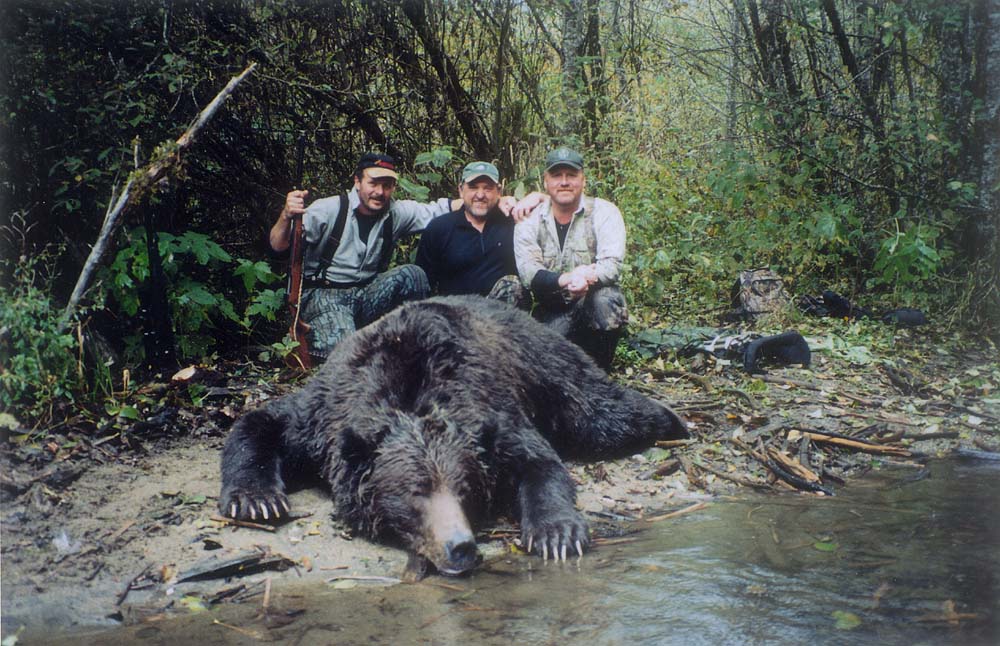
Overkill: Trophy hunting slams BC’s grizzly bears
Anna Taylor / The Ecologist
In BC, trophy hunting may be reducing grizzly bear populations. A new study by Raincoast finds evidence of serious ‘overkill’ – of which trophy hunting is a big contributor…

Wolf habituation a human issue
Chris Bolster and Dean Unger / Powell River Peak
Management of few animals in BC is more contentious than wolves. Seen by some as a symbol of our wilderness heritage and by others as a threat…