

Shifting salmon policy
Photo by Alex Harris.
Ecosystems are complex. They are communities of living organisms connected through interacting processes and features on the land, in water, and between the two. Yet BC’s antiquated environmental policy doesn’t reflect this. Colonial society governs ecosystems by siloing them into distinct ministries and resources instead of reflecting the interconnected nature of habitats that make them function in the living world. This “siloed decision making”is the root cause of many of the ecological challenges we face today.


Our policy goals
1. Manage fisheries for ecosystems
- Set salmon harvest at levels that optimize the benefits of spawning salmon to watersheds and wildlife.
- Shift away from historic management paradigms that minimize the number of spawning salmon reaching rivers and maximize harvest (called Maximum Sustainable Yield). Move towards fisheries management that meets salmon spawning targets that are ecologically based, not harvest-based.
- Shift harvest toward selective terminal fisheries (conducted in or near the rivers of origin) that respect the ‘place-based’ nature of salmon, and optimize the benefits to ecosystems, Indigenous cultures, and local communities.
2. Implement ecological-based governance
- Conservation planning and a commitment to sustainability that looks 7 generations ahead.
- A “whole-of-government” approach that implements shared solutions by Indigenous, federal, provincial, and municipal governments to achieve salmon recovery from inland watersheds and rivers, to the open ocean.
- Governance that honours Aboriginal rights and title, inherent Indigenous jurisdiction and law, and the United Nations Declaration on the Rights of Indigenous Peoples (UNDRIP) and the Declaration on the Rights of Indigenous Peoples Act (DRIPA).
- Sustainable funding strategies for watershed-scale restoration and planning.


3. Advance land-use policies that prioritize the health of wild salmon and biodiversity
- Zoning that bolsters functioning watersheds and riparian habitat (i.e.protect natural features, limit impervious surfaces, reduce urban sprawl, adopt nature-based solutions).
- Forestry policy that prioritizes salmon health by restricting clear-cutting in salmon watersheds, and incentivizes a sustainable, second or third-growth forest economy.
- Climate adaptation policy that incentivizes nature-based solutions including natural shorelines, intact riparian areas, unrestricted floodplains, managed retreat, and use of rain-gardens in urban areas.
Our recent reports
Recent articles

Tracking Raincoast into 2021
Like everyone else in 2020, we have had to adapt and explore our own resilience. From pausing multi-year field research programs, cancelling youth education and our usual travel throughout the coast, COVID has disrupted much. Yet we are grateful to have our health and play our part in protecting and supporting the communities, businesses, and individuals we work with…
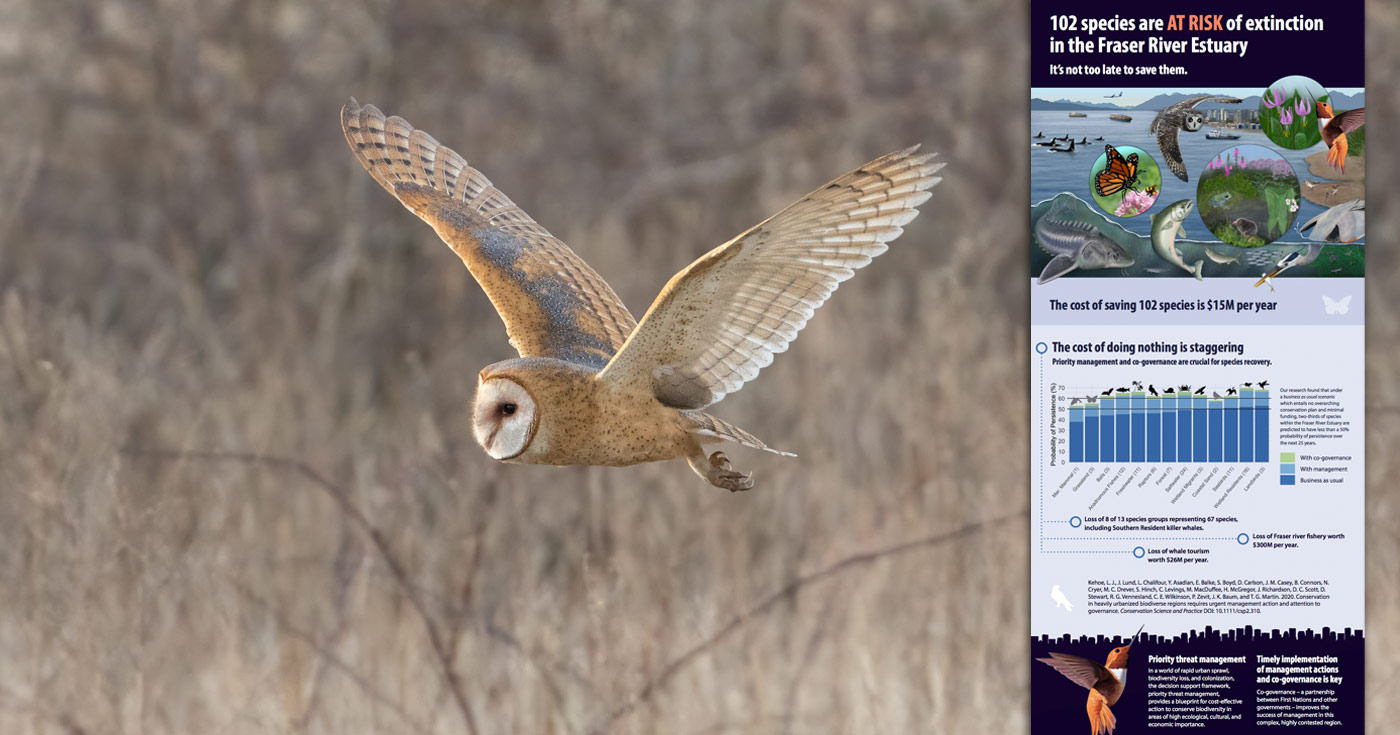
Research: Conservation in heavily urbanized biodiverse regions requires urgent management action and attention to governance
A new open access research paper led by Dr. Tara Martin at the UBC Conservation Decisions Lab applied a novel conservation decision making tool called Priority Threat Management to identify the most cost-effective management strategies needed to address the threats facing 102 species at risk identified in the area…
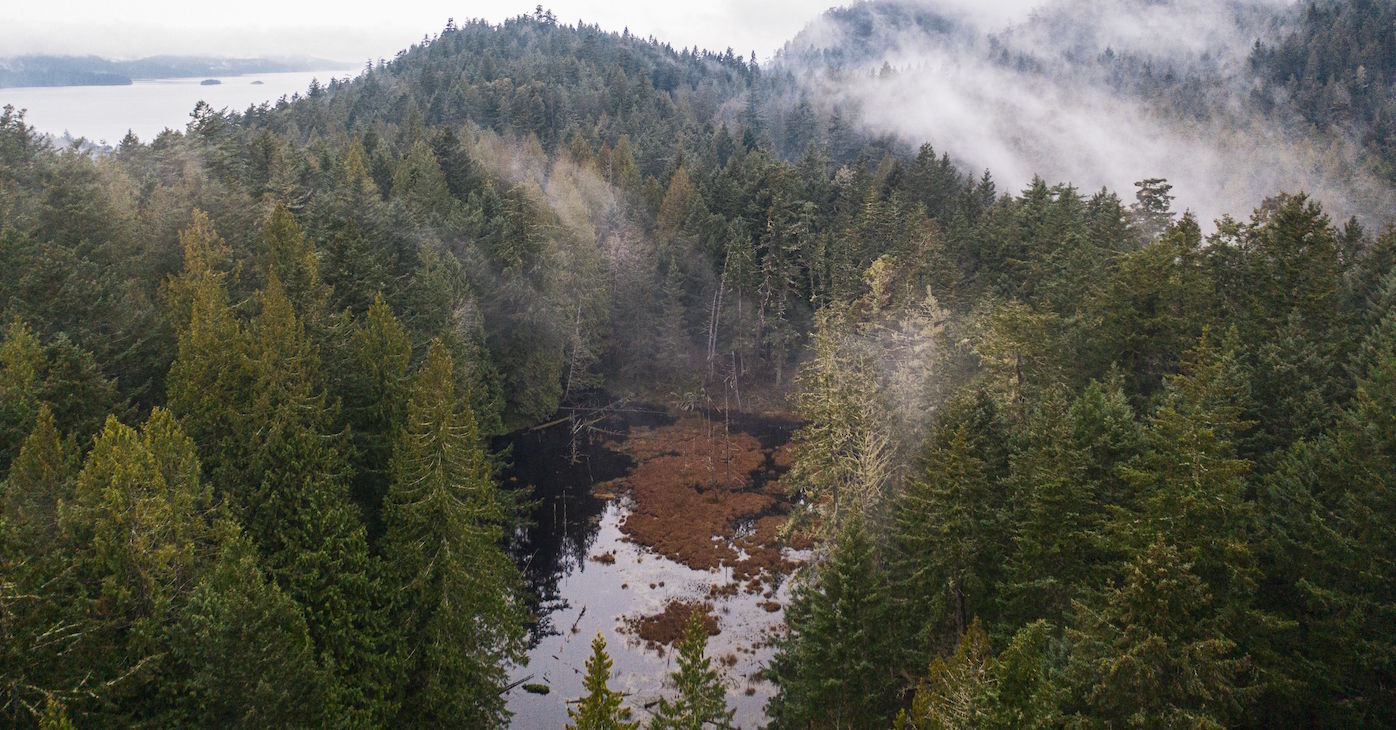
Explore S’DÁYES Flycatcher Forest: Webinar, video and fundraising update
On December 1st, Raincoast and Pender Islands Conservancy announced a match funding campaign in support of protecting S’DÁYES Flycatcher Forest on North Pender Island: we will be gifted $50,000 if we can raise the same amount with individual donations. We are now only $12,000 away from unlocking this $50,000! Can you help bring us to…

Help permanently protect the S,DÁYES Flycatcher Forest this December
One week into the fundraising campaign for the S,DÁYES Flycatcher Forest initiative, the Pender Islands Conservancy and Raincoast Conservation Foundation have collectively raised over $62,000 in donations…

The perfect holiday gift that supports efforts to protect BC’s wolves
We have partnered with Ecologyst and an incredibly talented Tsleil-Waututh artist, Ocean Hyland, to make these exclusive 1200 Wolf Tee Shirts…

Report: Legal Measures to Protect the Gulf Islands Coastal Douglas-fir Zone
A review from the Raincoast Conservation Foundation and Environmental Law Centre (ELC) at the University of Victoria shows that much more needs to be done to protect this important zone, particularly in the Gulf Islands.