

Shifting salmon policy
Photo by Alex Harris.
Ecosystems are complex. They are communities of living organisms connected through interacting processes and features on the land, in water, and between the two. Yet BC’s antiquated environmental policy doesn’t reflect this. Colonial society governs ecosystems by siloing them into distinct ministries and resources instead of reflecting the interconnected nature of habitats that make them function in the living world. This “siloed decision making”is the root cause of many of the ecological challenges we face today.


Our policy goals
1. Manage fisheries for ecosystems
- Set salmon harvest at levels that optimize the benefits of spawning salmon to watersheds and wildlife.
- Shift away from historic management paradigms that minimize the number of spawning salmon reaching rivers and maximize harvest (called Maximum Sustainable Yield). Move towards fisheries management that meets salmon spawning targets that are ecologically based, not harvest-based.
- Shift harvest toward selective terminal fisheries (conducted in or near the rivers of origin) that respect the ‘place-based’ nature of salmon, and optimize the benefits to ecosystems, Indigenous cultures, and local communities.
2. Implement ecological-based governance
- Conservation planning and a commitment to sustainability that looks 7 generations ahead.
- A “whole-of-government” approach that implements shared solutions by Indigenous, federal, provincial, and municipal governments to achieve salmon recovery from inland watersheds and rivers, to the open ocean.
- Governance that honours Aboriginal rights and title, inherent Indigenous jurisdiction and law, and the United Nations Declaration on the Rights of Indigenous Peoples (UNDRIP) and the Declaration on the Rights of Indigenous Peoples Act (DRIPA).
- Sustainable funding strategies for watershed-scale restoration and planning.


3. Advance land-use policies that prioritize the health of wild salmon and biodiversity
- Zoning that bolsters functioning watersheds and riparian habitat (i.e.protect natural features, limit impervious surfaces, reduce urban sprawl, adopt nature-based solutions).
- Forestry policy that prioritizes salmon health by restricting clear-cutting in salmon watersheds, and incentivizes a sustainable, second or third-growth forest economy.
- Climate adaptation policy that incentivizes nature-based solutions including natural shorelines, intact riparian areas, unrestricted floodplains, managed retreat, and use of rain-gardens in urban areas.
Our recent reports
Recent articles

Mom, can you hear me? Impacts of underwater noise on mother-calf communication in endangered beluga whales
We investigated whether the elevated levels of underwater vessel noise in the estuary could interfere with the ability of beluga mothers and their newborn calves to regain contact after separations.
Meet Lance Barrett-Lennard, Senior Research Scientist and Co-Director of Raincoast’s new Cetacean Research Program
Dr. Lance Barrett-Lennard is a renowned cetacean researcher who served as a research scientist at Fisheries and Oceans Canada before starting as senior research scientist and director of the Marine Mammal Research Program at the Coastal Ocean Research Institute (Ocean Wise Conservation Association) in 2001. One of his principal current projects is a study of…

Meet Valeria Vergara, co-Director of Raincoast’s new Cetacean Research Program
We posed some questions to Valeria to get to know her better.

Take action for the Fraser River Estuary by March 15th
The Government of Canada is currently requesting public comments to decide on whether the Roberts Bank Terminal 2 expansion project should go forward. Until March 15th, supporters like you can take action to protect the Fraser River Estuary. Please consider taking five minutes to submit a public comment. We have made it very easy for…
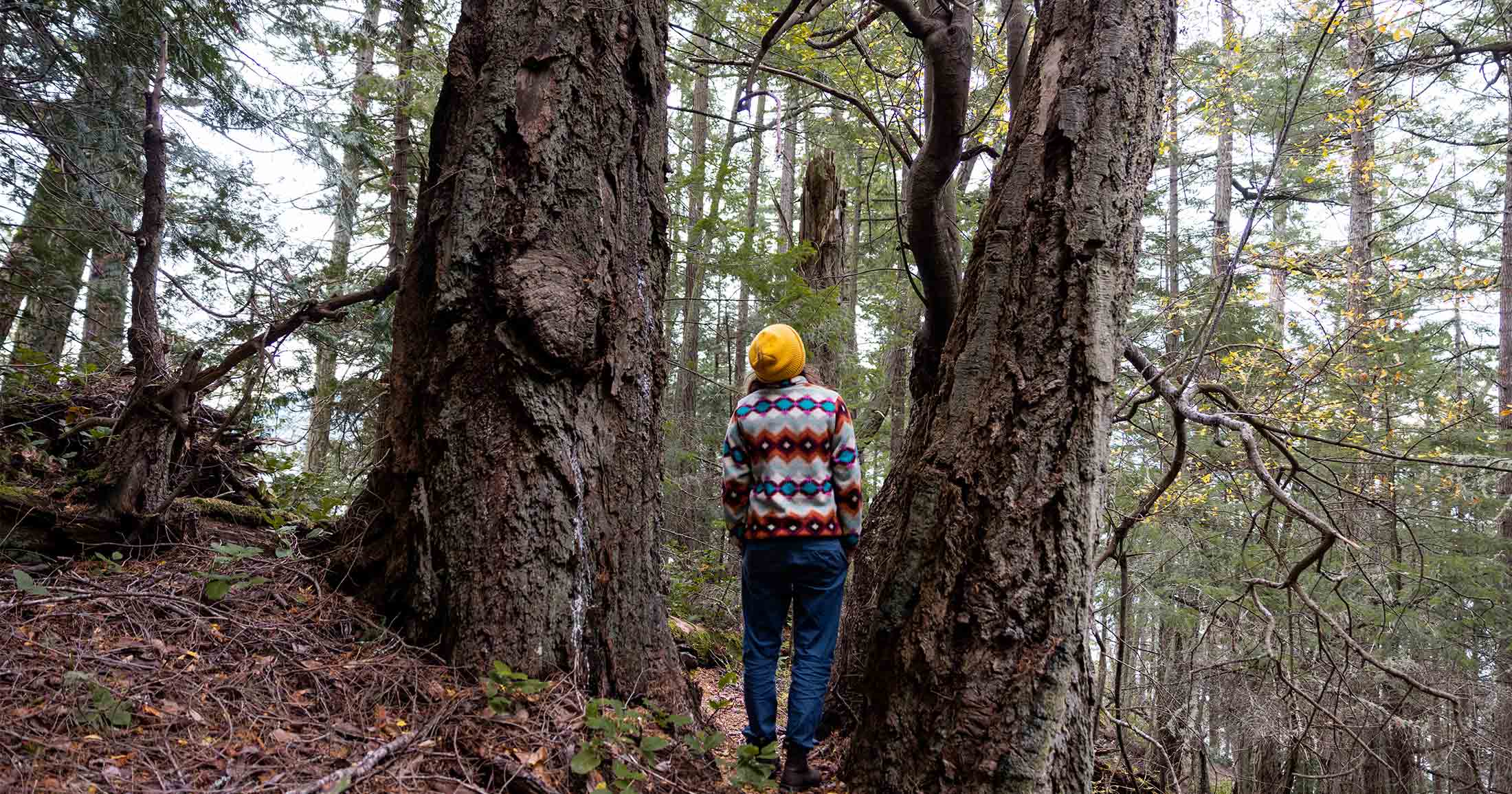
The Pender Islands Big Tree Registry is helping property owners connect with the forest
We asked one property owner to share her experience with the Big Tree Registry.

Anglers and conservation groups make joint call for listing of endangered Interior Fraser River steelhead under Canada’s Species at Risk Act
Endangered Interior Fraser River steelhead were the object of a scandal in 2018 when bureaucrats at Fisheries and Oceans Canada unilaterally altered the conclusions of a multi-author scientific report the federal cabinet relied on in their controversial decision not to protect Fraser River steelhead under SARA. This action by DFO came to light in an FOI that was reported on by the Narwhal in 2021.