
Plastic pollution

Photo by April Benze.

Plastic pollution is choking our waterways and threatening the health of fish and wildlife. We are collecting plastic and microplastic data as part of our community-oriented water pollution monitoring program. We are collaborating on research projects with universities, governments and experts in the field. We are providing advice to local, regional and federal governments on plastic science, policies, and regulations. We are working with Ocean Diagnostics to support a strong science-based foundation for solutions.


Lots of garbage on a beach.
Photo by Simon Ager.
People working together to take samples of water in jars.
Photo by Alex Harris / Raincoast Conservation Foundation.

Our approach

  • Design a source identification toolbox for plastic pollution; 
  • Working with Indigenous and coastal communities to document plastic pollution and track this back to its source;
  • Conduct research on the source, transport and fate of micro and macroplastics in the environment;
  • Engage in outside-the-box dialogue with industry and governments to support more sustainable design, manufacturing and processes that stem the release of plastics during the life cycle of a product;
  • Support community-oriented outreach and training to support solution-oriented actions and capacity building.

Plastics are everywhere

Plastics from just about every sector can now be found all over the world – from mountain tops to the seafloor, from the Arctic to the Antarctic, and from our homes to the ocean. A modern-day scourge that is blighting remote beaches and shorelines, getting mistaken for food by wildlife, and getting into the foods that nourish us. Whether it’s the structural features of plastic products that suffocate, entangle, or create intestinal blockages – or the endocrine disrupting-contaminants that serve as ingredients of the product (e.g. Bisphenol A or phthalate esters) or as hitchhikers soaked up by plastics in the environment (e.g. PCBs or metals) – plastics are harmful.

Underwater photo of plastic floating near the top of the water.
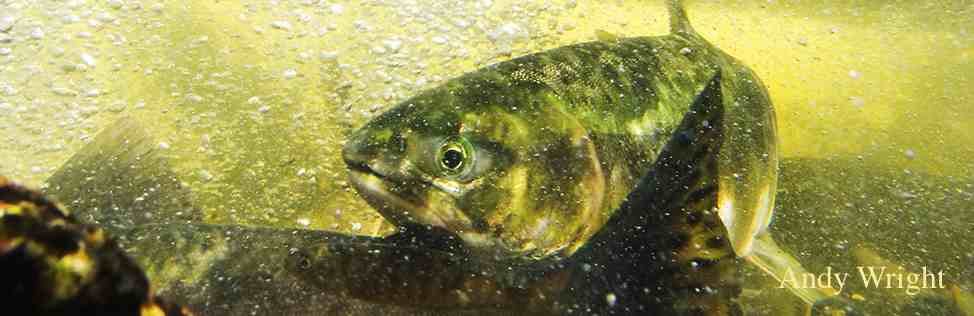
Chinook salmon swim in a river as seen from head on; epic.
Photo by Fernando Lessa.

The impact on the environment

Without a dramatic re-think, the plastic crisis is here to stay. Despite the best intentions of governments, industry, and consumers to reduce, recycle or re-use, global plastic production continues to enjoy exponential growth. And the unintentional loss to the environment of plastic products and byproducts will continue – plastic bags, bottles, and fishing gear, as well as the discharge of microplastics through domestic and industrial waste. With that will come a constant stream of items that will be mistaken for food but offer zero nutrition, that will entangle wildlife, and will deliver endocrine disruptors to our aquatic food webs. We will document impacts, share findings, and work for change through science, community engagement, and expert advice.

Recent articles
Pacific salmon swimming underwater along a creek bed.

Small streams surveys

Our interest in small streams stems from their importance to genetic diversity, as nutrient corridors for riparian habitats, food and access sources for bears and other predators, evolutionary opportunities, and fresh water rearing habitat for juvenile salmon, especially coho. When combined, small streams can also provide moderate salmon production which can be important for subsistence fisheries.
dummy-img

Open-net fish farms sell out the future

Times Colonist Thursday, May 17, 2007 Re: “The coastal economy: Let’s keep options open,” May 14. I am a fourth-generation Vancouver Islander and have lived long enough to recognize an outdated ideology. Dan Miller is privileged to have held such responsible positions as minister of forests, energy, mines and premier. Yet under his watch, coastal…
dummy-img

Grizzly viewing beats hunting

by Chris Genovali letters – Victoria Times Colonist and Vancouver Province Published: Sunday, June 15, 2008 Re: ” Poll: Ban grizzly hunting in B.C.,” June 11. British Columbians have been strongly opposed to the grizzly hunt for several years. In 2001, the International Fund for Animal Welfare commissioned Strategic Communications to conduct a province wide…
dummy-img

Fear and Loathing: Is it better to be a wolf in Canada than the U.S.?

By CHRIS GENOVALI Monday Magazine May 28 2008 Having recently attended the 20th annual North American Wolf Conference in Pray, Montana, it has been particularly dismaying to learn that literally days after the gray wolf was de-listed from the Endangered Species Act in the United States, trophy hunters in Wyoming had already shot numerous wolves.
dummy-img

No thanks….. dirty oil not wanted

Calgary Herald Published: Saturday, May 17, 2008 Re: “Premier counters dirty oil threat,” May 9. Premier Ed Stelmach is in for a rude awakening if he thinks he’s going to snap his fingers and build a pipeline to the north coast of British Columbia in order to send oilsands products to Asia.
dummy-img

A Lousey Time in Clayoquot Sound

By Mike Price, Biologist, Raincoast Wild Salmon Project Clayoquot Sound; the name conjures up images of mist-shrouded emerald forests, islands of volcanic shapes, wave-pounded shorelines blessed with white-sand beaches, and the site of massive civil uprising against natural destruction; a World Heritage Biosphere Reserve.
dummy-img

We should be suspicious of grizzly bear numbers

By Chris Genovali, Executive Director Raincoast Conservation Vancouver Sun Published: Wednesday, May 14, 2008 Re: Bear attack prompts conservation officers to issue vigilance warning, May 8 In the article a spokesman for the provincial Ministry of the Environment claims that there are 17,000 grizzly bears in British Columbia. There is no credible basis for this…
dummy-img

Environmentalists decry hunting's record toll on B.C. grizzlies

MARK HUME From Tuesday’s Globe and Mail April 15, 2008 at 3:57 AM EDT VANCOUVER – A record number of grizzly bears were killed in British Columbia last year, according to new figures released yesterday by environmental organizations. “It’s kind of shocking … very disturbing,” Chris Genovali of the Raincoast Conservation Society said of provincial…