
Plastic pollution

Photo by April Benze.

Plastic pollution is choking our waterways and threatening the health of fish and wildlife. We are collecting plastic and microplastic data as part of our community-oriented water pollution monitoring program. We are collaborating on research projects with universities, governments and experts in the field. We are providing advice to local, regional and federal governments on plastic science, policies, and regulations. We are working with Ocean Diagnostics to support a strong science-based foundation for solutions.


Lots of garbage on a beach.
Photo by Simon Ager.
People working together to take samples of water in jars.
Photo by Alex Harris / Raincoast Conservation Foundation.

Our approach

  • Design a source identification toolbox for plastic pollution; 
  • Working with Indigenous and coastal communities to document plastic pollution and track this back to its source;
  • Conduct research on the source, transport and fate of micro and macroplastics in the environment;
  • Engage in outside-the-box dialogue with industry and governments to support more sustainable design, manufacturing and processes that stem the release of plastics during the life cycle of a product;
  • Support community-oriented outreach and training to support solution-oriented actions and capacity building.

Plastics are everywhere

Plastics from just about every sector can now be found all over the world – from mountain tops to the seafloor, from the Arctic to the Antarctic, and from our homes to the ocean. A modern-day scourge that is blighting remote beaches and shorelines, getting mistaken for food by wildlife, and getting into the foods that nourish us. Whether it’s the structural features of plastic products that suffocate, entangle, or create intestinal blockages – or the endocrine disrupting-contaminants that serve as ingredients of the product (e.g. Bisphenol A or phthalate esters) or as hitchhikers soaked up by plastics in the environment (e.g. PCBs or metals) – plastics are harmful.

Underwater photo of plastic floating near the top of the water.
Chinook salmon swim in a river as seen from head on; epic.
Photo by Fernando Lessa.

The impact on the environment

Without a dramatic re-think, the plastic crisis is here to stay. Despite the best intentions of governments, industry, and consumers to reduce, recycle or re-use, global plastic production continues to enjoy exponential growth. And the unintentional loss to the environment of plastic products and byproducts will continue – plastic bags, bottles, and fishing gear, as well as the discharge of microplastics through domestic and industrial waste. With that will come a constant stream of items that will be mistaken for food but offer zero nutrition, that will entangle wildlife, and will deliver endocrine disruptors to our aquatic food webs. We will document impacts, share findings, and work for change through science, community engagement, and expert advice.

Recent articles

J50/Scarlet and her mother, J16/Slick, travel toward the west side of San Juan Island, Washington.

Killer Whales versus Trans Mountain pipeline – decision time

We requested the court send this unlawful approval back to Cabinet with instructions that it must meet all of the legal requirements, which include addressing the risks to Southern Resident killer whales. The court ruling is due Thursday…
A quiet sunny day on the The Fraser River.

Wild Salmon, Pipelines and the Trans Mountain Expansion

As the endangered Southern Resident killer whale population continues to struggle from the combined forces of noise, pollution and food (i.e. Chinook) availability, Raincoast Conservation Foundation has released a report that highlights the risks posed to wild salmon in the Lower Fraser River from an expanded Trans Mountain pipeline…
Raincoast scientists learning with a camper on making grizzly bear paw cast

Koeye Camp – 20 years of engaging youth in science and culture

Every summer, Raincoast joins and supports the Qqs Project Society with Koeye camp, an innovative camp program that takes place in the Koeye River valley. This year was a particularly special year as it marked the 20-year anniversary of the camp…
Two Southern Resident killer whales in the Salish Sea, with CFAX logo and Misty MacDuffee in the foreground

Interview: Southern Resident killer whales, fisheries, whale watching and the need for enforcement

Last week, Raincoast Conservation Foundation and the David Suzuki Foundation made a joint call for action to save the Southern Resident killer whales. This call for action was made to the new Minister of Fisheries and Oceans Jonathan Wilkinson to immediately close recreational and commercial marine Chinook fisheries, to suspend all commercial and recreational whale…
J16 and J26 on a smokey day in the Salish Sea.

Emergency order for Southern Residents under the Species at Risk Act

Research by an international team of scientists, including Raincoast staff, showed that a modelled 30 per cent increase in the coast-wide Chinook abundance above the 1979-2008 average could increase southern resident growth rate by as much as 1.9 per cent…
J50 swims toward San Juan Island: a group of people stand by the lighthouse waiting and watching.

Fisheries closures needed for killer whales
The Southern Resident killer whale population needs your voice to demand that the new federal Fisheries Minister, Jonathan Wilkinson, issue an emergency order that also includes the following actions…
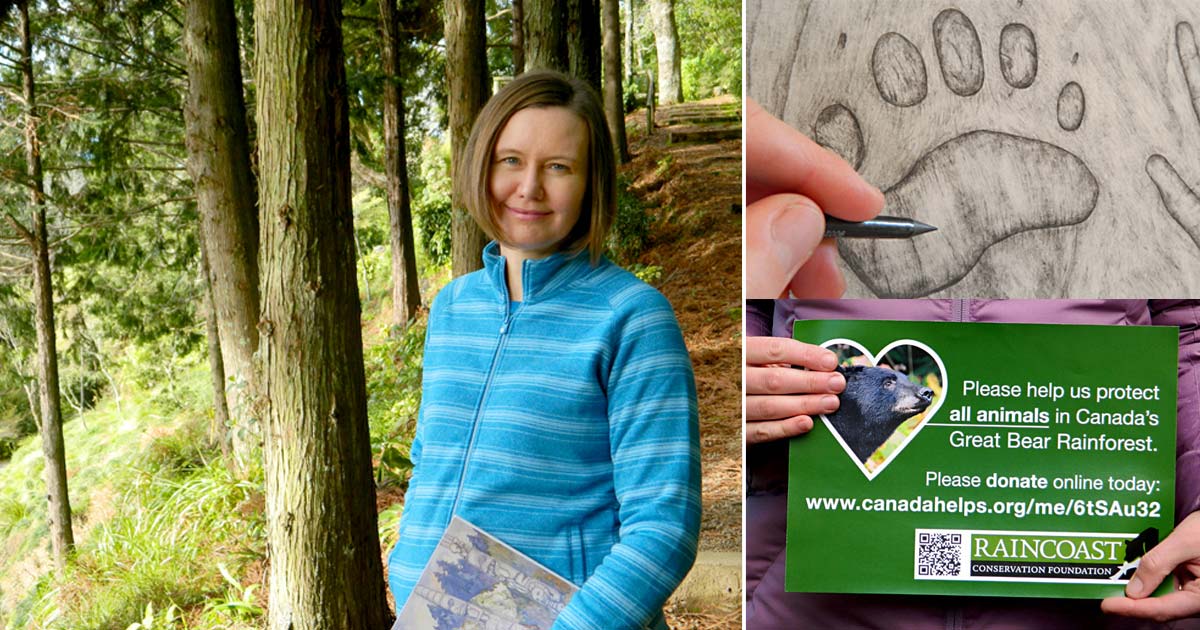
A woman is holding a book with a paw print on it.

Angela Gnyp: A wilderness artist down under

When I first found out about Raincoast’s goal to buy up the commercial hunting territories in 2013, it was something I couldn’t ignore. So, on discovering the opportunity to fundraise for the Safeguarding Coastal Carnivores campaign earlier this year, I knew I had to sign up…
A screenshot of the interactive map and living atlas of the Lower Fraser River.

Creating a living atlas for salmon and salmon habitat in the Lower Fraser

Much of this data currently contained within the atlas comes from provincially available data online, as well as the Department of Fisheries and Oceans (DFO) and the local stewardship organizations that we have met with. We hope that the map can be used to support decision making, management and…