Conservation Genetics Laboratory 

Our conservation genetics research addresses threats to cetaceans, fish, and coastal carnivores. 

The Conservation Genetics Lab is an integral part of Raincoast’s efforts to protect the land, waters and wildlife of coastal BC. The DNA and RNA analysis we perform provides our scientists with reliable insights into the population structure, health, diets, and resilience and genetic isolation of coastal species. The lab works closely with our Cetacean Conservation Research Program and also helps answer important questions for our other conservation initiatives. 

Two hands wearing blue gloves holding and organizing beakers.
Research scientist Adam Warner holding two small beakers while wearing a lab coat in a lab.

Cutting edge genetics and genomics analysis

The Raincoast Conservation Genetics Lab is equipped with a complete set of instrumentation to conduct molecular biology and genetics, including cutting-edge DNA sequencing technology. Our Research Scientist, Dr. Adam Warner, has extensive experience in genetics, genomics and DNA sequencing, has set up our lab space and has begun to carry out this research under the guidance of our Cetacean Research Program directors Dr. Lance Barrett-Lennard and Dr. Valeria Vergara. The lab works alongside Fisheries and Oceans Canada, which is hosting our lab space at the Pacific Science Enterprise Centre.

Understanding killer whale diet

A lack of sufficient Chinook salmon in the diets of Southern and Northern Resident killer whales has been linked to declines in population health. Our lab has the ability to extract and analyze salmon DNA from Resident killer whales feces, to identify the salmon stocks of most importance to the whales. Since we can identify the individual whales that produced fecal material genetically, we can link other health metrics such as stress hormone levels (also found in the fecal material) to individual killer whales. 
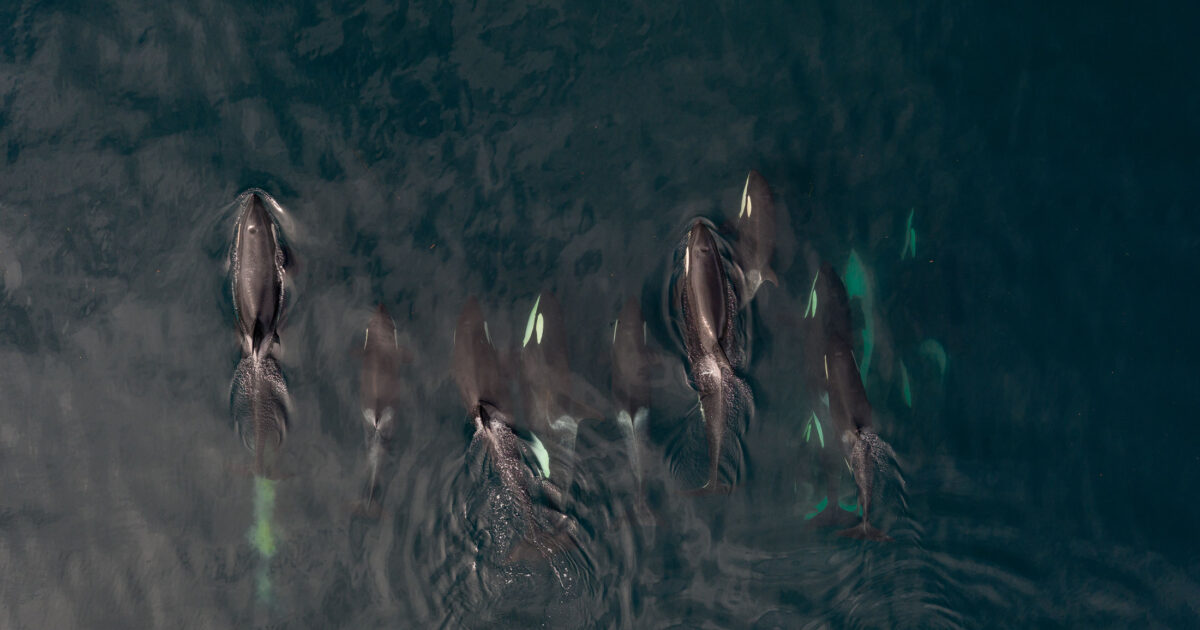
Overhead photo of a pod of killer whales swimming in the ocean.
Photo by Raincoast Conservation Foundation, taken under SARA Research License XMMS-2-2022.
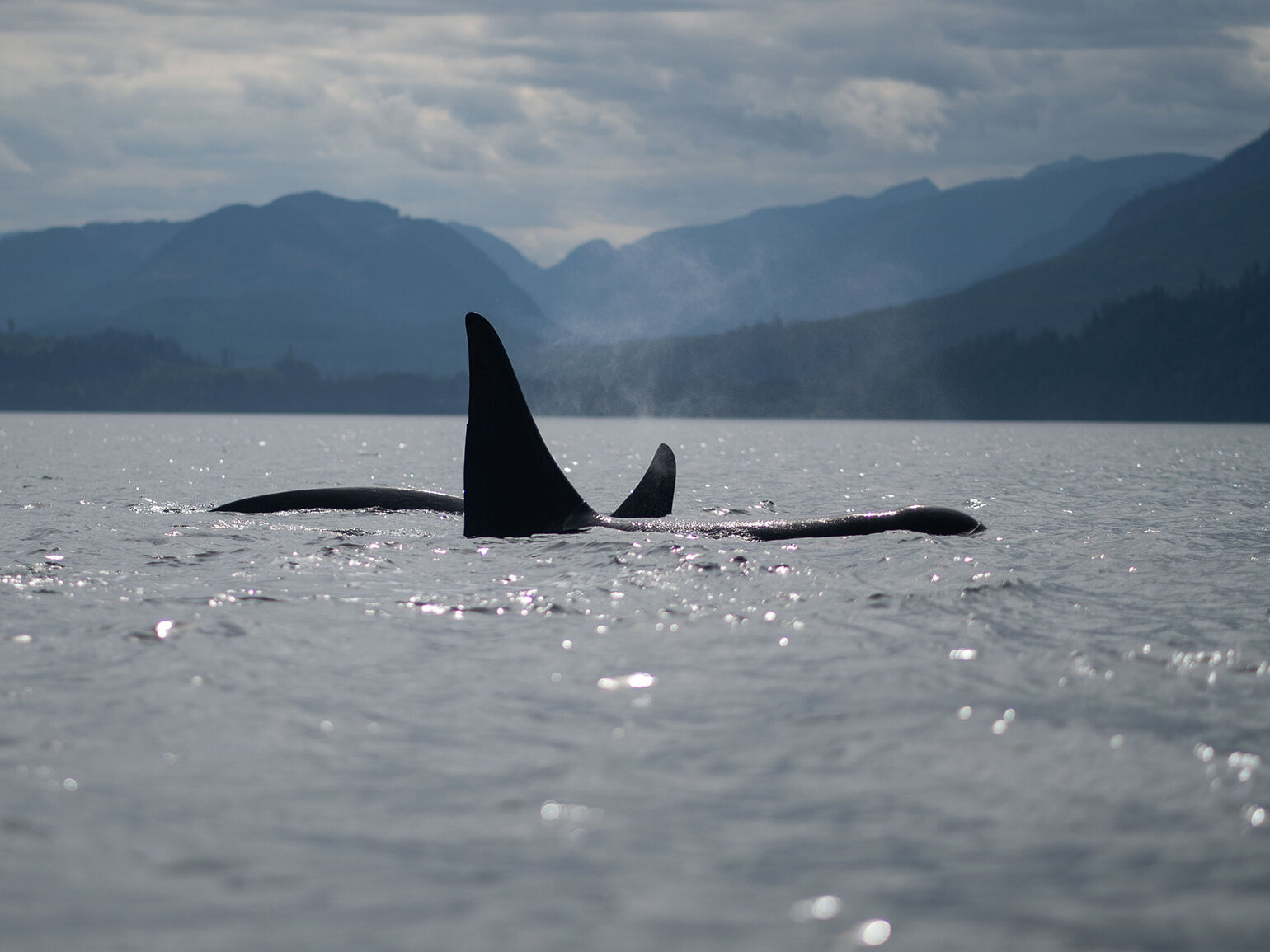
Two killer whales surfacing on the ocean.
Photo by John Kelsey.

Killer whale population health and dynamics

Killer whales live in small populations that from their size alone would appear to be vulnerable to negative effects of inbreeding.  We recently sequenced the entire genomes of 142 members of the Northern Resident population to directly  assess inbreeding, genetic diversity, and immune system strength. We are comparing this information in this dataset to one for Southern Residents compiled by NOAA in the United States. This will help us gain insight into the comparative health of these important fish-eating populations of killer whales. We are also finalizing a study of inbreeding in marine mammal-eating Bigg’s killer whales, which will inform our understanding of similarities and differences between North Pacific killer whale populations.

Environmental DNA to aid research focused on wild salmon and coastal wolves

Our research on wild salmon and coastal wolf populations has the potential to be expanded through the use of environmental DNA (eDNA) monitoring and analysis. Through eDNA, we can track and assess salmon populations and determine abundance and diversity. Using wolf scat samples we can identify specific individuals, their sex, and the prey consumed. By learning more about these important populations, we hope to drive policy change to protect biodiversity.

Research scientist Adam Warner holding two small beakers while wearing a lab coat in a lab.
Photo by Alex Harris / Raincoast Conservation Foundation.

Recent articles

Wolf stands in the intertidal zone amidst the rock and seaweed, looking at the photographer, Kyle Artelle.

New study casts doubt on scientific basis of wildlife management in North America, offers a way forward
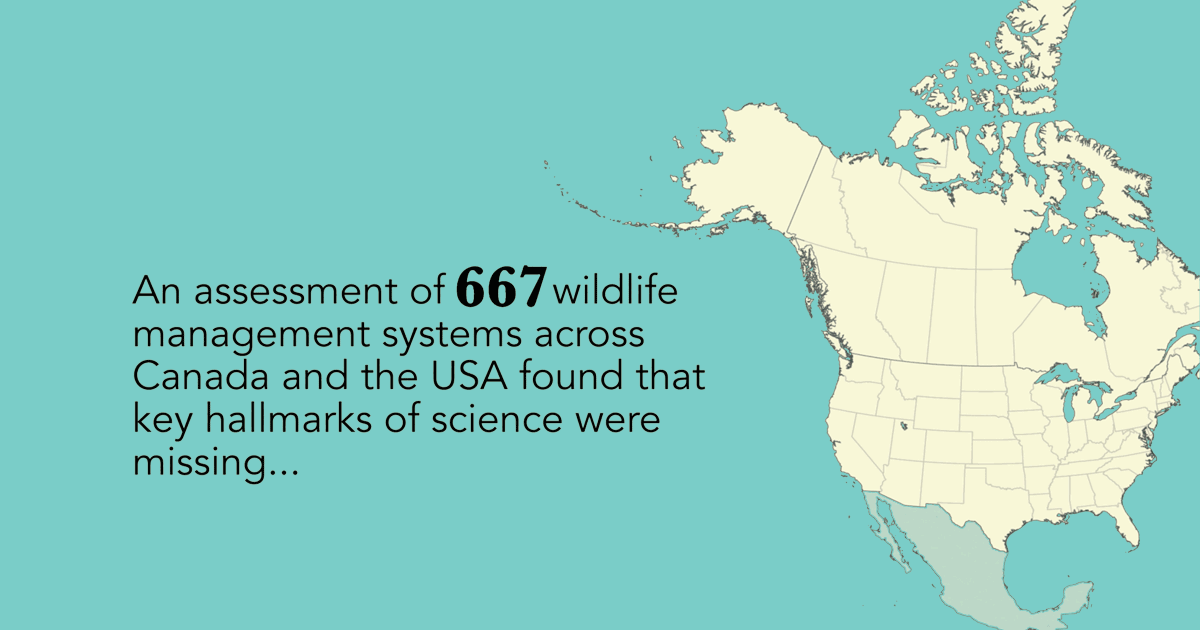
A new study, “Hallmarks of science missing from North American wildlife management”, released today in the AAAS Open Access journal Science Advances, identified four key hallmarks expected of science-based management: clear objectives, use of evidence, transparency and external review. Combined, these hallmarks provide the checks and balances that give rigour to science-based approaches…
A map of North America and then in text it says, An assessment of 667 wildlife management systems across Canada and the USA found that key hallmarks of science were missing...

Applied Ecology: Hallmarks of science missing from North American wildlife management

A new study, “Hallmarks of science missing from North American wildlife management”, published by Science Advances , challenges a widespread assumption that wildlife management in North America is science-based. Scientists from Raincoast Conservation Foundation, Simon Fraser University, University of Victoria, and the University of Wisconsin – Madison examined management documents relating to most hunted species across…
Luke Wallace events coming up in Tofino and sidney on behalf of Safeguard Coastal Carnivores campaign.

Live performances by musician Luke Wallace

Join Raincoast and Musican Luke Wallace for a series of events in support of Raincoast’s campaign to safeguard Coastal Carnivores. It’s now time to permanently end commercial trophy hunting of all large carnivores in the Great Bear Rainforest. Join us in Sidney on March 22nd and in Tofino on March 23rd…
Juvenile killer whale and mother off the coast of British Columbia.

National Energy Board’s failure haunts governments

The cries of condemnation emanating from the Alberta and Canadian federal governments are deafening. The burgeoning conflict began when BC announced the province would limit shipments of diluted bitumen from Alberta…
Southern Resident killer whales swim side by side, as seen from the air.

A killer whale emergency

We are requesting an emergency order under Canada’s Species at Risk Act. Southern Resident killer whales were recognized as endangered in 2002. Despite this, the Federal Government has taken no action to date to reduce the threats to these whales…
Achiever rests, sails down, in the twilight.

Sailing with Raincoast in 2018

In May, our spring ‘hunts’ visited lush estuaries as the days grew longer and bears were down low grazing on sedges. Marine wildlife started to make their way back to the rich, cold waters of the coast. Their annual migration to foraging areas beginning and lasting well…
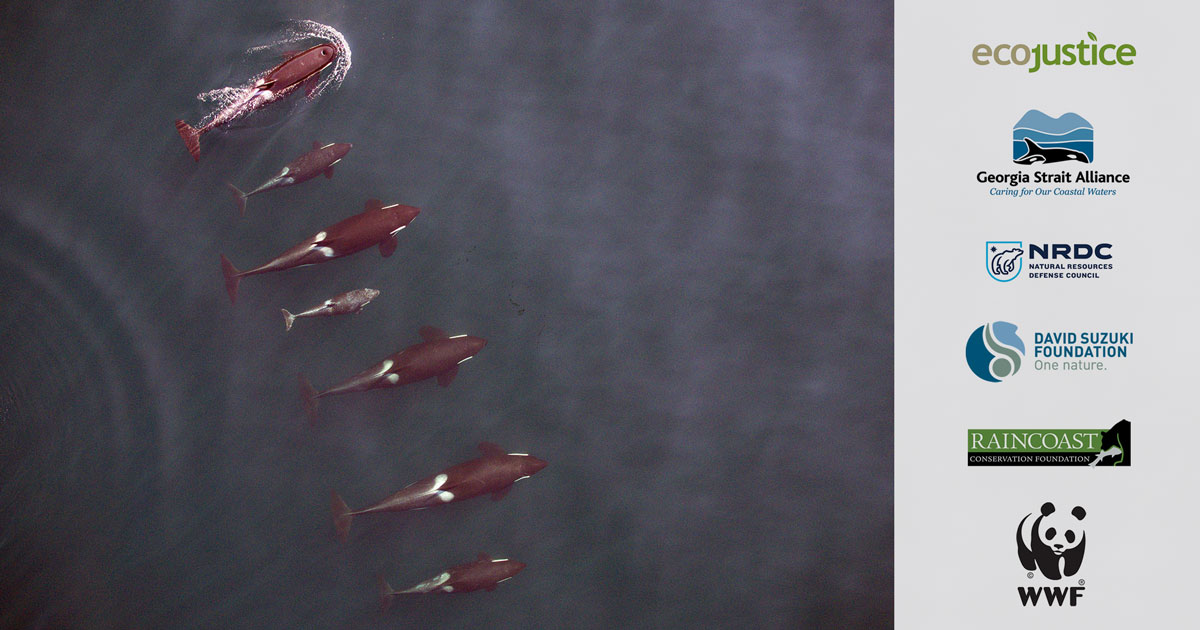
Southern Resident killer whales swim side by side in the Salish Sea, with joint partner logos on the right, including David Suzuki Foundation

Critical situation for Southern Resident killer whales provokes call for urgent action

Only 76 Southern Resident killer whales remain. This is a critical situation. Today, represented by Ecojustice, and in collaboration with other science and environmental organizations, we are calling on the Canadian government to take immediate action to protect these whales…
A map of the proposed emergency order, with logos of the various orgs involved including Ecojustice and the David Suzuki Foundation.

Emergency order requested for Southern Resident killer whales: time is running out

Raincoast and its partners, represented by Ecojustice, are calling on federal cabinet ministers LeBlanc and McKenna to recommend cabinet issue an emergency order under Canada’s Species at Risk Act…