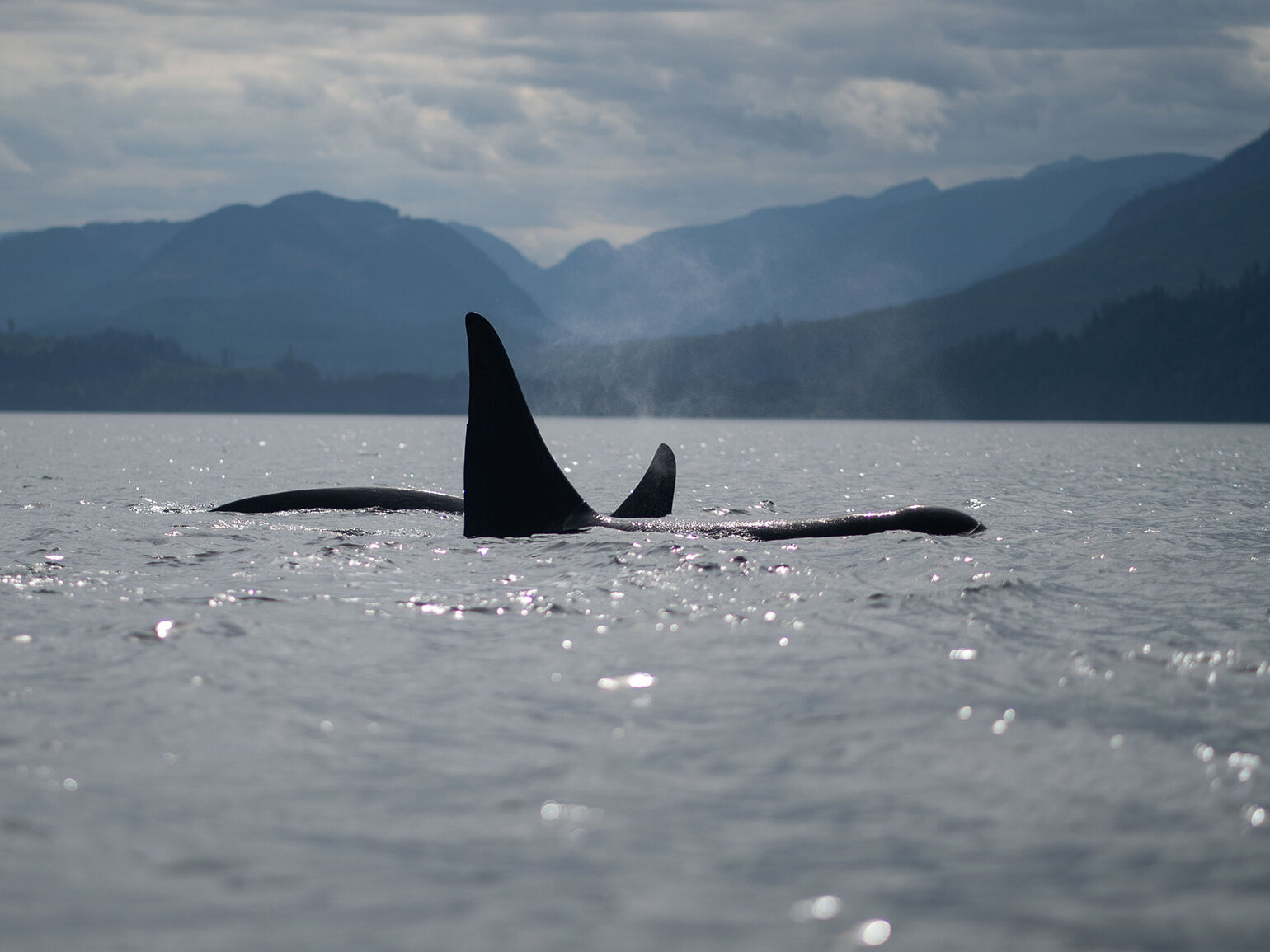
Conservation Genetics Laboratory 

Our conservation genetics research addresses threats to cetaceans, fish, and coastal carnivores. 

The Conservation Genetics Lab is an integral part of Raincoast’s efforts to protect the land, waters and wildlife of coastal BC. The DNA and RNA analysis we perform provides our scientists with reliable insights into the population structure, health, diets, and resilience and genetic isolation of coastal species. The lab works closely with our Cetacean Conservation Research Program and also helps answer important questions for our other conservation initiatives. 
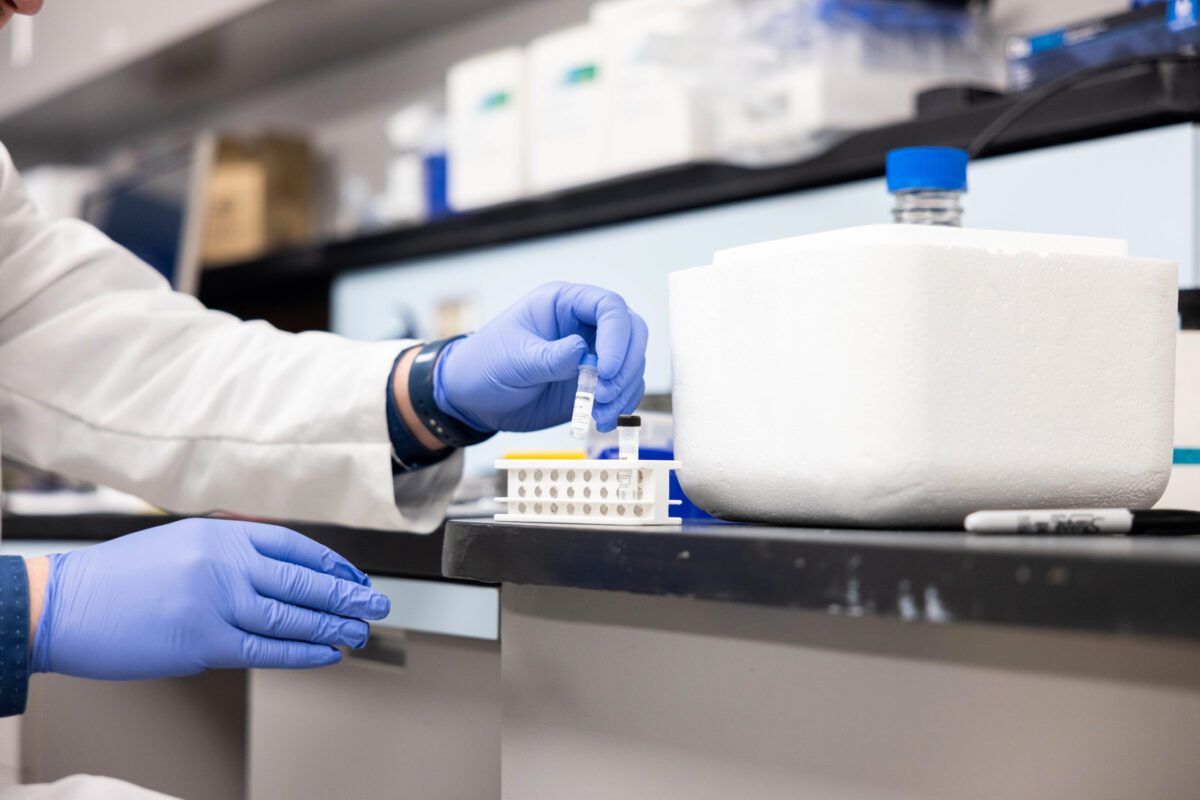
Two hands wearing blue gloves holding and organizing beakers.
Research scientist Adam Warner holding two small beakers while wearing a lab coat in a lab.

Cutting edge genetics and genomics analysis

The Raincoast Conservation Genetics Lab is equipped with a complete set of instrumentation to conduct molecular biology and genetics, including cutting-edge DNA sequencing technology. Our Research Scientist, Dr. Adam Warner, has extensive experience in genetics, genomics and DNA sequencing, has set up our lab space and has begun to carry out this research under the guidance of our Cetacean Research Program directors Dr. Lance Barrett-Lennard and Dr. Valeria Vergara. The lab works alongside Fisheries and Oceans Canada, which is hosting our lab space at the Pacific Science Enterprise Centre.

Understanding killer whale diet

A lack of sufficient Chinook salmon in the diets of Southern and Northern Resident killer whales has been linked to declines in population health. Our lab has the ability to extract and analyze salmon DNA from Resident killer whales feces, to identify the salmon stocks of most importance to the whales. Since we can identify the individual whales that produced fecal material genetically, we can link other health metrics such as stress hormone levels (also found in the fecal material) to individual killer whales. 
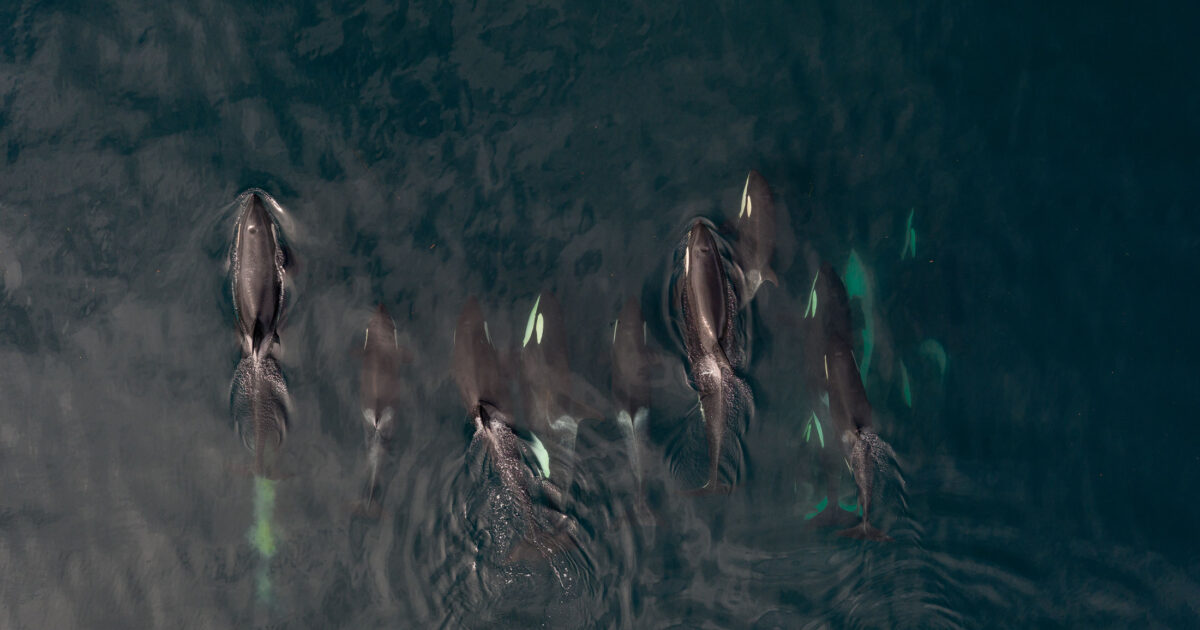
Overhead photo of a pod of killer whales swimming in the ocean.
Photo by Raincoast Conservation Foundation, taken under SARA Research License XMMS-2-2022.
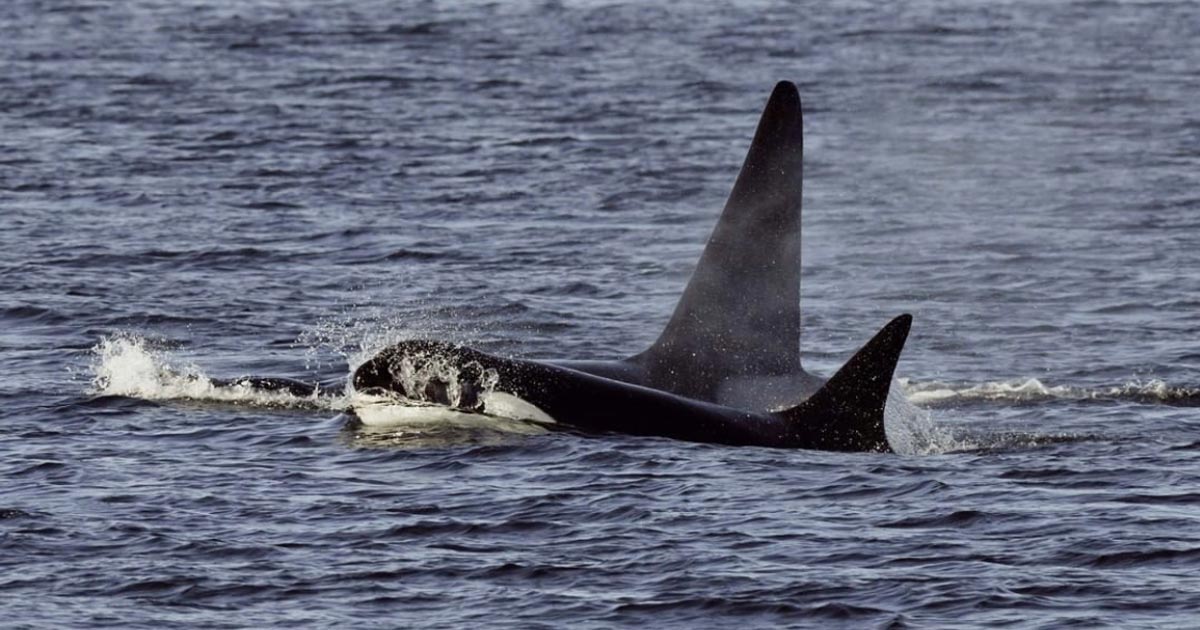
Two killer whales surfacing on the ocean.
Photo by John Kelsey.

Killer whale population health and dynamics

Killer whales live in small populations that from their size alone would appear to be vulnerable to negative effects of inbreeding.  We recently sequenced the entire genomes of 142 members of the Northern Resident population to directly  assess inbreeding, genetic diversity, and immune system strength. We are comparing this information in this dataset to one for Southern Residents compiled by NOAA in the United States. This will help us gain insight into the comparative health of these important fish-eating populations of killer whales. We are also finalizing a study of inbreeding in marine mammal-eating Bigg’s killer whales, which will inform our understanding of similarities and differences between North Pacific killer whale populations.

Environmental DNA to aid research focused on wild salmon and coastal wolves

Our research on wild salmon and coastal wolf populations has the potential to be expanded through the use of environmental DNA (eDNA) monitoring and analysis. Through eDNA, we can track and assess salmon populations and determine abundance and diversity. Using wolf scat samples we can identify specific individuals, their sex, and the prey consumed. By learning more about these important populations, we hope to drive policy change to protect biodiversity.

Research scientist Adam Warner holding two small beakers while wearing a lab coat in a lab.
Photo by Alex Harris / Raincoast Conservation Foundation.

Recent articles

Cecil Paul, Xenaksiala elder, at a book signing in Kitimat Valley.

Stories from the Magic Canoe of Wa’xaid

Cecil Paul has told the story of that long journey in–what his granny called–the magic canoe. “Build a canoe and it will be supernatural and no matter how many people will come aboard to help you paddle to save your place of birth, it will never be full.” Raincoast is one of the many organizations who stepped into the magic canoe to support and learn from the traditional knowledge systems of the Xenaksiala…
Grizzly bear in the water, in the Great Bear Rainforest.

A picture is worth 1000 words, but not at any price

As critical as these images are, we are committed to using only images that are ethically obtained. These considerations are informed by our own conservation ethics and what we learn along the way. The points below are those from a code of conduct, given to us by Brad Hill and available in full on Brad’s website…
Kloey and her mom, Vernadean, from Cowichan Secondary, SD79, in Duncan.

Salish Sea Emerging Stewards celebration

We recently closed our third season of Raincoast’s Salish Sea Emerging Stewards program with a new addition to the program – an event to connect, reflect and celebrate our precious coastline. People of all ages and backgrounds joined in the festivities as graduates of the 2018 season had the opportunity to take the stage and share their experiences and perspectives from the program…
Salmon circle on the rocky bottom of the Fraser River.

Approval of Trans Mountain expansion puts Fraser River salmon and Salish Sea estuaries at risk

The Fraser River in British Columbia remains one of the world’s most productive salmon rivers. Equally significant is the Fraser River’s estuary, which serves as vital habitat for fish, bird, and mammal species that are linked across thousands of kilometers of the Northeast Pacific Ocean. All Fraser River populations of salmon…
A killer whale in the foreground, with a container ship behind it in the mouth of the Fraser River.

We’re headed back to court for killer whales

Today we are returning to court with partners Ecojustice and Living Oceans Society to challenge the federal government’s re-approval of the Trans Mountain pipeline expansion. Our lawyers at Ecojustice submitted a motion to the Federal Court of Appeal this morning, asking for leave to launch a judicial review of Cabinet’s decision. We contend that Cabinet…
A stunning field of Lupin is framed by the epic mountains of the Kitlope.

A first grizzly bear in the Kitlope

Just days before being asked to go on a last-minute week-long trip to the Kitlope I had been glued to the pages of Cecil Paul and Briony Penn’s new book, Stories From the Magic Canoe. I was invited to visit as a guest aboard Maple Leaf, to capture visuals, to help with fundraising and awareness…
Aerial view of Maple Leaf in the Kitlope on emerald green water.

Maple Leaf’s commitment to coastal conservation
2019 marks the second year of a decade-long $100,000 commitment from Maple Leaf Adventures to our research and conservation efforts on the BC Coast and, in particular, the Great Bear Rainforest. As the spring field program for Raincoast’s Salmon Carnivore program comes to an end…
Two killer whales come to the surface of the Salish Sea.

Misty MacDuffee on CFAX 1070 talking about the approval of the Trans Mountain Pipeline

The day after the federal government approved the Trans Mountain Pipeline yet again, Raincoast’s Wild Salmon Program Director, Misty MacDuffee spoke with Mark Brennae on CFAX 1070 to talk pipelines, whales, and how humans are implicated in the disappearance of species. There is, of course, the risk of an oil spill or a vessel strike, but the noise and disturbance on both inbound and outbound tankers is always a certainty. And that noise can reduce the whales ability to echolocate and communicate…