Salish Sea Emerging Stewards
Our education program aims to inspire, prepare, and empower the next generation of leaders.
Photo by Alex Harris /
Raincoast Conservation Foundation.
Education opportunities with Raincoast
Through engaging virtual, classroom, field, and boat-based learning, we connect students to British Columbia’s coastal environment and conservation initiatives.
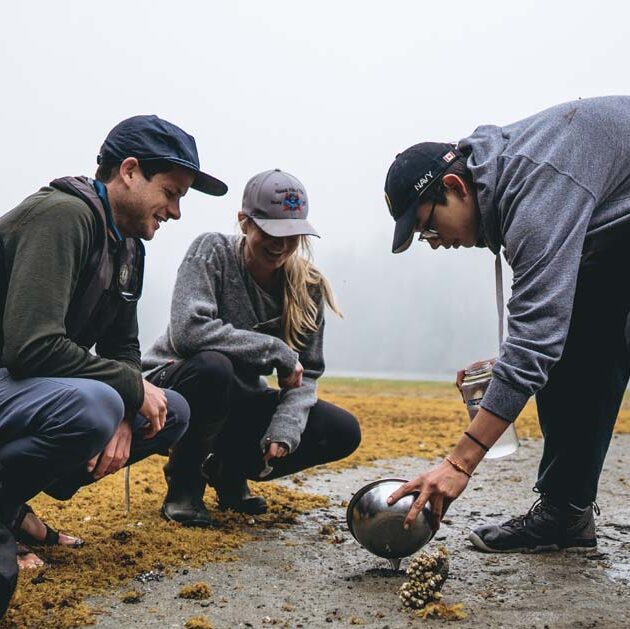
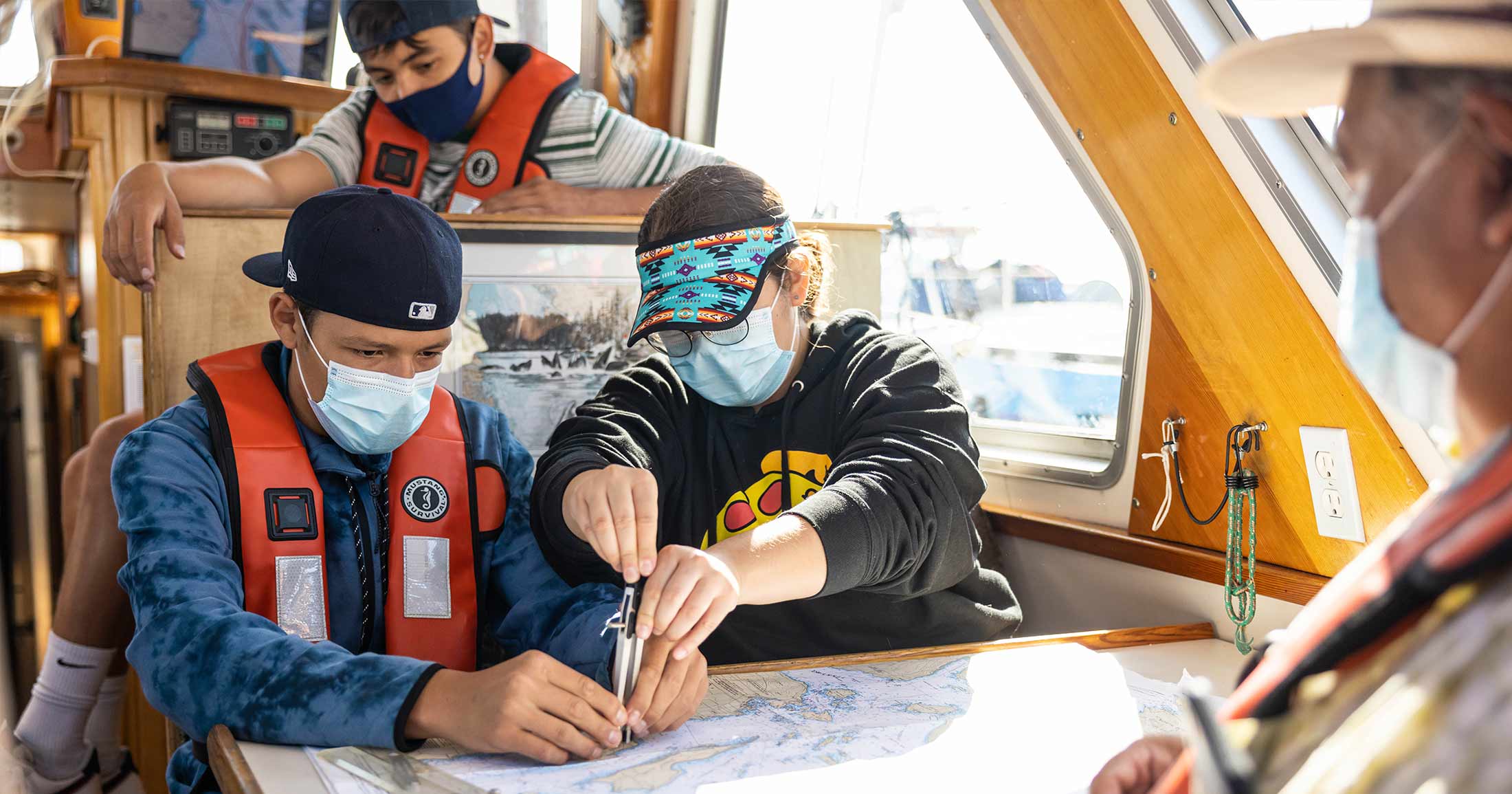
The education program blends Indigenous Knowledge and Western science using hands-on, interactive, and experiential learning in watersheds, forests, estuaries, and oceans to help youth understand their coast. Raincoast’s 68’ research sailing vessel, Achiever, serves as a floating classroom for our boat-based learning throughout the Salish Sea.
Students visit and learn about culturally significant sites including ancient middens, burial grounds, and clam gardens. Youth also visit wildlife hotspots such as sea lion haul-outs, bird sanctuaries, salmon streams, and Southern Resident killer whale critical habitat to learn about key research and conservation efforts.

Resources for teachers
Raincoast’s education program has developed a broad range of educational materials for teachers of grades 9-12 to use in the classroom based on education objectives of BC’s curriculum, or for anyone with an interest in coastal and marine environments.
Online learning
Raincoast has hosted a live and interactive online learning program, Coastal Insights, for the last two years that brings science, stories, culture, and conservation through virtual lessons and interviews with some of the coast’s leading experts and inspiring young leaders.
Land Healing Stewards Initative
More soon.
Our approach to education
Our approach is community engaged, collaborative, and inclusive. In collaboration with an extensive network of community partners that lend their expertise, our multi-faceted programs engage students through place-based learning, mentorship, and leadership training.
All of our programs use the “Two-eyed seeing” guiding principle, or the braiding of strengths from Indigenous and Western Knowledge systems to approach learning about environmental conservation and stewardship.
The programs align with the BC curriculum and are geared towards High School students (grade 9-12) in the subjects of science, social studies, geography, and Indigenous studies in BC.
Reducing barriers
All of our online learning programs are 100% free for educators to access anywhere, anytime. To reduce barriers to experiential and place-based learning, full sponsorship for our boat-based learning program is available to local Indigenous and non-Indigenous youth from underserved communities throughout Greater Vancouver and Vancouver Island.
Experiential learning at sea
The Salish Sea Emerging Stewards Program offers hands-on learning where participants link learning concepts directly to the places and experiences of the program as they immerse in local forests, intertidal, and oceans to understand their local environment and its conservation challenges.
Participants engage all their senses as they explore the rich biodiversity of the coast and visit sites of ecological and cultural significance throughout the Gulf Islands. The boat-based learning provides opportunities for transformative and inspiring visits to British Columbia’s diverse habitats such as oceans, forests, and beaches, access to traditional territory, and encounters with iconic wildlife such as eagles, sea lions, porpoises, and killer whales.
Support our programming
You can join us and support the Salish Sea Emerging Stewards program.

Our research and education vessel, Achiever
Emerging stewards in the Salish Sea

Notes from the Field: My first experiences with Raincoast

Memories of sailing with the Salmon People

On hope

Student Innovation Contest: 2021 winners

Raincoast welcomes five summer team members!