Harvesting immature Chinook salmon can shrink size and reduce future returns
New research highlights the problems of modern fisheries.
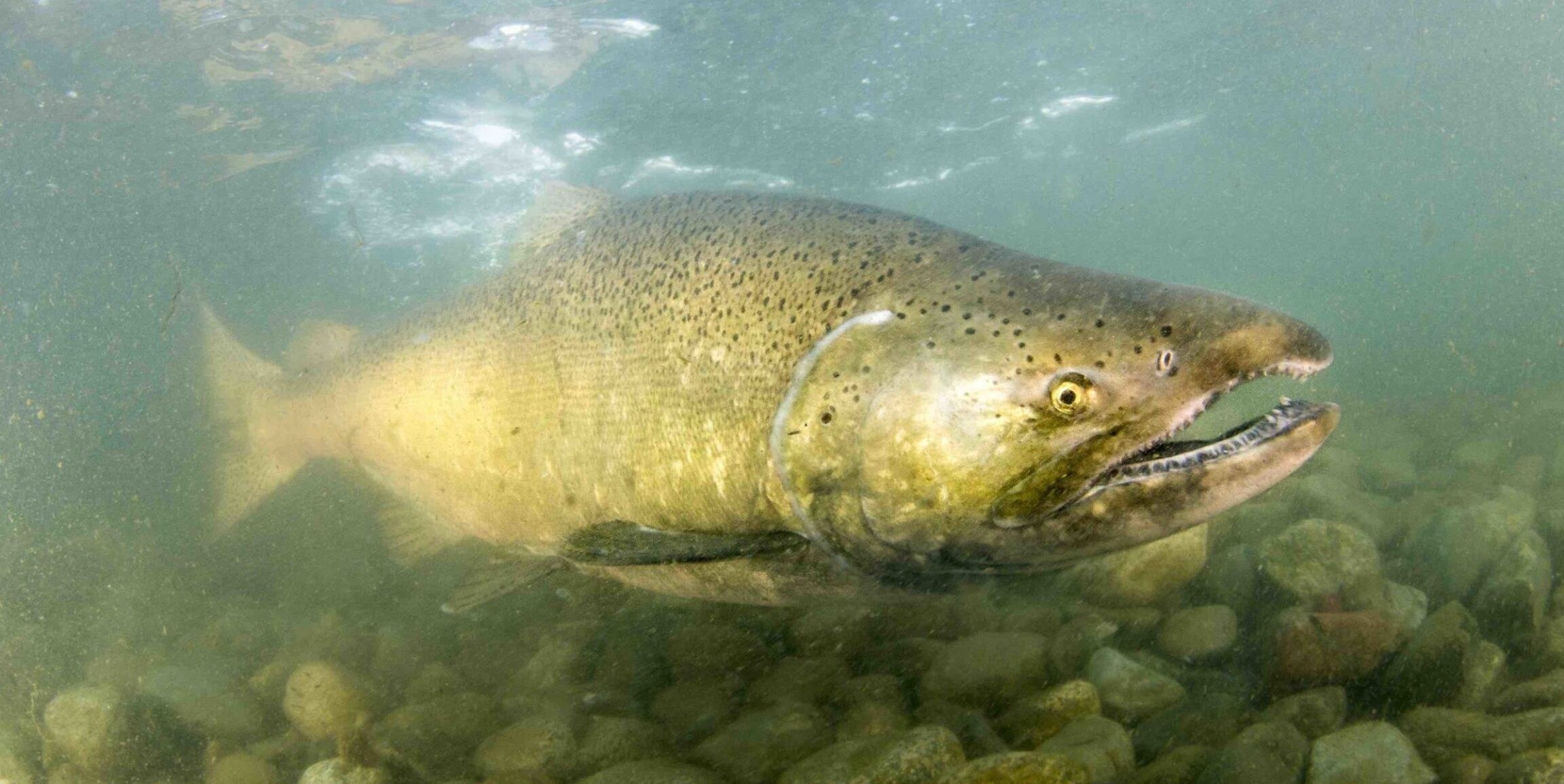
A study published in the journal Scientific Reports by researchers from the Wild Fish Conservancy and Raincoast Conservation Foundation has identified fisheries practices that may be contributing to long-term declines in the age and size of Chinook salmon across the northeast Pacific.1 2
The study examined the effects of harvesting Chinook salmon before they reach maturity. While salmon are often thought of as being caught on their spawning migration from the high seas, a substantial portion of Chinook harvest occurs in coastal marine waters where both immature and mature fish are encountered. Researchers refer to these as “mixed-maturation fisheries.”
For more than a century, fisheries scientists have documented declines in the average age and size of Chinook salmon. In 1980, Canadian fisheries scientist Bill Ricker noted that the average size of Chinook salmon in the eastern Pacific had been declining since at least 1920. More recent studies have documented continued declines in age at maturity and body size throughout much of the species’ range.
Read the open access article in Scientific Reports
Gayeski N, Swanson D, MacDuffee M, Rosenberger A. 2026 Apr 16. Mixed-maturation fisheries compromise productivity and resilience of Chinook salmon. Scientific Reports. doi:https://doi.org/10.1038/s41598-026-49054-5.
Why age and size matter
Age and size are important indicators of population health and productivity.
Older and larger female Chinook produce more eggs and larger eggs than younger fish. Their offspring often have higher survival rates and greater resilience during early life stages. Larger Chinook are also better able to access spawning habitats that smaller fish can’t use. They also contribute disproportionately to population productivity.
What the study examined
Researchers developed a demographic-genetic model representing a fall Chinook salmon population and simulated different fishery strategies over many generations.
The study compared:
- “Mixed-maturation” fisheries that harvest both immature and mature Chinook salmon in coastal marine waters.
- Terminal fisheries that primarily harvest mature adults at, or within, rivers as they return to spawn.
The model evaluated how these fisheries affected age structure, body size, population productivity, and long-term harvest yields.
Key findings
1. Harvesting immature Chinook drives populations toward younger ages and smaller sizes
Fisheries that harvest immature salmon consistently reduce the proportion of older fish in the population. Over time, populations became dominated by younger and smaller individuals.
2. Large, productive female Chinook decline
Mixed-maturation fisheries reduce the abundance of older females, which contribute disproportionately to egg production and population growth.
3. Population productivity decreases
By reducing the abundance of older age classes, mixed-maturation fisheries lowered the overall reproductive capacity of populations
4. Terminal fisheries produced larger salmon
Because terminal fisheries primarily harvest mature fish, immature Chinook remain in the ocean where they continue growing, enabling them to reproduce at older ages. As a result, terminal fisheries maintained larger average body sizes and older age structures than fisheries that harvested immature fish.
5. Greater harvest weight can be achieved from fewer fish
When managed for Maximum Sustained Yield (MSY), terminal fisheries produced greater total harvest weight despite catching fewer individual salmon. Allowing fish to continue growing before harvest increased the size and value of fish entering the fishery.
6. Terminal fisheries foster more resilient salmon populations
Mixed-maturation fisheries can reduce the ability of Chinook populations to resist and recover from environmental change, while terminal fisheries can maintain more resilient populations by preserving older age classes and larger spawners.
What this means for salmon management
The study suggests that how fisheries harvest salmon may be as important as how many salmon are harvested.
Climate change, hatcheries, and competition for food all influence Chinook salmon growth and survival. However, the persistence of declining size and age trends over more than a century suggests that harvest practices have been an important driver of change through the 20th and 21st centuries
The findings indicate that shifting more harvest to terminal and near-terminal fisheries could help rebuild older age classes, increase the abundance of large Chinook, improve long-term fishery yields, and provide greater benefits to ecosystems and salmon-dependent wildlife.
The authors emphasize that larger, older Chinook are not simply bigger fish. They represent an important component of population productivity, biodiversity, and ecosystem function. Management approaches that allow more salmon to reach maturity may help restore some of the age and size diversity that historically characterized Chinook populations across the Pacific coast.
Notes and references
- Gayeski N, Swanson D, MacDuffee M, Rosenberger A. 2026 Apr 16. Mixed-maturation fisheries compromise productivity and resilience of Chinook salmon. Scientific Reports. doi:https://doi.org/10.1038/s41598-026-49054-5.
- Wild Fish Conservancy works to restore wild fish habitat, reform fisheries, and transition away from fish hatcheries.