

Uncovering the causes of degraded fish and whale habitat
These are not just stories about chemistry, numbers, and water quality. These are stories about watersheds, fish habitat, and the well-being of communities.
No one enjoys debris-strewn beaches, images of oiled sealife, or those summer beach closures due to fecal coliform contamination. At Healthy Waters, we have been rolling up our sleeves with our watershed partners to conduct a deep dive into pollution, and the results are revealing — and empowering. We are finding both good news and bad news, by sampling water from mountain tops to the ocean, and measuring 600 different contaminants along this journey.
While you might think this is a bad news story, think again: we are learning, sharing, and training, as are our partners. Our findings are providing communities with foundational datasets, and the resulting pollution profiles are revealing much about the leading causes of poor water quality.
Our sleuthing continues, but here’s a hint of what we are finding.
Where agriculture meets a stream, we find excess nutrients, pesticides and metals, and lower levels of life-giving dissolved oxygen for fish.
Runoff from roads, bridges, and parking lots are teeming with contaminants, including the coho salmon-killing tire chemical 6PPD-quinone, road salts, and petroleum products.
Liquid domestic waste from failing septic fields and broken sewage connections is seeping into ditches, creeks, and rivers, carrying with it pharmaceuticals, illicit drugs, and pathogens.
Additionally, the burgeoning number of forest fires associated with climate change are polluting the air, and contaminating drinking water supplies upstream of communities.
These are not just stories about chemistry, numbers, and water quality. These are stories about watersheds, fish habitat, and the well-being of communities. As we head into 2026, we look forward to bringing our watershed stories together, and crafting a powerful narrative around water quality, priority pollutants in watersheds, and the activities that threaten fish habitat. These stories are already helping us ponder targeted solutions that protect and restore healthy waters throughout the region.
There is cause for optimism.


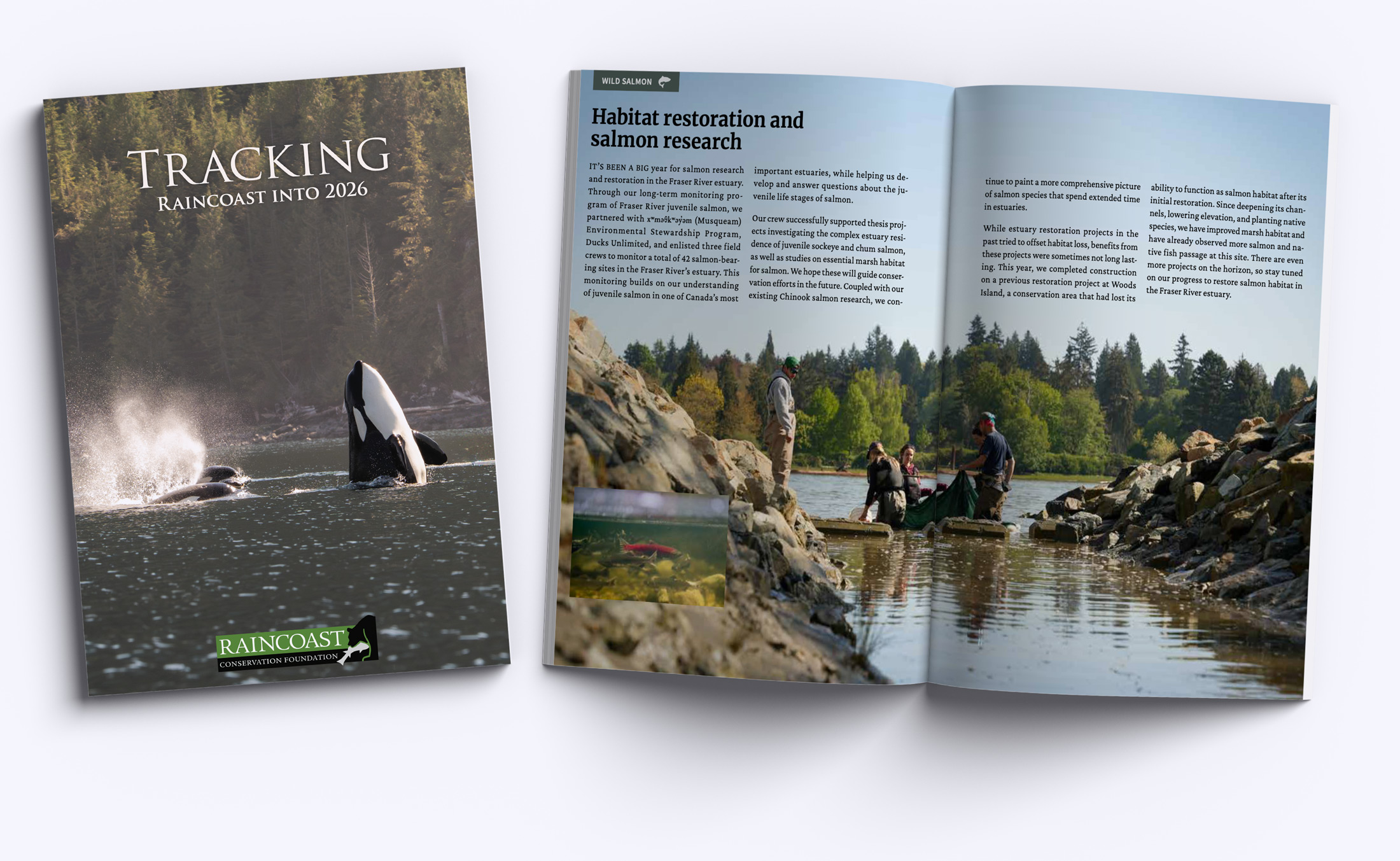
This is an excerpt from our annual report, Tracking Raincoast into 2026.