Take action and help wolves
In British Columbia, Canada, wolves continue to be killed through a variety of means. These include legal recreational hunting and trapping. You can help us to end the killing of BC’s wolves.
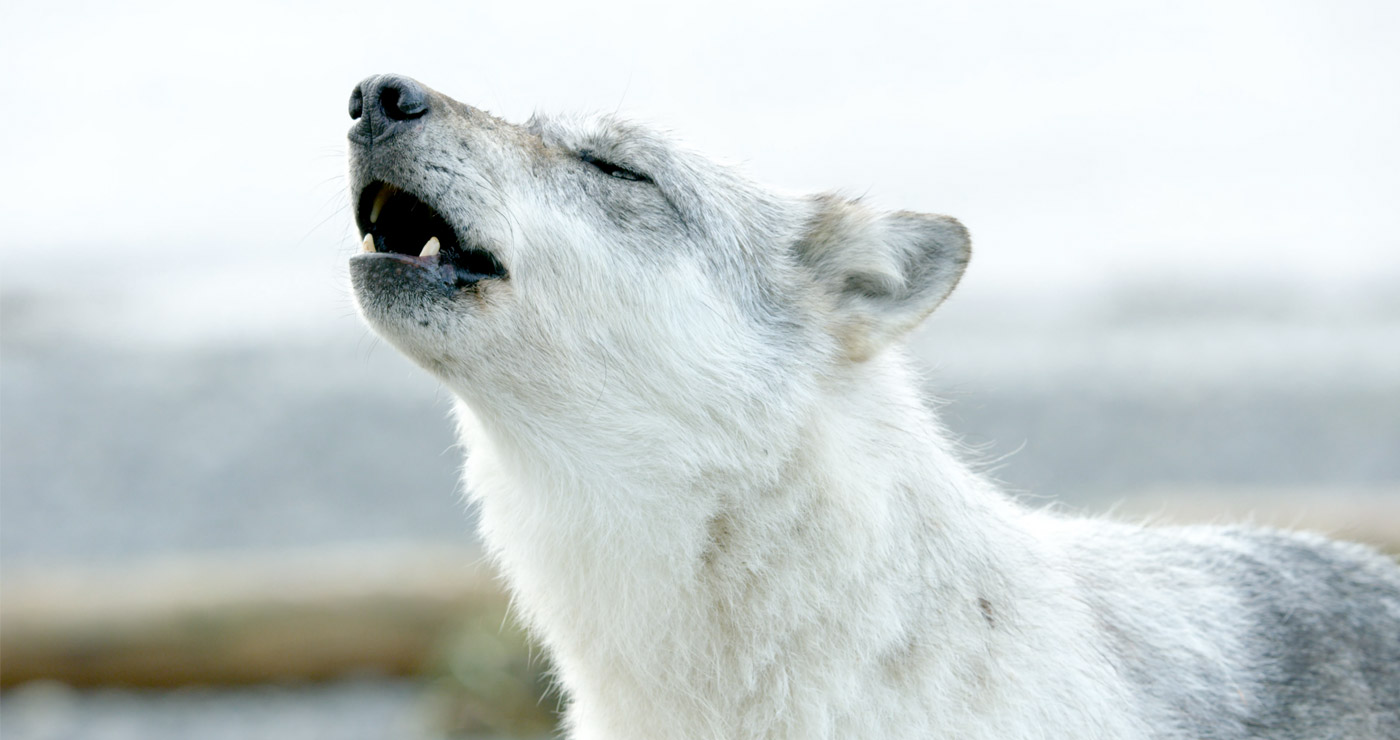
Photo by Michelle Valberg.
Over 1,200 BC wolves killed annually for “recreational” purposes
In British Columbia the provincial government estimates that some 1,200 wolves are killed on an annual basis for recreational purposes. Recreational, in this context, means to kill a wolf for the purposes of sport, trophy, and perceived competition for shared prey. Raincoast large carnivore experts suspect that number is likely even higher given BC’s weak reporting requirements and inadequate conservation enforcement capability.
Recreational hunting is the largest source of mortality for wolves. There is no species licence (or tags) required for BC residents to hunt wolves, and in many regions in BC there is no limit to the number of wolves that can be killed daily. Hunting season is often open from September to June, and can include the period from April-May when wolves den and pups are born.

The killing of wolves is not ethical
The question is not whether killing wolves is ‘sustainable’, as wildlife managers are always trying to assert. The question is whether it is ecologically, ethically, or even economically defensible to kill large numbers of predators anywhere. The answer on all counts is no: there are no reasonable ecological reasons to kill wolves, there are no valid economic reasons, and clearly there are no tenable ethical reasons.
This is not science based management
The fundamentals of science-based management are not in place including clear objectives, use of evidence, transparency, and external review. The BC government does not have adequate population estimates for wolves and does not reveal how hunting quotas for wolves are determined.
Accountability and progress
Current wolf management policy in British Columbia, that permits activity that is so misaligned with commonly held societal values, requires immediate attention by our elected representatives, who are accountable to the public.
Wolves in the Great Bear Rainforest
Our campaign to stop commercial trophy hunting in the Great Bear Rainforest includes wolves. We began purchasing hunting tenures back in 2005, when it was clear a different solution to the vagaries of political objectives was needed. We now control the commercial hunting rights in five tenures, more than 38,000 km2 of the BC coast – an area larger than Vancouver Island or the entire country of Belgium.
We are currently raising funds to purchase the Southern Great Bear Rainforest Tenure, which covers 18,239 km2, more than a quarter of the Great Bear Rainforest. Purchasing this tenure protects wolves and dozens of other species from being commercially trophy hunted because it gives us the exclusive rights to commercially guide trophy hunters.
Government sanctioned culls
In BC and Alberta, wolf management is a pseudonym for aerial gunning, shooting, poisoning, and trapping wolves in strangling neck snares at the hands of provincial governments. Many scientists and conservationists have condemned BC’s wolf kill program as an “inhumane” slaughter of wolves that has ambiguous scientific support as a conservation measure for endangered caribou. In other words, wolves are scapegoated for the decline of caribou in a morally and scientifically dubious attempt to protect Canada’s industrial sacred cows: oil and gas, mining, and forestry. We remain opposed to wolf culls here in BC and elsewhere.

Recommendations towards greater transparency in the science, science communication, and values-driven processes of natural resource management

Behind The Glass Hunting with Chris Darimont and Chris Pryn

The perfect holiday gift that supports efforts to protect BC’s wolves
What would it be like to study wolves?

Wolf School

Exploring human dimensions of hunting via social science, evolutionary ecology, and personal experience

Wolf School Episode 3 with biologist Dr. Heather Bryan