

We have raised the funds to stop commercial trophy hunting in more than a quarter of the Great Bear Rainforest in British Columbia.
We raised $1.92 million! Thank you for your help.
Southern Great Bear Rainforest tenure
Sitting on the coast of British Columbia, Canada, the Southern Great Bear tenure covers 18,239 km2, more than a quarter of the Great Bear Rainforest. Purchasing this tenure protects dozens of species from being commercially trophy hunted because it gives us the exclusive rights to commercially guide trophy hunters.
We buy the rights to guide people to shoot wildlife – and our clients choose not to shoot the wildlife.
Safeguarding Coastal Carnivores in the Southern Great Bear Rainforest. [web map].
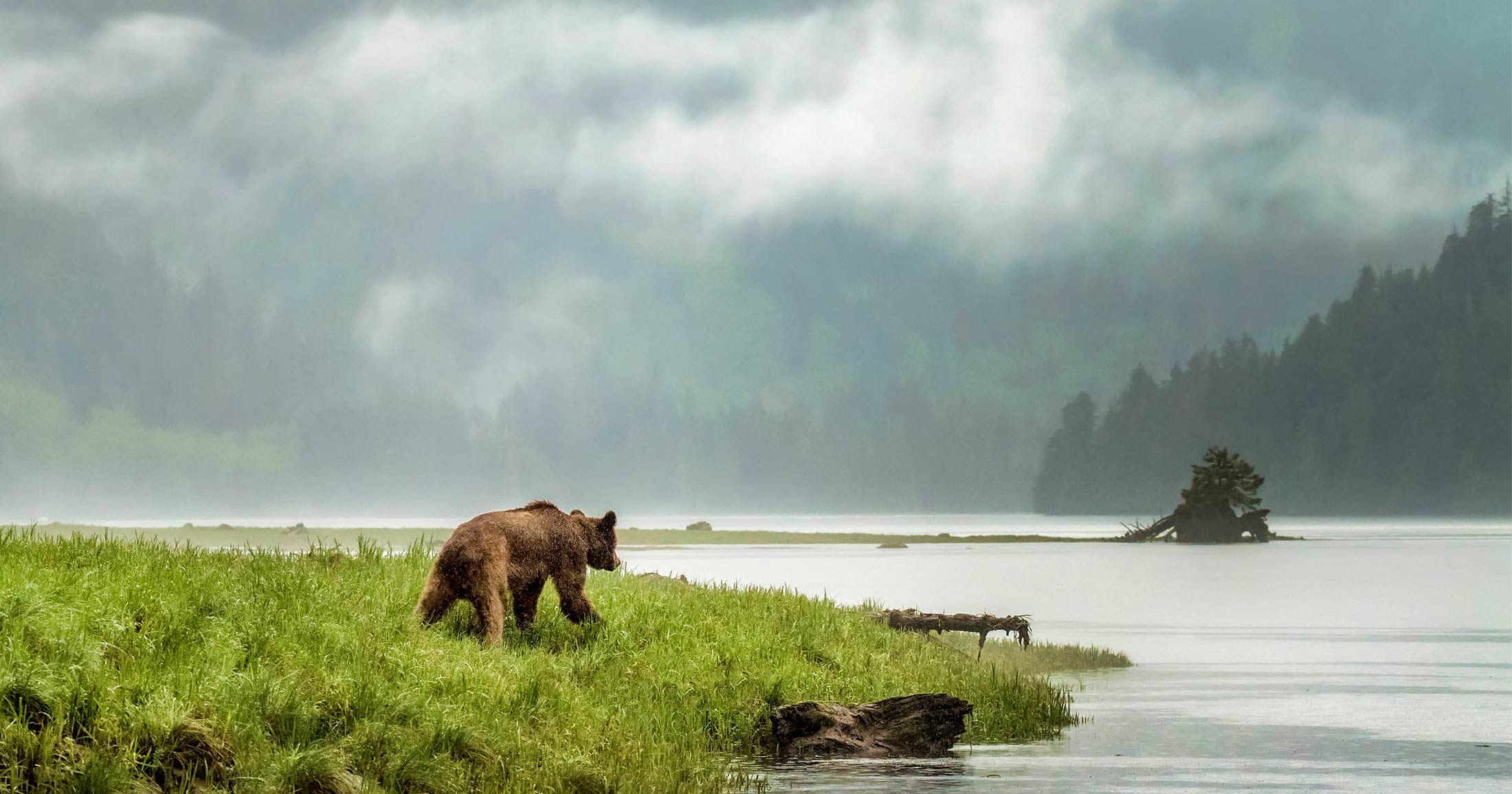
The Southern tenure contains significant populations of grizzlies, cougars, black bears, wolves, and Roosevelt elk left in BC and contains six major coastal inlets, over 10 major river systems with critical estuaries and countless smaller named and unnamed watersheds that support healthy ecosystems – from Smith Inlet to Toba Inlet. This purchase also exemplifies the new economy as there are more than 19 ecotourism companies who rely on respectful wildlife viewing.
Photo by Michelle Valberg
Permanent end to commercial trophy hunting
Raincoast now controls the commercial hunting rights in six tenures, more than 56,000km2 of the BC coast – an area larger than Vancouver Island or the entire country of Belgium.
Through the acquisition of these tenures, we own the commercial hunting rights in perpetuity, thus protecting all coastal carnivores that would be, otherwise, subject to trophy hunting.

Buying hunting territories, a permanent fix
Raincoast began purchasing hunting tenures back in 2005, when it was clear a different solution to the vagaries of political objectives was needed. Despite our campaign success 20 years ago, achieving a province-wide moratorium on grizzly hunting, the trophy hunt ban was overturned by a subsequent government following a provincial election. Purchasing tenures appeared to be the only permanent solution to stopping commercial trophy hunting. Purchasing hunting tenures demonstrated our support for the First Nations control of their resources in the Great Bear Rainforest.
In 2017, after 20 years of public campaigning, the province ended the grizzly trophy hunt. While welcomed and long fought, this did not negate the need for protection for the other approximately 60 species that trophy hunters are allowed to exploit. Acquiring hunting territories is a permanent solution, not just for grizzlies, but for all carnivores hunted for trophies.
Working with First Nations
Your support will help Raincoast and our First Nations partners end commercial trophy hunting in their territories. Purchasing these tenures is one small part in the process of supporting First Nations stewardship in the Great Bear Rainforest.
Our ultimate goal is to secure the rights to all commercial trophy hunting tenures in the Great Bear Rainforest. We now stand poised to complete the job.

You can help us stop
commercial trophy hunting
Photo by Finn Steiner.
Recent articles

Progress update on KELÁ_EKE Kingfisher Forest fundraising campaign
Applied conservation science helps inform and empower local decision-making

Recovering wild salmon through collaborative conservation

Rejecting the Roberts Bank Terminal 2 expansion

Our new Healthy Waters program
