

Marie-Ana Mikus
Cetacean Conservation Research Program Technician
Marie-Ana is a research technician for the Raincoast Cetacean Conservation Research program. She holds a MSc Degree in Animal behavior from the University of Rennes (France) where she studied small-clawed otter acoustic communication. She has extensive experience in behavioral and acoustic field data collection and acoustic analysis of animal sounds, particularly cetaceans. Since 2016, she has assisted with the collection and acoustic analysis of field recordings of beluga whales from Cunningham Inlet (Canadian High Arctic), the Churchill River Estuary and the St. Lawrence River Estuary, and has been involved on studies of killer whale acoustics and underwater noise impacts on cetaceans.
As a field technician, Marie-Ana is experienced with the deployment and troubleshooting of digital hydrophones, a competent small-boat handler, and a certified drone pilot.

Peer reviewed publications
Aubin, J. A., Mikus, M.-A., Michaud, R., Mennill, D., & Vergara, V. (2023). Fly with care: belugas show evasive responses to low altitude drone flights. Marine Mammal Science, 1– 22. https://doi.org/10.1111/mms.12997
Vergara, V., Wood, J., Lesage, V., Ames, A., Mikus, M.A. and Michaud, R., 2021. Can you hear me? Impacts of underwater noise on communication space of adult, sub-adult and calf contact calls of endangered St. Lawrence belugas (Delphinapterus leucas). Polar Research, 40, 5521. https://doi.org/10.33265/polar.v40.5521
Vergara, V. and Mikus, M.A., 2019. Contact call diversity in natural beluga entrapments in an Arctic estuary: Preliminary evidence of vocal signatures in wild belugas. Marine Mammal Science, 35(2), pp.434-465. https://doi.org/10.1111/mms.12538
Lemasson, A., Mikus, M.A., Blois-Heulin, C. and Lodé, T., 2014. Vocal repertoire, individual acoustic distinctiveness, and social networks in a group of captive Asian small-clawed otters (Aonyx cinerea). Journal of Mammalogy, 95(1), pp.128-139
Lemasson, A., Mikus, M.A., Blois-Heulin, C. and Lodé, T., 2013. Social partner discrimination based on sounds and scents in Asian small-clawed otters (Aonyx cinereus). Naturwissenschaften, 100(3), pp.275-279
Recent articles

Fearsome deer hunters? No, wolves would rather dine on a dainty fish dish
By Daily Mail Reporter September 2, 2008 Wolves have a…
Wolves would rather fish than hunt, biologists say
The Ottawa Citizen Vancouver Sun Tom Spears Tuesday, September 02,…

Whose afraid of the big bad wolf? Salmon are
A four-year study of prey remains in wolf droppings and…
British Columbia wolves have taste for salmon, new study finds
Financial Post Canwest News Service Published: Tuesday, September 02, 2008…
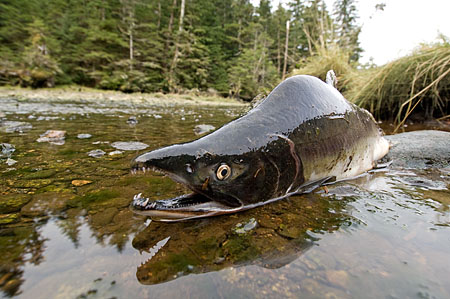
Venison’s fine, but wolves prefer salmon
Wolves are not quite the red-blooded hunters we thought they…
Oil Futures: We’re in for a whale of a time, one way or another
BY: CHRIS GENOVALI MONDAY MAGAZINE August 27, 2008 The International…